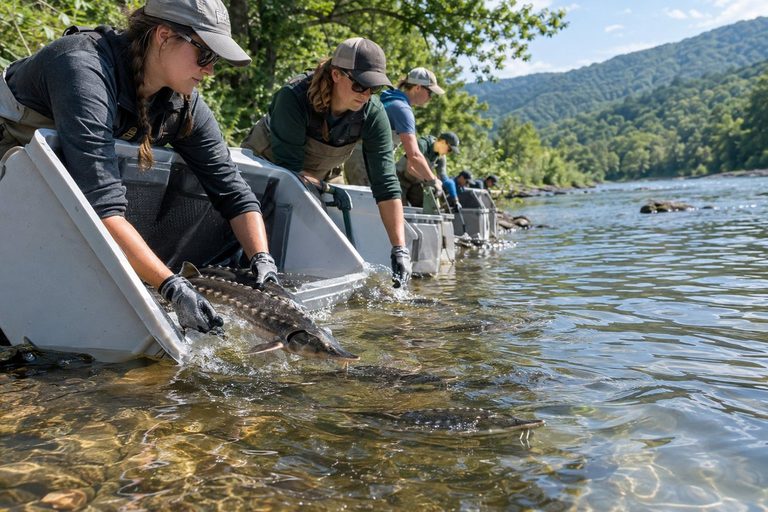
Tennessee Aquarium releases 500 lake sturgeon into the Tennessee River
About 500 juvenile lake sturgeon went into the Tennessee River at Coolidge Park. Here's how the restoration works and whether it's succeeding.

Five fish food staples for tropical, goldfish, guppy, and cichlid tanks, plus how to read labels, feed correctly, and keep food fresh.
Jack·7 min read·July 9, 2021·Updated October 16, 2026
You shake a pinch of flakes into the tank. The fish rush up, and a few minutes later some bits are still drifting toward the gravel. That leftover food matters more than the brand. Still, the brand question has an answer. TetraMin Plus Tropical Flakes is a solid daily staple for a mixed tropical tank. TetraFin or API Goldfish Flakes suit goldfish, Hikari Tropical Fancy Guppy suits guppies, and Aqueon Cichlid Pellets suit cichlids. Whichever you buy, feed small amounts and keep the container fresh, or it won't do much good.
Before comparing products, it helps to know what the label can and can't tell you. In the US, fish food labels generally fall under FDA rules administered by the Center for Veterinary Medicine, along with AAFCO guidelines. Pet foods don't need FDA approval before they go on sale. The law only requires them to be safe, sanitary, free of harmful substances and truthfully labeled.
The most useful part of the label is the guaranteed analysis. It gives minimums for crude protein and fat and maximums for fiber and moisture. Phrases like "boosts immunity" or "crystal-clear water" are the maker's own claims, not results from independent tests. Use the numbers and the ingredient list to compare foods, and treat the slogans as marketing.
This is the best all-round pick for a community tank of mixed tropical fish. One retailer lists its guaranteed analysis as:
Another listing shows 47% protein and 10% fat, so check the package you actually buy. The first ingredients are fish meal, dried yeast, ground brown rice, shrimp meal and wheat gluten. Freeze-dried shrimp and krill are also in the mix.
Tetra says its TetraMin flakes use a "Clean and Clear Water Formula" that is easier to digest and doesn't leach color, and that they won't cloud water when fed as directed. The flakes also contain ProCare, a patented blend of immunostimulants, vitamins, biotin and omega-3 fatty acids. Tetra says the blend strengthens fish's resistance to disease and stress. Both claims are the maker's, not independent findings. Tetra's directions are to feed 2–3 times a day, only as much as the fish eat within 3 minutes.
Goldfish need their own food, and this is Tetra's version. It is sold as TetraFin Goldfish Flakes, a complete daily diet for goldfish and small koi, and it works in aquariums and small outdoor ponds. The guaranteed analysis is at least 42% crude protein and 8% crude fat, and at most 6.5% moisture.
It has the same kind of blend as TetraMin: immunostimulants, vitamins, biotin and omega-3s, which Tetra says help fish resist disease and stress. The directions are 2–3 feedings a day, only as much as the fish can finish in several minutes.
API's goldfish flake is the main alternative to TetraFin. Spirulina is listed as a color enhancer, and garlic is added to make goldfish more eager to eat. The directions are a little stricter than Tetra's: up to twice a day, only as much as the fish eat within 3 minutes. Picky eaters may respond to the garlic. If your goldfish already eat well, either flake will do.
Guppies are small fish that breed often, and this food is made for them. It isn't a flake. It is a semi-floating, high-protein granule that softens quickly without falling apart and sinks slowly, so small fish have time to eat it at different depths.
Hikari credits its high linolenic acid content with promoting growth and encouraging breeding. It names chitosan and stabilized vitamin C as immune-support ingredients, and the granules also contain iodine from seaweed. The coating is said to stop nutrients from leaching out and to keep water from clouding. Again, these are the maker's claims. The directions are 2–3 feedings a day, with a warning not to overfeed.
Cichlids are bigger, stronger eaters, and a pellet suits them better than a flake. Aqueon's first ingredients are whole fish meal, whole wheat flour, whole dried krill and squid meal. Color comes from marigold powder, chili powder, natural astaxanthin and spirulina. The guaranteed analysis is:
Feeding directions vary by seller. PetSmart's listing says 2–3 times a day, eaten within 3 minutes, while a Walmart listing says under 2 minutes. If color is your main goal, Aqueon also sells a separate Cichlid Color Pellets product built around marigold, paprika and other pigments.
Every food above comes with nearly the same rule, and it's the one that matters most: feed only what your fish finish in about 2–3 minutes. Food left over breaks down into ammonia, clouds the water and feeds algae. No "clear water" formula can fix overfeeding. A newly set-up tank needs even less food, because the bacteria that break down waste haven't built up yet.
If food is still floating or sitting on the gravel after a few minutes, cut back at the next feeding.
Buying a big tub to save money is a common mistake. Dry fish food does lose quality over time. Feed guides advise against keeping dry feed for more than about 3 months, and fish-farm feed specifications usually give a 90-day shelf life.
Vitamin C shows why. In one study, dry catfish feed without stabilized vitamin C lost half its vitamin C after three months at 21°C (about 70°F, a normal room temperature). Stabilized forms, such as the one Hikari lists, hold up much better. One fish-care site notes that flakes lose vitamin C faster than other foods because they are so thin, and that the loss starts as soon as the container is opened.
So buy a size you'll finish in a few months, close it tightly after each use, and keep it somewhere cool and dark. A cabinet works better than the warm lid of the tank.
About 500 juvenile lake sturgeon went into the Tennessee River at Coolidge Park. Here's how the restoration works and whether it's succeeding.
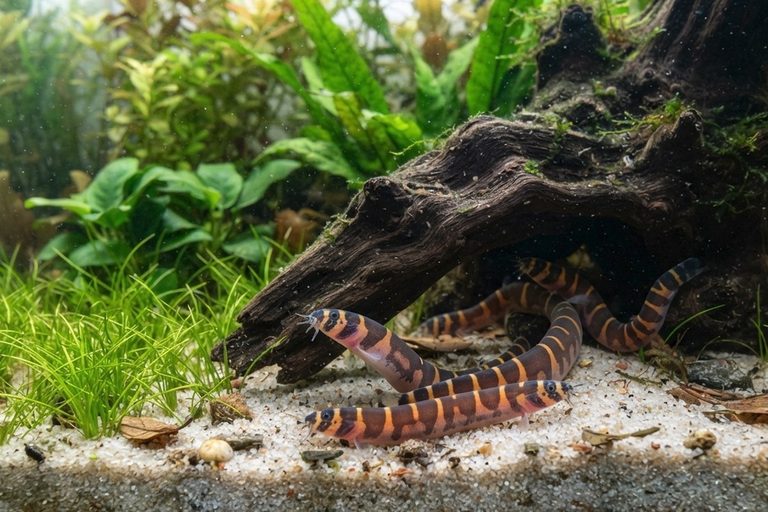
Kuhli loaches can live in a river tank if you give them a calm zone, soft sand, a group of six, 74–79°F water and plenty of places to hide.
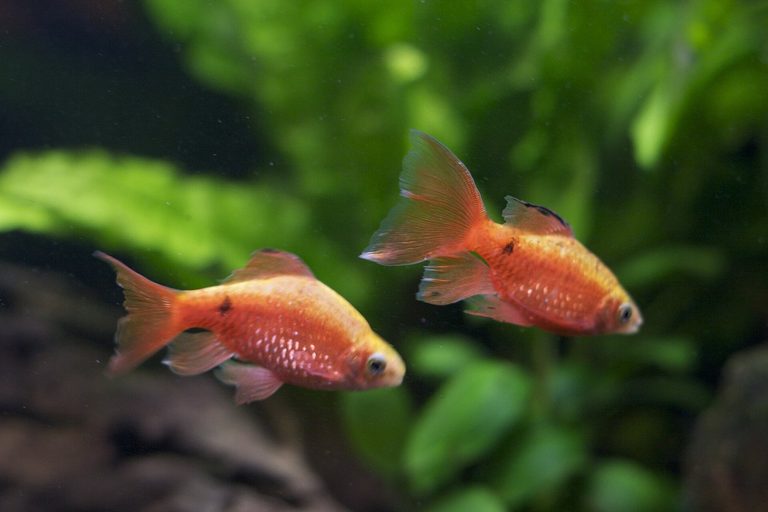
Rosy barb care for unheated river tanks: temperature range, tank size, group size, tank mates, feeding and the fin-nipping problem.