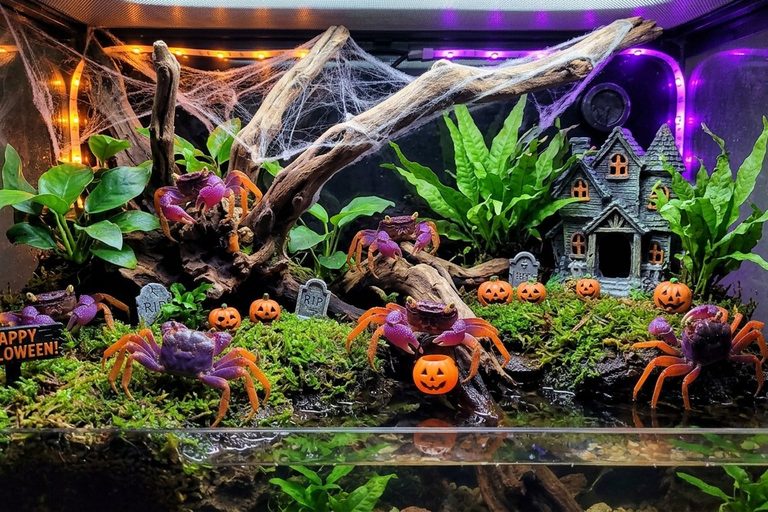
Can a crab get stuck in a pumpkin-house ornament?
Can a crab get trapped in a pumpkin-house ornament? See which openings are risky, how to pick or seal a safe piece, and how to free a stuck crab.
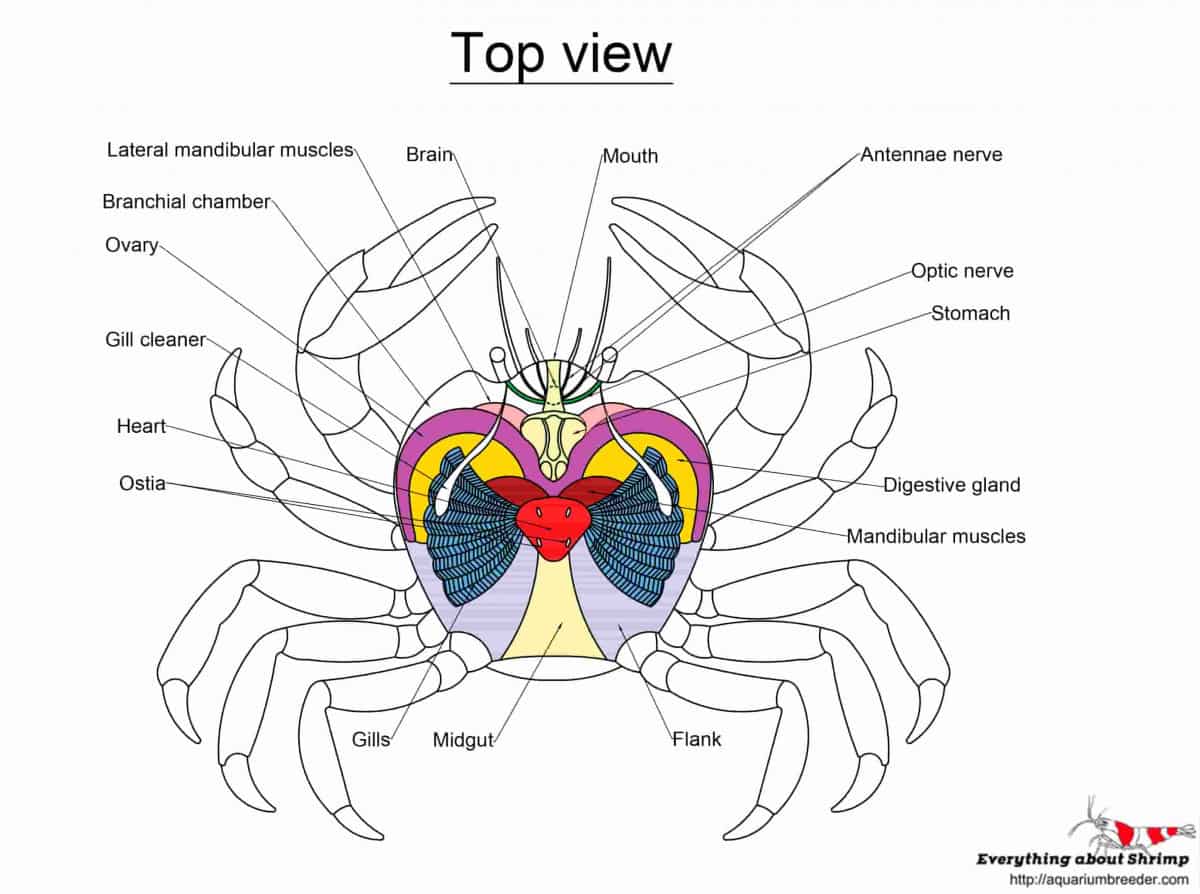
Yes, crabs have gills, including land crabs that keep them wet in a sealed chamber. Learn how some crabs add lung-like tissue to breathe air.
Jack·6 min read·July 13, 2021·Updated October 17, 2026
You're walking along a beach or a mangrove edge, and a crab darts across dry sand, nowhere near the water. Animals that live in water usually breathe with gills, so how is that crab breathing? Yes, true crabs have gills. Land crabs still use them, keeping them wet inside a sealed chamber. Some crabs have added lung-like tissue, and the coconut crab relies on lungs so heavily that it can drown. Here's how that works, and what it means if you keep crabs at home.
A crab's gills sit inside branchial chambers under the sides of its shell, not out in the open. A small paddle-like appendage called the scaphognathite beats to push water or air across them.
In the land crab Cardisoma carnifex, gas exchange happens in large gill chambers that are only partly filled with water. In its relative Cardisoma guanhumi, the paddle mostly beats forward while the crab is in air. When the crab can reach water, the paddle reverses far more often. That reversed flow seems to flush water through the chambers. It helps with breathing, and it also helps the crab balance salts and acidity in its body.
Gills only work when they're moist, so land crabs have ways of holding on to water. They seal moisture into the gill chamber with plates that close over it. They also store water in the gill chamber, in their blood, and in pockets of the body. That's how a crab can stay out on dry sand and keep breathing with organs built for water.
Some crabs go further and turn the lining of the gill chamber into a breathing surface. Fiddler crabs send extra blood flow over this lining, forming what biologists call a "branchiostegal lung." In the air-breathing freshwater crab Holthuisana transversa, most of the blood goes to this lung-like tissue, and the gills get a smaller share.
The coconut crab (Birgus latro), the largest land-living arthropod, takes this the furthest. It breathes with branchiostegal lungs, and its gills are vestigial. The lung tissue resembles gill tissue but is suited to taking oxygen from air. As a result, adult coconut crabs can't swim and can drown if they're left in water. Estimates of how long that takes vary, and one source puts it at about an hour.
So "crabs can breathe underwater" isn't true for every crab. Fully aquatic crabs live underwater for good, but a crab built for land can die there.
If you keep land hermit crabs, their gills are the reason care guides stress humidity. The gills must stay moist to work, and in dry air the crab slowly suffocates. Hobbyist sources also report that dry air can damage the gills.
The recommended humidity varies by source:
Most guides land somewhere in the 70–85% range, so aiming there is a reasonable middle ground.
Good care can lead to a long life. The Hermit Crab Association says 10–20 years is common in captivity and up to 40 years is possible. One documented Coenobita clypeatus lived 45½ years in captivity, though the source that reports it warns against assuming every hermit crab can do the same.
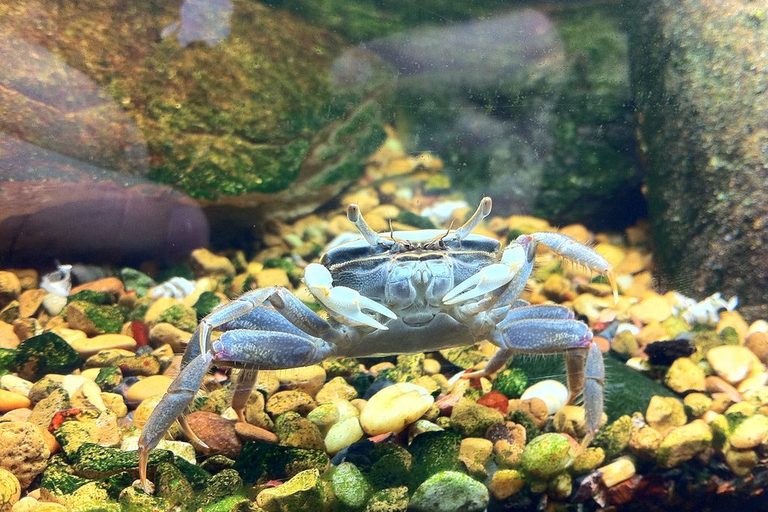
Fiddler crabs are often sold as "freshwater" crabs, but they need brackish water. Sources say they die within about a month in fresh water. A typical setup uses water with a specific gravity of about 1.005–1.012 and gives over roughly 70–80% of the tank to land, which suits their part-lung, part-gill breathing. Even with good care, their average lifespan is about 2–3 years.
True freshwater crabs do exist, and in large numbers. A 2007 global assessment in Hydrobiologia counted 1,476 freshwater crab species in 14 families. Of these, 1,306 belong to eight families found only in fresh water. One of that study's authors, Neil Cumberlidge, has since said there are over 2,000 species in tropical fresh waters, though that figure comes from a news interview rather than a formal count.
Many of these species are under pressure. An IUCN assessment of 103 freshwater crab species in tropical Africa found that 71% were of Least Concern and 27% (28 species) were threatened.
A crab's life starts small. Blue crabs hatch as zoea larvae, and lab studies show the zoeal phase lasts roughly 30–60 days, depending on salinity and temperature. Next comes the megalopa stage, which can last about 30–90 days. Sources disagree on the details. A Chesapeake Bay education page describes about seven molts over roughly 45 days, while a Gulf of Mexico study found six zoeal stages at 25°C.
Adult lifespans vary widely by species:
The horseshoe crab isn't a crab at all. NOAA notes that it belongs to a different class from true crabs like the blue crab, and it has six pairs of legs instead of five. It breathes with "book gills," layered flaps that are one of the traits making it closer to spiders, ticks and scorpions than to true crabs.
It's also long-lived. Maryland DNR says a horseshoe crab that survives spawning may live to about 18 years, and the U.S. Fish and Wildlife Service puts it at about 20. South Carolina DNR says the animals mature at 9–12 years and live 10 or more years after that.
Can a crab get trapped in a pumpkin-house ornament? See which openings are risky, how to pick or seal a safe piece, and how to free a stuck crab.
Vampire crabs make tempting Halloween impulse buys at $10, but they need a land-heavy paludarium to survive—not a traditional fish tank.
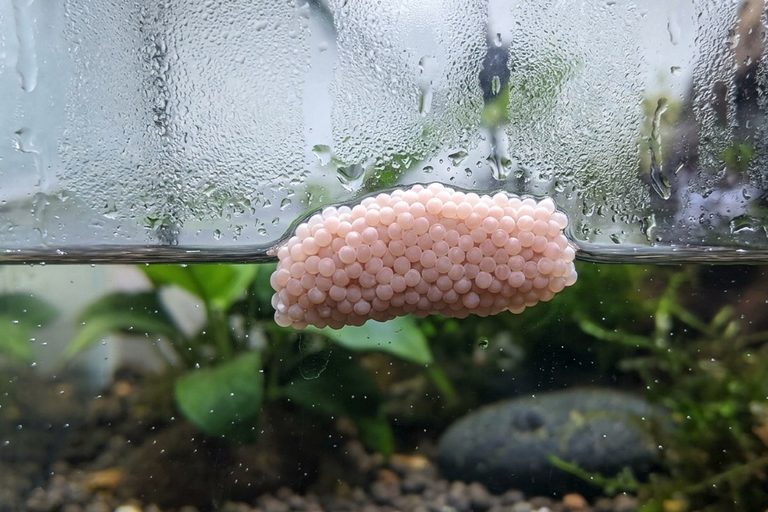
Tell snail eggs apart by species (nerite dots, mystery snail clutches, ramshorn and bladder jelly) and decide whether to scrape, keep, or hatch them.