Does expanding foam belong in a fish tank
Expanding foam can work in a fish tank if you buy pond-and-stone foam, cure it fully, and soak it before adding fish. Here's how to do it safely.
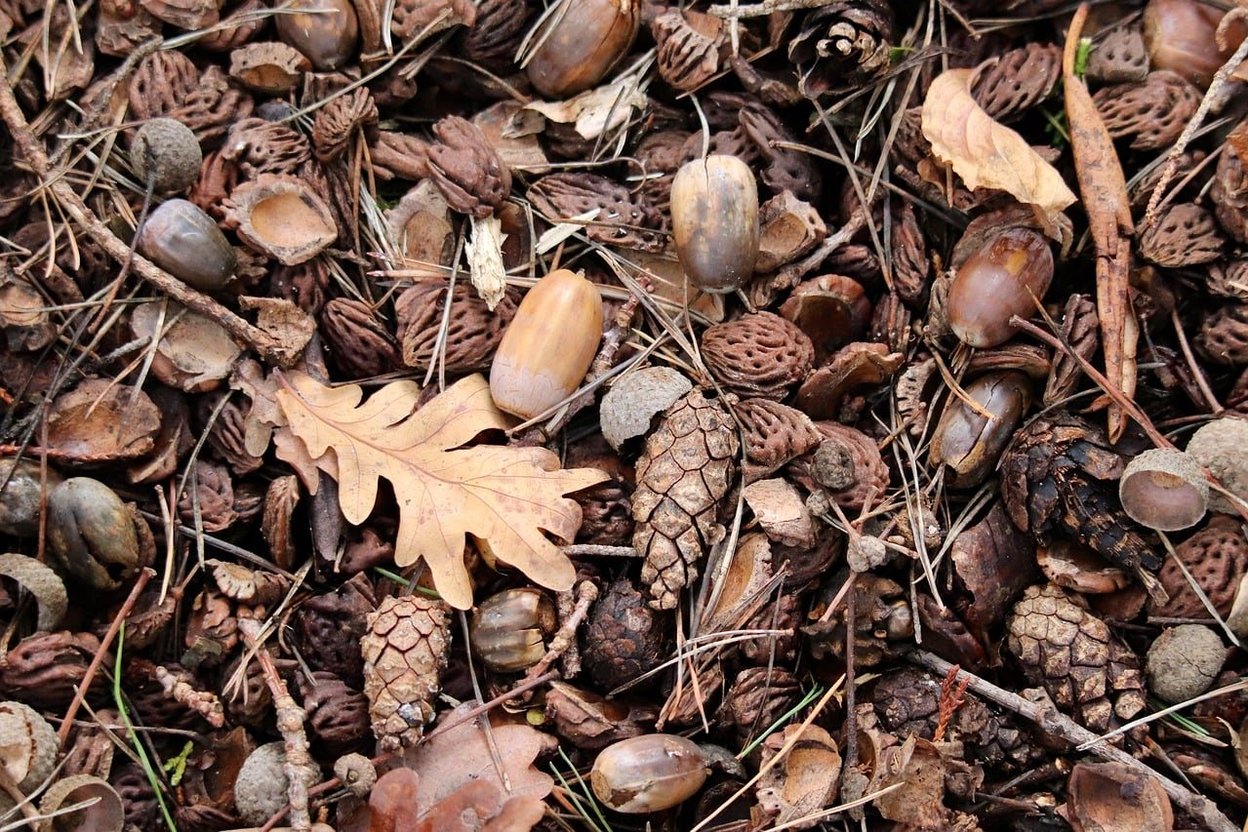
Dried oak, beech, and Indian almond leaves can tint tank water tea-brown without dye. Learn which leaves to use, how many, and how long they last.
Jack·7 min read·October 21, 2026
You're out raking in October, the yard is ankle-deep in oak and maple, and you start to wonder whether a handful of those leaves could give your tank the look of a creek in autumn. They can, but not quite the way the yard looks. Dried leaves tint the water tea-brown and cover the bottom the way a real streambed looks this time of year, and you don't need bottled dye. You just need the right leaves in the right amount, and you have to accept that the bright reds and oranges won't last underwater.
Dried leaves release tannins, and tannins stain water yellow-brown. That staining is what gives a tank the soft, tea-colored "blackwater" look, and the leaves on the bottom give you the leaf-covered streambed. You can get it without any dye.
How dark the water gets depends on two things: which leaf you use and how many you put in. The tint comes from the leaves breaking down and releasing their tannins. You can't switch it on and off, but you can steer it by your choice of leaf and your dose.
Here's the limit. Your red maple and orange oak leaves won't stay red and orange in water. Plan on brown leaves in amber water. Think of a woodland stream in late November, not a postcard of peak foliage. To me that's the better look anyway, and it's the one real streams have.
Three leaves do most of the work in the hobby, and each behaves differently.
Dunlop has also used several kinds of oak (pedunculate, sessile, Turkey and red), along with hawthorn and Japanese maple. You have more choices than the big three.
What to skip. Hobbyists commonly warn against hairy leaves and plants with toxic sap. One forum list names rubber, laburnum, fig, oleander, evergreen rhododendron, laurel, walnut and horse-chestnut. Another reply in that thread thought walnut might be safer than claimed, but I'd still leave it out. Keepers also advise against pine, cedar, spruce and fir, since conifers can leak resins. These warnings come from forums, not lab tests. The easy rule is to stick with leaves that many keepers have used for years.
If you have oak or beech nearby, fall is collecting season. You can fill a year's supply in one afternoon.
To boil or not? Hobbyists disagree on this. Dunlop says don't: boiling removes the compounds you want. He adds dry leaves straight to the tank. They float at first and most sink within about 24 hours. Other keepers boil leaves for an hour or two until they sink, and still others point out that this mostly leaves the tannins in your pot. If color is your goal, adding them dry makes sense: the tint ends up in the tank, not down the sink. If floating leaves bother you, a quick soak or a rock to hold them down for a day works fine.
Start low. With Indian almond leaves, a common starting dose is two leaves per 10 gallons. For a small betta tank, half a leaf is enough. With oak or beech you can use more, since they tint more weakly, and beech can go in by the handful.
What to aim for. Seriously Fish puts it simply: you want a weak yellow-brown tint. If the water turns clearly brown, take some leaves out. Regular test kits can't measure the humic substances leaves release, so your eyes are the test. Hold a white cup of tank water up to the light. It should look like weak tea, not coffee.
How long they last:
Topping up. You don't have to pull out old leaves when you add new ones. Let the old ones keep breaking down and add a few fresh leaves when the color fades or the layer gets thin.
First weeks. The vendor post on oak notes that new leaves can grow biofilm, a little fungus and some haze early on. That usually passes as the leaves settle in. If the water gets darker than you like, take out a few leaves and do a water change.
If you're rebuilding a river tank with pools that step down, put the leaves in the slow, calm pools. In a real stream, that's where leaves pile up.
The tint isn't the only change. Leaf tannins and humic substances lower pH. Your leaves don't decide by themselves how far it drops. That also depends on your tap water and how many leaves you use. So test pH before you add leaves and again over the next few weeks.
Fish that like it. Soft-water, blackwater fish suit this setup best. Dunlop notes that wild bettas, Apistogramma and Badis tend to be less shy in stained water with dimmer lighting. Decaying leaves also grow slime and infusoria (tiny organisms), which make good first food for fry. People who use Indian almond leaves usually keep medium-to-soft, neutral-to-acidic water.
Fish that don't. Goldfish and African cichlid keepers generally skip leaves, because those fish do best in harder, more alkaline water, and leaves push the other way. If your tank is set up for hard water, or holds animals with specific water needs, check each species before you add leaf litter. Don't assume that what's good for an Apistogramma is good for everyone in the tank.
If you change your mind. Tannins are generally considered harmless. Most people remove them only because of plants, viewing or photos. Activated carbon pulls the tint out fast, but it also removes medications and liquid fertilizer. Water changes by themselves fade the color slowly. Purigen is another product keepers use to clear tannin color.
My advice: pick up a bag of oak leaves this fall, dry them in the garage, start with a handful, and add more until the water looks like weak tea.
Photo by Nennieinszweidrei on Pixabay.
Expanding foam can work in a fish tank if you buy pond-and-stone foam, cure it fully, and soak it before adding fish. Here's how to do it safely.
Yes, a rimless tank can carry a foam-and-stone riverbank if the glass, stand and foam are right. Here's how to check each before adding water.
Set up a riparium with rim holders for pothos, a light for leaves above water, and driftwood soaked until it sinks, plus a week-one checklist.