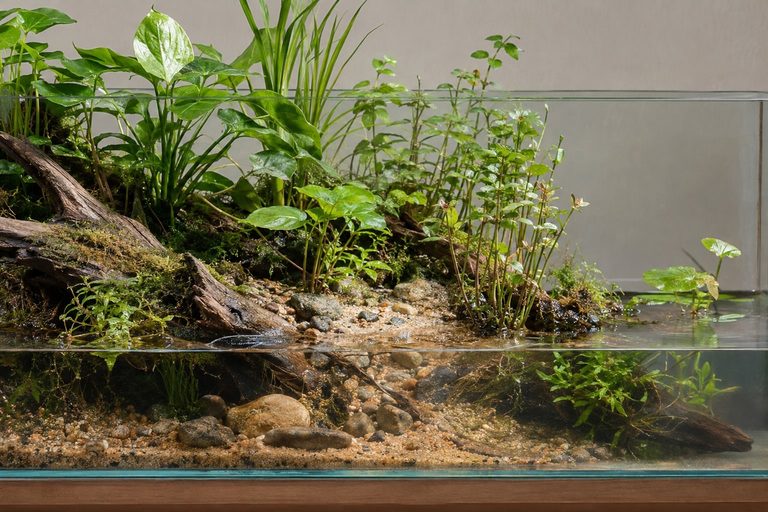
A riparium is a tank with a shoreline. What you actually need
Learn what a riparium is and what you need to build one: an open-top tank, planters, plants that tolerate wet roots, and light above the water.
Which leaves are safe in a fish tank, how many to use, how to collect and prep oak leaves, and which trees to skip.
Jack·8 min read·October 6, 2026
You can use Indian almond (catappa) leaves and dried, brown oak leaves in a freshwater aquarium. Both release tannins that tint the water tea-colored and can pull the pH down a little. They also grow a film that shrimp and snails graze on. Leave out black walnut, butternut and cherry leaves, and anything picked green off a tree, sprayed, or gathered along a road.
The rest of this covers how many leaves to use, how to prep oak leaves you rake up this fall, and what to watch for in a river tank where the current wants to throw leaves around.
A dead leaf in water slowly breaks down. As it goes, it lets out tannins and other organic compounds. Those stain the water yellow to amber and gradually lower the pH.
As the surface softens, bacteria and fungi coat it in a thin film. Shrimp, snails and baby fish pick at that film all day. A layer of leaves also gives shy fish a place to hide and gives some species a place to spawn.
The tea color does no harm. Tannins are harmless to fish and shrimp, and plenty of keepers add leaves just to get that look. If you don't like the stain, see the section on clearing it below.
These come from Terminalia catappa, a tropical tree. You won't find them on the ground in most of the US, so you buy them dried. A 10-pack typically runs about $7 to $11 as of October 2026, depending on the brand and leaf size.
How many to use: Aquarium Co-op suggests 1 leaf about 4 to 7 inches long for every 5 to 20 gallons. For a 55-gallon, that works out to roughly 3 to 10 leaves. Start low. You can always add more next week.
How long they last: about one to two months before they fall apart completely. You can leave the broken-down pieces in for the shrimp to finish, or pull them when they turn to mush.
Prep: store-bought leaves are dried and cleaned already, so most people just rinse them and drop them in. Boiling dumps most of the tannins out at once, so skip it unless you're trying to keep the color down.
They're often sold with "antibacterial" claims. There is lab work showing catappa tannins have antibacterial activity. Use them to support a tank, but don't count on them to cure a sick fish.
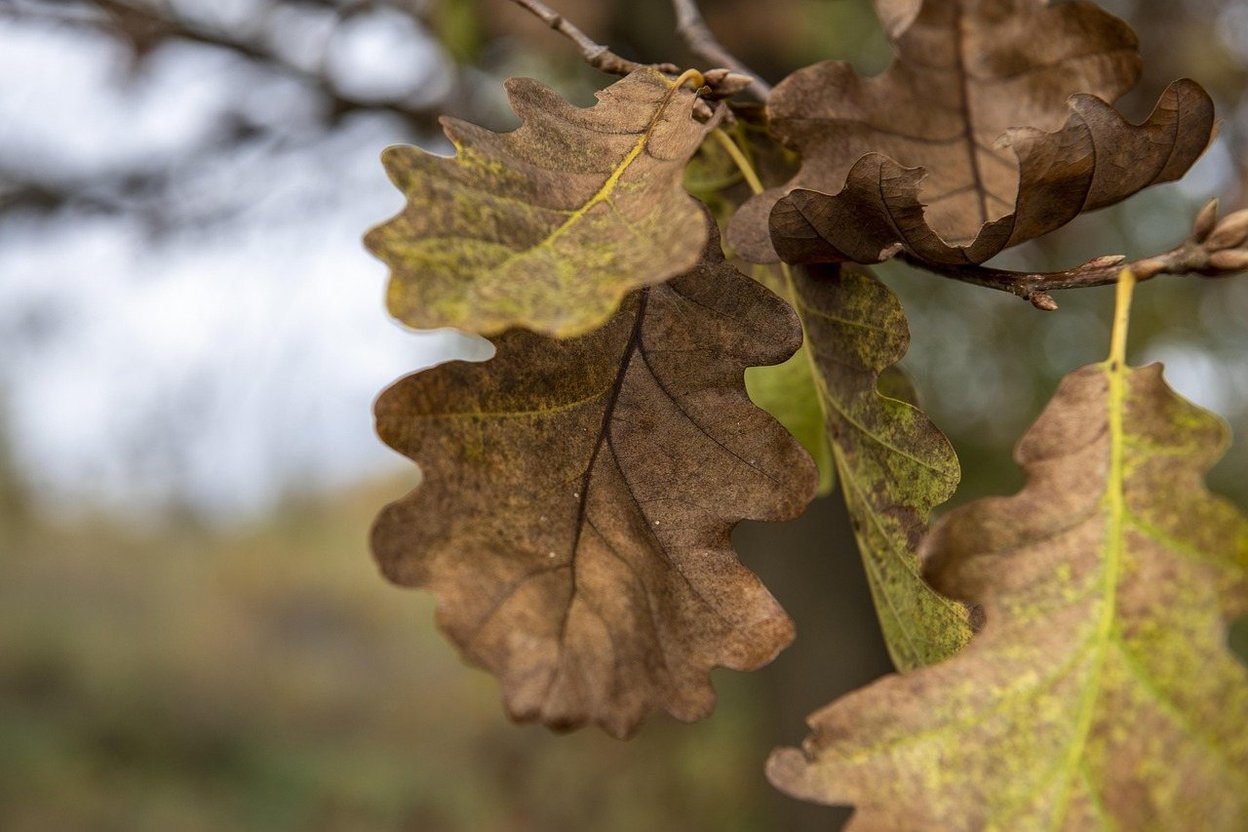
Oak leaves are the free, local version, and fall is when you collect them. Tannin Aquatics, a company that sells botanicals for aquariums, recommends only dried, naturally fallen leaves. By the time a deciduous leaf drops on its own, it has given up most of its chlorophyll and sugars, so it rots slowly and cleanly. A green leaf pulled off the branch rots fast and fouls the water.
What to pick up:
Oak leaves are tougher than catappa. They break down more slowly, often over several weeks to a few months, so they work well in the back corners of a tank where you aren't vacuuming every week.
Keepers prep leaves anywhere from barely at all to boiling them. Here's a middle path:
Pick up a bagful now, while the leaves are dry and fresh off the tree. Leaves that sit under snow all winter are past their best by spring.
Oak and catappa are the common ones. Lists of leaves that are usually considered safe also include beech, alder, hazel, hornbeam, apple and guava. The same rules apply: dried, fallen, unsprayed, and from a tree you've identified.
A river tank pushes a lot of water, and loose leaves end up wherever the flow drops them. Usually that's against the intake sponge or in one corner.
Critters that use leaf litter well include ghost shrimp, nerite snails and mystery snails. Fish that feed off the bottom will poke through it too. Leaves also work in unheated tanks with fish like White Cloud Mountain minnows. The leaves just break down more slowly in cold water.
Leaves are rotting organic matter, so too many at once loads up the tank. A water-quality study using Indian almond leaves found that as the dose went up, pH dropped while oxygen demand and bacteria counts rose. Other research on catappa extract found high doses raised ammonia.
In practice that means:
Some people want the leaf benefits without the brown water. Activated carbon in the filter adsorbs tannins, but it gets used up and needs replacing every few weeks. Seachem Purigen also pulls tannins and can be regenerated and reused. Regular water changes dilute the color too. Boiling oak leaves before they go in cuts the stain at the source. The same idea applies to wood, covered in preparing driftwood.
Photo by FilipFilipovic on Pixabay.
Learn what a riparium is and what you need to build one: an open-top tank, planters, plants that tolerate wet roots, and light above the water.
Learn which Halloween ornaments are safe in a fish tank, why craft-store decor is risky, and a simple screening test before adding one.
Discover why whole pumpkins damage aquarium water and how to safely offer small pieces as seasonal treats.