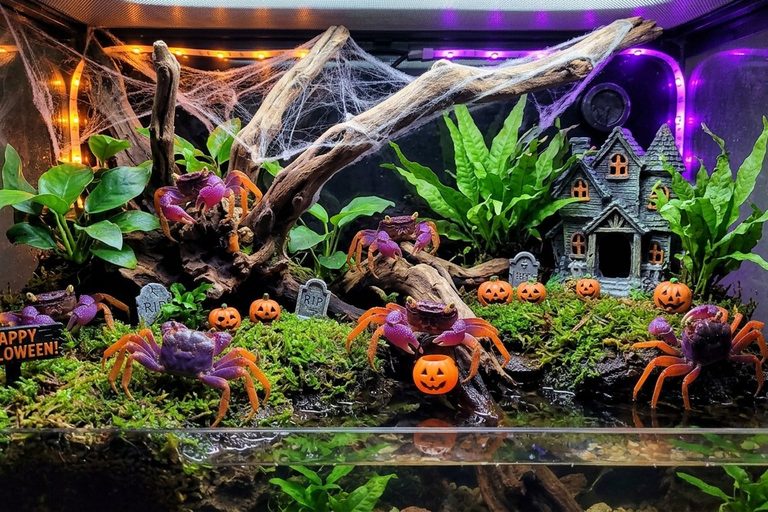
Can a crab get stuck in a pumpkin-house ornament?
Can a crab get trapped in a pumpkin-house ornament? See which openings are risky, how to pick or seal a safe piece, and how to free a stuck crab.
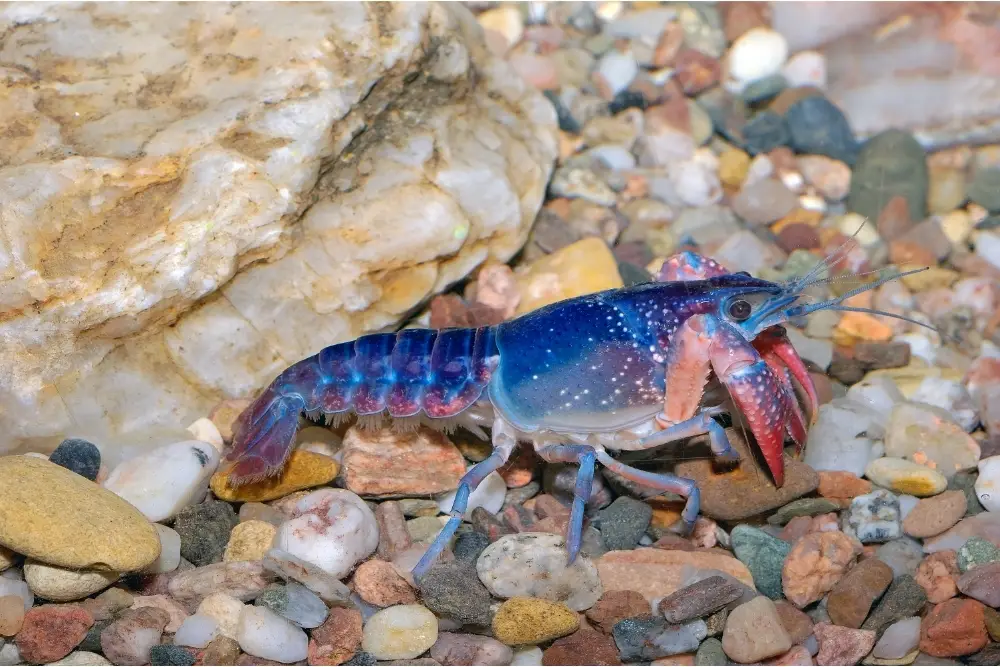
Crayfish breathe through gills, not lungs. Learn how long they last out of water and what that means for keeping one.
Jack·7 min read·July 13, 2021·Updated October 17, 2026
You flip a rock in a creek, a crayfish scoots backward, and you scoop it up to look. Then you wonder: is it holding its breath? Not really. Crayfish need oxygen, but they get it from water through gills, not from air through lungs. Out of water they can last for hours, sometimes days, but only while their gills stay damp. Dry gills collapse, and the animal suffocates. Below is how that breathing works, how long a crayfish can last out of water, and what this means if you catch or keep one.
A crayfish is a water-breather. Its gills sit inside a chamber on each side of its body, under the shell. The animal keeps water moving through that chamber, and the gills pull out the oxygen dissolved in it.
A 1974 study of the red swamp crayfish (Procambarus clarkii) traced how this works. Water flows through the gill chamber, while blood inside each gill filament flows the opposite way. Running the two streams against each other is an efficient way to move oxygen from water into blood. Researchers have also studied the side plates of the shell that cover the gills, called branchiostegites, for their own part in gas exchange.
Because the gills are built for water, depth is never the problem. A crayfish can live its whole life fully underwater. What can kill it is water that holds too little oxygen.
Gills work only while they stay wet. In dry air, the fine filaments stick together and collapse. Once that happens, there is little surface left to take up oxygen.
A crayfish can delay this. Its shell traps a small pocket of water or humid air around the gills, which keeps them moist for a while. That is why a crayfish you lift from a creek doesn't die in a minute.
It depends on the species and on how humid the air is. Stream species are reported to last about a day or two in dry air. Lab tests on some native crayfish have measured survival from about 20 hours to more than 120 hours.
Shade, damp moss, or a wet bucket buy more time, because they slow the drying of the gills. Hot, dry air does the opposite.
Some crayfish don't wait for rain. They dig. The red swamp crayfish can burrow into the ground during long dry periods, and it can also walk several miles over fairly dry ground to find new water.
In a lab study comparing several species, P. clarkii, the best burrower of the group, survived drought best. It settled underground and dropped into torpor, lowering its metabolism until conditions improved.
A burrow brings its own risk. A Griffith University study found that water in a flooded burrow ran out of oxygen within about 8 hours on average. Species that live mostly in burrows coped well with low oxygen. Species that burrow only now and then showed little to no tolerance for it. So the same habit that saves one crayfish from drying out could suffocate another.
The red swamp crayfish is the one most people have seen, whether in a Louisiana boil, a pet store, or a ditch where it doesn't belong.
What a crayfish's gills need tells you most of what its tank needs: water that is well oxygenated, not just wet. Crayfish also roam. Keep the lid tight, with no gap big enough for the animal to squeeze through. A crayfish on the floor will stay alive for a while, but not for long.
Because red swamp crayfish eat fish in the wild, putting one in a tank with fish is a risk. That is a reasonable guess, not a tested rule, but small or slow fish would be the first to go.
A crayfish that can cross miles of dry ground and wait out drought underground is very good at spreading. That is why many places treat non-native crayfish as invasive. Crayfish are not federally regulated in the United States or Canada, but many states have rules of their own:
If you no longer want a pet crayfish, return it to the seller or give it to an aquarium or a school. Ask a vet or pet retailer about humane euthanasia only as a last resort. Don't release it, and don't move live crayfish from one creek or pond to another.
Whether crayfish feel pain is no longer a fringe question. In 2022, the UK's Animal Welfare (Sentience) Act added decapod crustaceans, the group that includes crayfish, lobsters, crabs, and shrimp, to the animals it recognizes as sentient. The scientific review behind the law, from the London School of Economics, concluded that boiling them alive should be banned.
England's Animal Welfare Strategy has since called live boiling unacceptable. It has not set a ban or a date for one.
Can a crab get trapped in a pumpkin-house ornament? See which openings are risky, how to pick or seal a safe piece, and how to free a stuck crab.
Vampire crabs make tempting Halloween impulse buys at $10, but they need a land-heavy paludarium to survive—not a traditional fish tank.
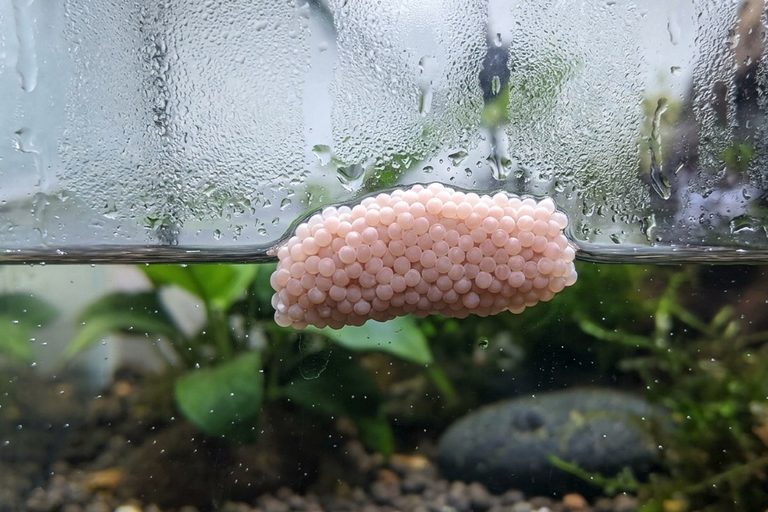
Tell snail eggs apart by species (nerite dots, mystery snail clutches, ramshorn and bladder jelly) and decide whether to scrape, keep, or hatch them.