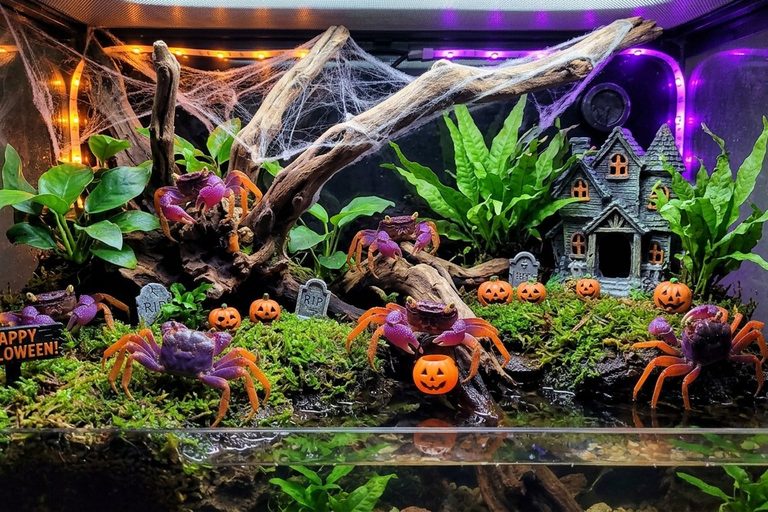
Can a crab get stuck in a pumpkin-house ornament?
Can a crab get trapped in a pumpkin-house ornament? See which openings are risky, how to pick or seal a safe piece, and how to free a stuck crab.

Wild crayfish mostly eat decaying plant matter, plus live plants and small prey. Learn what to feed a pet crayfish, with calcium and copper warnings.
Jack·7 min read·June 26, 2021·Updated October 15, 2026
You flip a rock in a shallow creek, and a crayfish shoots backward into the silt. If you wondered what it was doing under there, the answer is mostly eating. Wild crayfish are omnivores. Much of what they eat is detritus: rotting leaves and plant matter, along with the microbes and fungi growing on it. They also eat live plants and hunt small invertebrates. A pet crayfish needs that same mix in a cleaner form, plus enough calcium to rebuild its shell. Here is what that looks like in the wild and in an aquarium.
Crayfish are often called scavengers that live on dead animals, but gut studies point elsewhere. Researchers who examined invasive red swamp crayfish in southern Europe found mostly organic detritus and plant material in their guts, especially the non-green parts of aquatic plants. They found little animal material. What the crayfish ate also changed with what each habitat offered.
Work on Europe's white-clawed crayfish found a similar pattern. Gut analyses and lab trials suggest these crayfish mainly eat detritus, and that they depend on the microbes and fungi living on it for nourishment. A soggy leaf is more nutritious to a crayfish than it looks, because of everything growing on it. The same crayfish also ate plants and animal prey when they could get them.
In New Zealand streams, a study found native crayfish filling two roles at once. They are predators of invertebrates, and they also break down organic matter on the stream bed. So "not fussy" is fair. "Lives on rotting meat" is not. A wild crayfish eats whatever the stream bottom provides, and that is usually more leaf than fish.
A crayfish has five pairs of legs on its thorax. The first pair has become the big claws, called chelipeds. It uses them to defend itself and to grab prey. The other four pairs are walking legs. When you watch one feed, you'll see it pin food with its claws and tear it into pieces small enough for the mouthparts to work on. That fits a diet of tough plant matter and small, struggling invertebrates.
The crayfish sold as the "electric blue" is a color form of Procambarus alleni, the Florida or Everglades crayfish. The U.S. Geological Survey labels a photo of it as the Everglades crayfish's electric blue morph. In the wild, this species lives only in peninsular Florida, east of the St. Johns River and in and south of Levy and Marion counties, plus some of the Florida Keys.
This matters for care. Some advice says crayfish need cool water and an unheated tank. That doesn't fit an animal from Florida. Hobbyist care guides commonly suggest about 64–77 °F (18–25 °C) for popular pet species. They also suggest a pH of 7.0–8.0 and moderately hard to hard water. These figures come from keepers' guides, not scientific studies, so treat them as a sensible starting range. In a warm room you may not need a heater, but a cold tank is not the goal.
A tank has no leaf litter and no stream full of insect larvae, so you provide both kinds of food yourself.
Copper is toxic to invertebrates, and it appears in places you might not expect. Many fish foods, medications and plant fertilizers contain copper or copper sulfate. Before anything goes into a crayfish tank, read the ingredient list. That includes food bought for another animal and a treatment meant for your fish.
After a molt, a crayfish is soft and easy to injure until its new shell hardens. Disturbing one before it molts can lead to a failed molt. If your crayfish hides and stops eating for a while, give it peace and keep the calcium sources available.
Crayfish are easy to buy. A 2015 finding cited in a U.S. Fish and Wildlife Service risk screening counted 24 crayfish species, including P. alleni, plus one hybrid, listed for sale in North American online auctions. That doesn't mean you can legally own one. Michigan State University Extension notes that many states prohibit possessing the crayfish sold as "blue" and "electric blue" because they could become invasive. Its tables for the Great Lakes states are dated October 1, 2025. MSU recommends your state natural resources agency as the best source for current rules. It also points to invasivecrayfish.org.
The marbled crayfish (Procambarus virginalis) is under closer watch. Every individual is female, and each can reproduce without a mate. On January 10, 2025, the Fish and Wildlife Service published a proposal in the Federal Register to list it as injurious wildlife under the Lacey Act. The comment period closed on March 11, 2025. If the rule is finalized, importing live marbled crayfish or viable eggs would require a permit. Moving them between the continental U.S., D.C., Hawaii, Puerto Rico and U.S. territories would also be barred. Exports would still be allowed, and current owners could keep their animals where state law permits. FWS says the species has not been found in the wild in the United States. Check federalregister.gov for the rule's current status.
States are already acting. Ohio has declared the marbled crayfish an injurious aquatic invasive species. The Justice Department has published a press release titled "Ohio woman pleads guilty to violating Lacey Act, selling marbled crayfish."
What a crayfish eats, then, is the easy part: decaying plant matter, fresh plants, small prey, and in a tank, a measured daily meal with calcium and no copper. Making sure the one you bring home is legal takes a few more minutes of checking.
Can a crab get trapped in a pumpkin-house ornament? See which openings are risky, how to pick or seal a safe piece, and how to free a stuck crab.
Vampire crabs make tempting Halloween impulse buys at $10, but they need a land-heavy paludarium to survive—not a traditional fish tank.
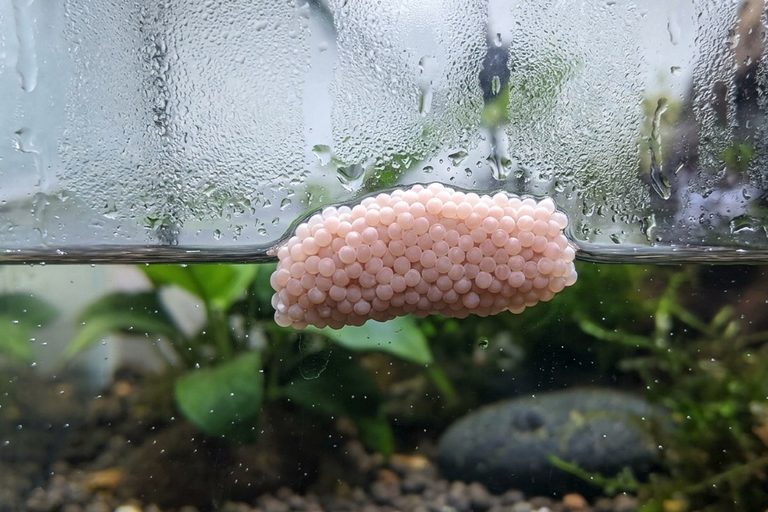
Tell snail eggs apart by species (nerite dots, mystery snail clutches, ramshorn and bladder jelly) and decide whether to scrape, keep, or hatch them.