Bringing Pond Fish Indoors in November: When It's Worth It and How to Do It
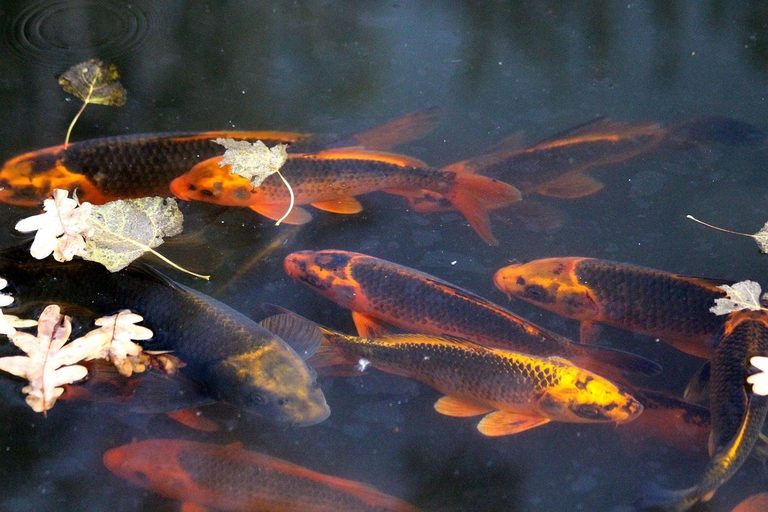
Find out whether your pond fish can stay outside or need to come indoors in November, and how to set up a cold tank and move them safely.
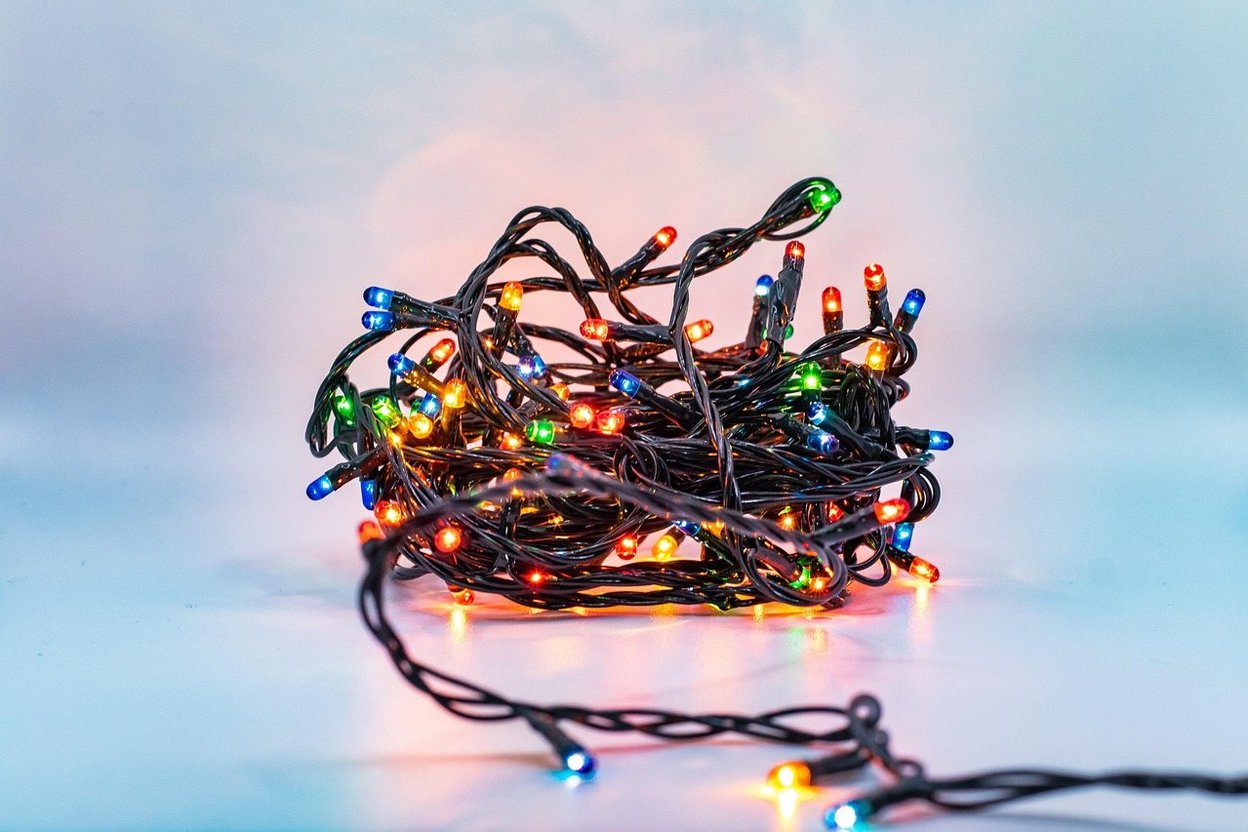
Yes, holiday lights can go outside an aquarium. Learn the electrical safety rules, heat limits, and timer setup that keep fish safe.
Jack·8 min read·November 6, 2026
You've got a strand of lights in one hand and the tank is glowing on the stand right next to you. You start thinking how good it would look with lights strung around the back, or even under the water. Maybe it's an orange strand left over from Halloween, or you're planning for the weekend after Thanksgiving. Yes, you can put holiday lights on or around an aquarium. Keep them outside the tank, keep the cords and plugs dry, plug them into protected power, and put them on a timer so your fish still get a dark night.
Lights around the tank are fine: behind it, along the stand, framing the cabinet, or on the wall above. Fish don't care whether the room is decorated. The problem is water and electricity ending up in the same spot, so the whole job comes down to keeping them apart. The cord, the plug and every connection between strands have to stay dry, and no bulb should touch the water or hang where it could fall in.
Inside the tank is a different story. Don't put ordinary string lights in the water, and that includes the battery kind. Battery strands seem harmless because they don't plug into the wall, but nobody built them to sit under water. Their seams, battery boxes and wire coatings weren't designed to be soaked for weeks, and you don't want whatever comes out of them in your water. One holiday aquascaping guide gives the same advice: keep even battery lights outside the tank and use waterproof external LEDs for the effect.
Only lights made and labeled for aquarium use belong in the water. To get a holiday look, light the tank from outside. LEDs behind the tank or along the back glass can wash the whole tank in green, red or warm white, and you can do it without anything going in the water.
A fish tank already puts water, pumps, a heater and a light next to a wall outlet. Adding a few holiday strands means more plugs in the same splash zone, so get the basics right first.
This isn't overcautious. CPSC counted more than 13,000 emergency-room visits from holiday-decoration injuries in November and December 2010, up from about 10,000 in 2007. Those numbers are old, but they show how often decorating goes wrong.
How much heat matters depends on where the lights sit. A strand on the wall a few feet away hardly matters. A strand pressed against the glass or tucked under the hood can.
The difference between bulb types is big. In a FLIR thermal-camera test of 100-count mini strands, incandescent sets reached over 100°F while LEDs stayed around 80°F (38 watts vs. 5). With the larger-bulb 50-count strands, the incandescent set hit 200°F or more and drew 242 watts. The LED version stayed around 80°F on 2 watts. FLIR sells thermal cameras, so treat that as a vendor test, but it matches what you feel when you touch an old bulb.
So use LEDs near a tank. Keep every strand off the glass seams, out of the hood, and away from the heater, where extra warmth can stack up. Practical Fishkeeping gives the same warning about decorated tanks and sun or radiators: temperature swings harm livestock. Your heater is set to hold one number, so don't make it fight a string of hot bulbs.
Once the lights are safe, think about the fish. They live with your decorations 24 hours a day.
Fish that are active during the day need a dark period to rest. Sera, the German aquarium company, says light periods that run too long can cause excess algae, and that sudden changes from bright to dark should be avoided. That's why it suggests dimmers to ease the change. A tank framed in lights that run all evening, or all night, takes away that dark period. Blinking and chasing modes add sudden flashes on top of that. Nobody has studied holiday strands and fish stress, but it doesn't make sense to bet a tank of fish on a light show. Steady light, switched off at night, is the safer choice.
People often ask about color, especially whether red or blue lights cause algae. As far as anyone can tell, algae depends more on how bright the light is, how long it runs, and the nutrients in the water than on color. A dim strand behind the tank is a small addition. The same strand left on for an extra eight hours a night adds up.
The easy fix is to plug the holiday lights into the same timer as the tank light, so they come on and go off together. If that isn't practical, give them their own timer that shuts off at your tank's lights-out. Remember that the room counts too. If the tank sits in a room that's bright late into the evening, it's already getting more light than the tank timer alone would give it.
Lights aren't the only temptation. A tiny Santa on the gravel or a glittery ornament hanging over the back is the next idea. Leave regular ornaments out of the water. They can carry paints, adhesives or metals that are toxic to fish. Glitter and fake snow are the worst, since they're designed to shed and spread. Painted items, metallic finishes and anything with glue are risky too.
Practical Fishkeeping's rule is the right one: when livestock is in the tank, be 100% sure everything in it is non-toxic, and the safest place to buy is an aquatic retailer. That means aquarium-labeled decor, or inert ceramic and non-reactive plastic made for tanks. If you can't confirm something is aquarium-safe, put it on the shelf next to the tank, not in it. On a stream-style tank, the smooth stones and driftwood already look good. A warm white backlight on them does more than any ornament could.
I've kept fish tanks since I was a kid, and this is the order I'd follow:
Do all that and you can put the lights up in November and not worry about the tank until it's time to take them down.
Photo by MolnarSzabolcsErdely on Pixabay.
Find out whether your pond fish can stay outside or need to come indoors in November, and how to set up a cold tank and move them safely.
Will party music stress your fish? Here's what the research shows, what actually causes party-day losses, and a five-minute checklist to prevent them.
Learn how to dechlorinate tap water for your aquarium, check whether your city uses chloramine, and dose conditioner correctly for water changes.