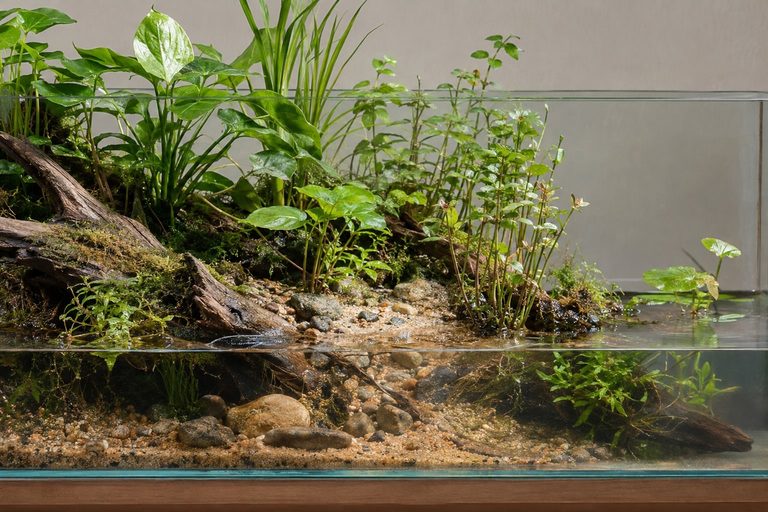
A riparium is a tank with a shoreline. What you actually need
Learn what a riparium is and what you need to build one: an open-top tank, planters, plants that tolerate wet roots, and light above the water.

Learn which Halloween ornaments are safe in a fish tank, why craft-store decor is risky, and a simple screening test before adding one.
Jack·5 min read·October 10, 2026
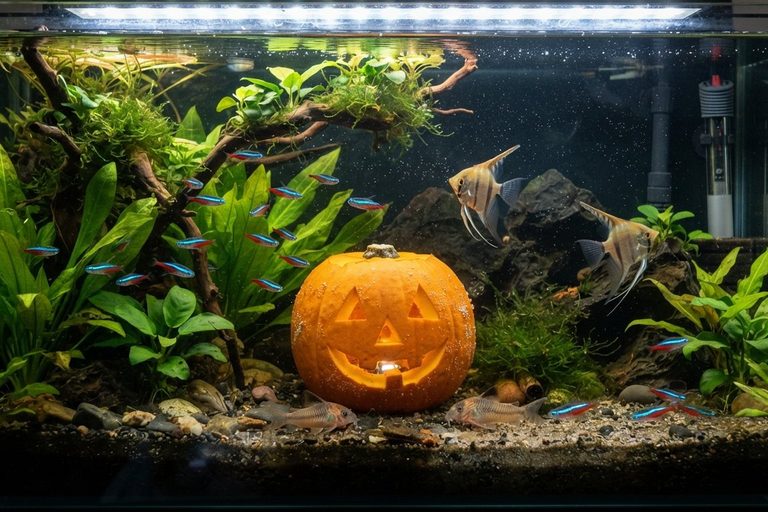
You spot a Halloween decoration that would fit your tank and wonder whether it can go underwater. Purpose-made Halloween ornaments sold in the aquarium aisle are intended for aquarium use; general seasonal decor from craft, home, or garden stores is not. The difference is the materials and finish, which can affect your water and the animals living in it.
Treat “aquarium-safe” and “non-toxic” as the seller’s claims, then check the piece and its instructions before you add it. That extra care is especially useful in river tanks with shrimp, crabs, or snails.
A Halloween ornament sold in the aquarium section is made for underwater use; a seasonal decoration from a craft, home, or garden store is not. Penn-Plax’s SpongeBob Halloween ornaments and PetSmart’s Thrills & Chills pumpkins are polyresin pieces sold for fresh or salt water. Their care instruction is to rinse them before use.
General Halloween decor may have unsealed paint, an unknown ceramic glaze, metal parts, foam, or cement. Those materials can shed into the water, introduce metals, or change water chemistry. A piece’s Halloween theme and sturdy appearance do not show that it can stay submerged safely.
Treat “aquarium-safe” and “non-toxic” as the seller’s own words. I couldn’t find a standard behind those claims, and a hobby writer reports Penn-Plax did not tell him what paint it uses. The label gives you a starting point, not details about the coating or its long-term performance underwater.
Pet-store Halloween ornaments are purpose-made polyresin decorations with instructions for aquarium use. Penn-Plax’s SpongeBob Halloween line includes Halloween-themed figures, with glow-in-the-dark or blue-light features on some pieces. PetSmart’s Thrills & Chills pumpkins are also polyresin; product sizes vary by design.
For both kinds, rinse with warm water before placing the ornament in the tank, and never use soap. PetSmart notes that its decor may discolor in salt water and advises you to choose an ornament sized appropriately for your fish. Check the dimensions and placement so the piece does not crowd the swimming space.
Small online sellers also market handmade aquarium decorations, including hand-painted haunted pumpkin houses made with “aquatic-safe resin” and “non-toxic paint.” Those descriptions remain the seller’s claims. Read the care directions and product details, and remember that a stated material does not identify the paint or coating used.
Craft-store and home-decor pieces carry more uncertainty because their materials and finishes were not chosen for aquarium use. Unsealed acrylic craft paint can soften and shed pigment underwater. Latex paint can bubble and peel; paint with anti-mold additives can harm the bacteria that keep your tank cycled.
Decorative ceramics deserve particular caution. The FDA notes that lead can be present in glazes and decals, and flags bright orange, red, and yellow decoration as a “problem type.” A “Not for Food Use” stamp is a red flag for a piece you are considering for the tank. Review the FDA’s guidance on lead-glazed traditional pottery and the federal regulation covering ceramicware not intended for food use.
Metal wires, bells, and joints can corrode and release metals into the water. Foam tombstones can break down or shed material. Cement and concrete garden pumpkins can push pH upward, changing the water conditions in your tank.
Crabs, shrimp, and snails make metal contamination a greater concern because copper is lethal to most invertebrates at very low levels. Copper that binds to a decoration can come back off when pH drops, and copper also affects the nitrifying bacteria in your tank.
Zinc from galvanized metal is toxic too. In a river tank with crabs or shrimp, a metal accent that a fish-only tank might tolerate becomes a bigger gamble. Skip decorations with exposed wires, bells, or metal joints when you cannot verify what they contain.
Use a simple screening routine to catch obvious risks before an ornament reaches your tank. It cannot confirm that an unknown coating is safe, so treat a questionable result as a reason to leave the piece out.
When a material, coating, or test result leaves you uncertain, leave the decoration out.
Rinse aquarium ornaments with plain warm water before use and never clean them with soap. Once a piece is in the tank, watch for cloudiness, odd smells, flaking, or unexplained fish stress. Remove the ornament and do a large water change if you notice any of those signs.
Paint can wear with time underwater, especially on inexpensive decorations. One aquarium-forum report described most of an ornament’s paint being gone after about three years underwater. Check the finish periodically, and take the piece out if it starts to shed.
Photo by suju-foto on Pixabay.
Learn what a riparium is and what you need to build one: an open-top tank, planters, plants that tolerate wet roots, and light above the water.
Discover why whole pumpkins damage aquarium water and how to safely offer small pieces as seasonal treats.
Which leaves are safe in a fish tank, how many to use, how to collect and prep oak leaves, and which trees to skip.