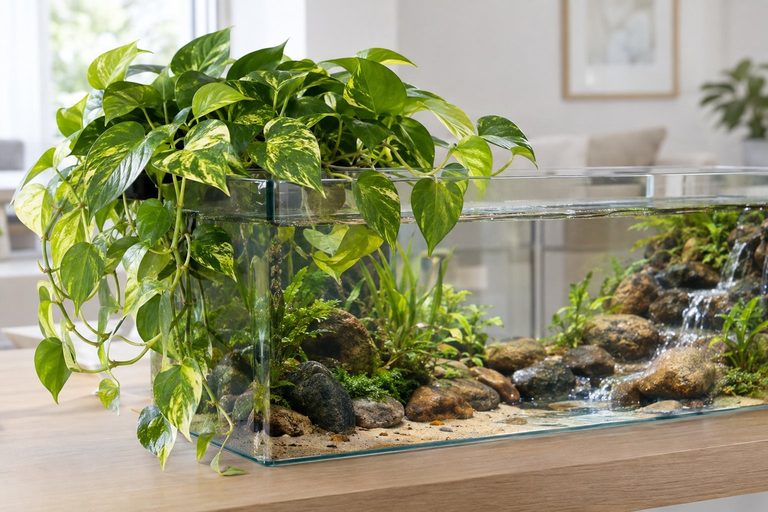
Pothos over the rim: the easiest river-tank plant
Pothos can soak up some nitrate and add a green bank to a river tank. Learn how to root it, place it safely, and keep it trimmed.
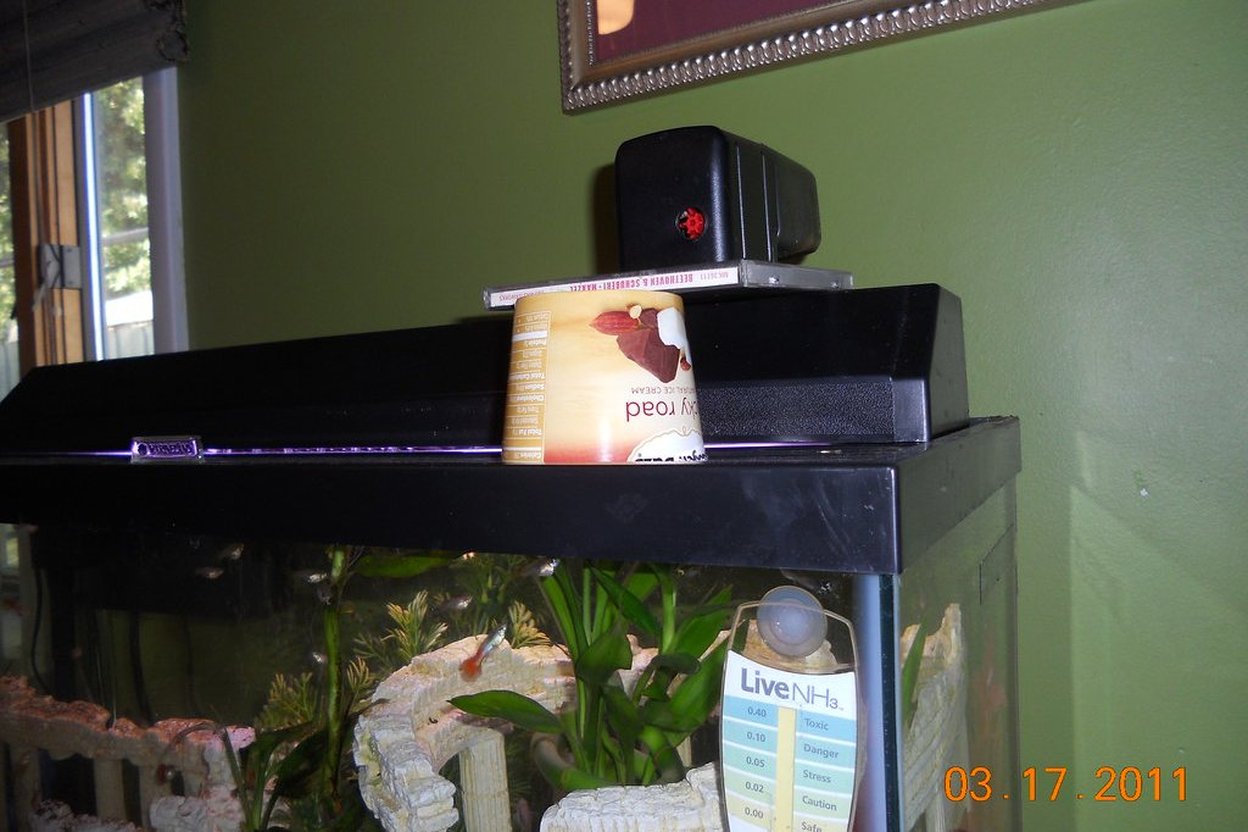
Skipping feeding for a four-day trip is usually safe for healthy adult fish. Learn when a feeder helps, what goes wrong, and how to prepare.
Jack·8 min read·October 22, 2026
You've got the bags half packed for a long weekend, maybe the drive to family for Thanksgiving, and you're looking at the tank and wondering whether the fish will be okay. For most river tanks, they will. If your fish are healthy adults and the tank is established, skip feeding for four days and leave the feeder in the box. A feeder makes sense for fry, sick fish, a few small or grazing species, and trips longer than about a week. The rest of this article explains why, and how to get the tank ready either way.
Skip feeding. Aquarium Co-Op says the easiest plan for a trip of a week or less is simply not to feed. Practical Fishkeeping says about five days without food "isn't going to hurt" a healthy community tank. Fishkeeper says weekend-length gaps can be left with no food at all.
There are exceptions. Get a feeder, or someone to feed, if you have:
Why not set up a feeder just in case? Because overfeeding is the bigger risk. A hungry fish has a dull few days and then eats when you get back. Uneaten food rots, and that rot turns into ammonia in a tank nobody is watching. Fishkeeper calls overfeeding the biggest threat to a tank left in a beginner's care. A fish vet goes further: she says most auto feeders "are almost ALWAYS overfeeding your fish, sending up your ammonia and potentially crashing your tank." A four-day fast is the safer bet.
The usual range for healthy adults is three days to a week. Build Your Aquarium gives that window, though it also advises against pushing to the limit. Aquarium Co-Op says healthy fish can go "a week or even more, depending on the species." Its own quarantine routine includes seven days with no food. Some large fish that eat now and then, such as shovelnose catfish, often go a week or two between meals, according to Practical Fishkeeping.
These numbers come from experienced keepers, not controlled studies, so treat them as rough guides. Four days sits safely inside the range for a typical adult community fish, and that's the point.
The exceptions matter, though:
Species vary, so check the needs of every fish in your tank, not just the majority.
If your tank includes one of those exceptions, or the trip runs long, a feeder can earn its spot. Here's what tends to go wrong.
They overfeed. The cheap feeders that dump food on a schedule are the ones the fish vet calls poor. The design she prefers lets you divide the food into specific meals ahead of time, so each drop is a set portion and not whatever falls through a slot.
Food clumps. The air just above a tank is humid. Practical Fishkeeping says that moisture can turn food into "a solid lump" within a couple of days. Then the feeder either drops nothing or drops the whole lump at once. Pellets and granules hold up to damp much better than flakes, so use pellets in a feeder. Build Your Aquarium also points out that some feeders handle only flakes or only pellets, so match the feeder to your food.
Nobody tested it. Aquarium Co-Op says to run the feeder "several days before your departure." Fishkeeper and Build Your Aquarium say the same: set it up a few days early, watch how much it drops, and adjust. If a feeding leaves food on the bottom, the setting is too high. Most people set it lower than they think they need to.
A river tank adds one more thing to check. With moving water and a cascade, food can get carried off or sucked into the intake before the fish find it. Mount the feeder where food lands in a calm spot, and watch where it goes during the trial.
Feeding blocks are hit or miss. Practical Fishkeeping says the white blocks can dissolve too fast in soft water and too slowly in very hard water. It suggests testing one weeks ahead, because a block that "burn[s] out in a couple of days" isn't doing its job. Build Your Aquarium's author doesn't use them at all. That source says their nutritional value drops over time, and fish that don't graze, like tetras, or fish that eat big meals, like cichlids, may not even recognize a block as food. Tetra markets its TetraVacation block as lasting up to 14 days without dissolving, but that claim comes from the product listing. For four days, a block mostly adds waste.
Sitters have their own problem: they love your fish too much. The fish vet and Fishkeeper both say sitters tend to pour in far too much food. Their fix is simple. Pre-measure each meal into small labelled containers, one per day, and hide the main food supply. For a four-day trip with healthy adults, the sitter might not need to feed at all. They can just look in, check that the pump is running and nothing has died, and leave.
This is where a river tank differs from a plain fish tank. In my old 55-gallon river tank, fish, little crabs, small turtles, fire-bellied frogs and even chameleons all lived in the same setup, and each had its own needs.
Healthy adult frogs are generally considered fine for a few days without food. Turtles and tadpoles are a different matter. Tadpoles eat more like fry than like adult frogs. Turtles are usually advised to have someone check on them during a trip, rather than being left the way you'd leave a tank of tetras. For crabs and for any reptile in the setup, there's no reliable fasting figure I can give you. Check the care sheet for your exact species before deciding.
Those animals also depend on heat lamps, basking spots and humidity, not just food. And a sitter who opens the lid needs to close it properly. One lesson I learned fast with that tank: replace the light kit with a full screen lid, because crabs and some reptiles will get out of almost anything.
Then go eat your own big meal. The fish will be ready for theirs when you get back.
Photo: March 15 -21, 2011 by osseous, BY 2.0.
Pothos can soak up some nitrate and add a green bank to a river tank. Learn how to root it, place it safely, and keep it trimmed.
Dried oak, beech, and Indian almond leaves can tint tank water tea-brown without dye. Learn which leaves to use, how many, and how long they last.
Expanding foam can work in a fish tank if you buy pond-and-stone foam, cure it fully, and soak it before adding fish. Here's how to do it safely.