A riparium is a tank with a shoreline. What you actually need
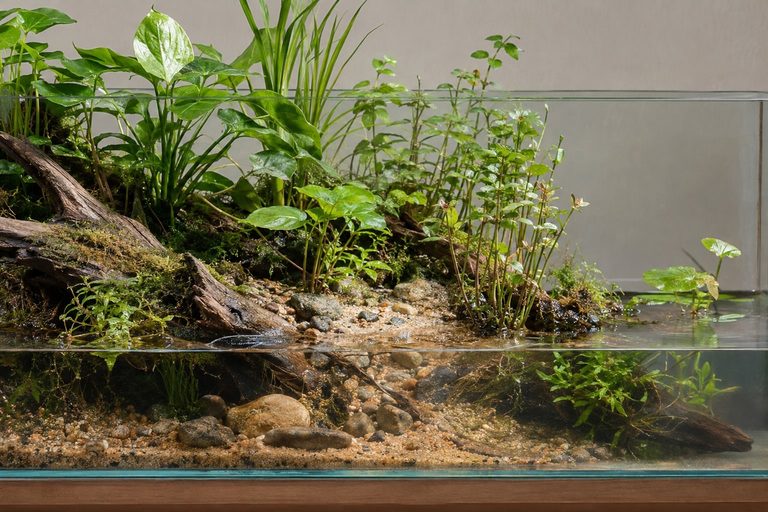
Learn what a riparium is and what you need to build one: an open-top tank, planters, plants that tolerate wet roots, and light above the water.
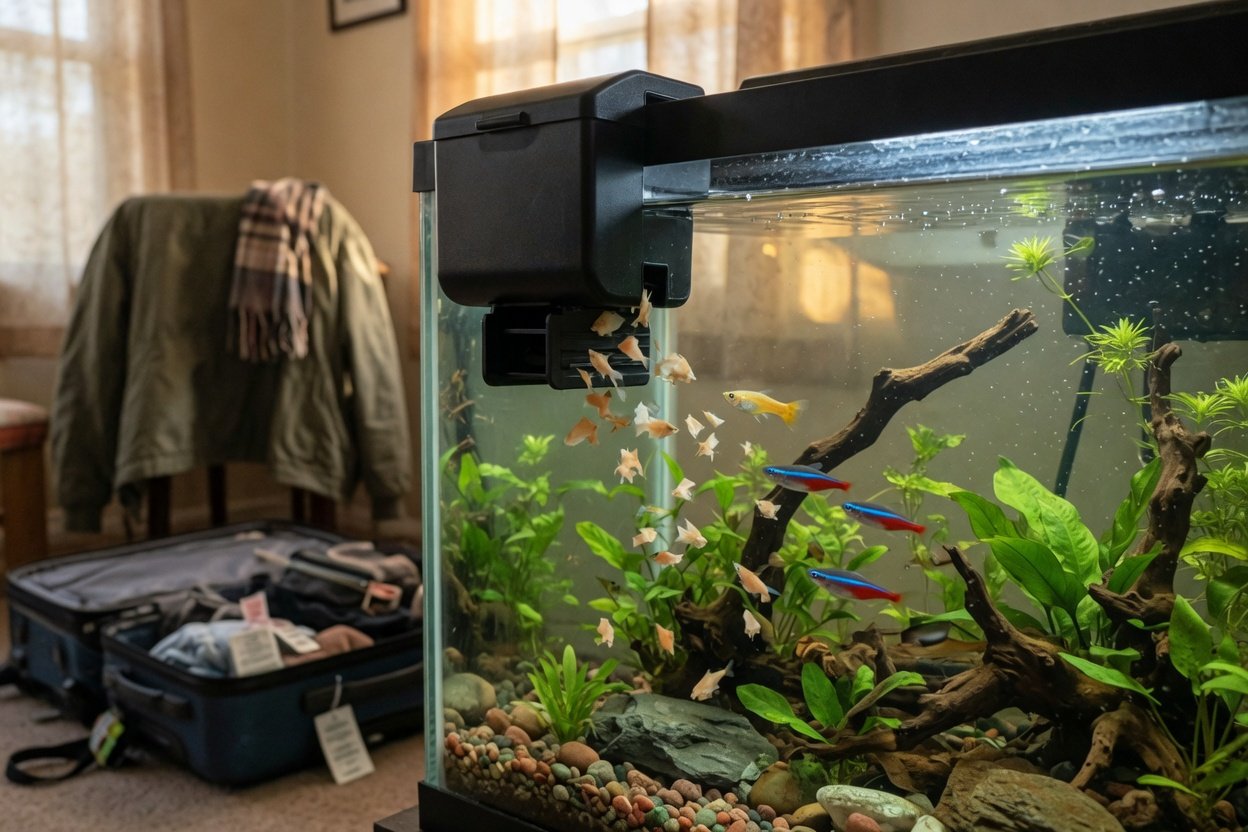
Going away for Thanksgiving? Most healthy adult fish are fine for a long weekend without food. How to prep the tank before you leave, when an automatic feeder makes sense, why to skip vacation blocks, and what to tell a sitter.
Jack·3 min read·October 5, 2026
Thanksgiving trips start in about seven weeks. If you'll be gone for a few days, the good news is that your fish will probably be fine. More fish die from too much food while their owners are away than from too little.
Most healthy, adult aquarium fish can go three to five days without eating, and many can go a week. Fish in cooler water burn energy more slowly and can go longer. Fish in warm water, and very small or young fish, need food sooner. In a planted tank with some algae, many fish snack between meals anyway.
For a long weekend: feed them well the day before you leave and don't feed them while you're gone.
For a week or more: plan on an automatic feeder or a sitter.
A good automatic feeder is the best option for trips over a week.
The plaster "vacation feeder" blocks that dissolve slowly are popular, but many keepers avoid them. They can cloud the water, change your water chemistry, and leave a lot of uneaten food rotting in the tank. Most fish are better off just fasting.
A storm and a power outage while you're away is the real danger, especially in late fall. A battery-powered air pump that kicks on when the power fails is cheap insurance, and our guide to keeping a tank warm in a power outage has more ideas.
Shrimp and snails graze and can usually go longer than fish. Crabs, turtles and frogs in a riparium vary. Musk turtles can go several days, while small frogs and fire-bellied toads do better with a sitter for longer trips.
Don't make up for lost meals. Feed a normal, small amount and check the water. If you find a dead fish, take it out, test the water, and do a water change. Our why did my fish die checklist can help figure out what happened.
Learn what a riparium is and what you need to build one: an open-top tank, planters, plants that tolerate wet roots, and light above the water.
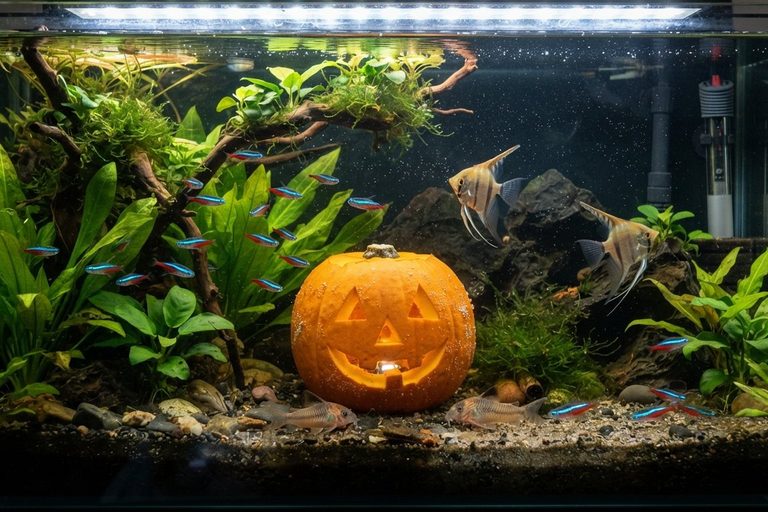
Learn which Halloween ornaments are safe in a fish tank, why craft-store decor is risky, and a simple screening test before adding one.
Discover why whole pumpkins damage aquarium water and how to safely offer small pieces as seasonal treats.