Do Aquarium Heaters Raise Your Electric Bill in Winter?
Yes, a tank heater adds to your power bill, usually a few dollars to about $15 a month. Learn how to calculate your own heater's winter cost.
Tank too cold in winter? Learn how to tell a too-small or misplaced heater from a drafty window, and fix it before the holidays.
Jack·8 min read·October 26, 2026
The first cold night of fall comes, the furnace hasn't caught up yet, and in the morning your thermometer reads a couple of degrees lower than it did all summer. The heater light is on and the water still won't warm up. A drafty window can be part of the problem, but it's usually not the main one. The real cause is a cold room, and a heater that's too small or in the wrong spot makes it worse. Here's how to tell which problem you have and how to fix it before the holidays.
Fishkeeping guides tell you to keep tanks away from windows. Practical Fishkeeping warns that open windows cause draughts, and draughts bring temperature changes. So a window can matter. In most cases, though, it matters because it makes the whole room colder. It isn't usually blowing cold air straight onto the glass.
Winter shows you whether your heater can keep up. Most tropical freshwater fish do best around 78–80 °F, and if your house is cooler than that, the heater is all that holds the water there. A heater that worked fine at 72 °F in September can fall behind when the room drops into the 60s, or lower at night.
To tell the causes apart, watch two things:
The gap between the water and the air is bigger than most people expect. JBL notes that in winter a room can fall to 12–14 °C (about 54–57 °F) at night, while tanks usually run at 23–28 °C (about 73–82 °F). A heater facing that gap may run nearly nonstop and still lose ground.
Where the tank sits changes the air around it. LiveAquaria says heating and air-conditioning vents and exterior entrances can drastically alter the temperature near a tank, and that stable water temperature is imperative to fish health. Practical Fishkeeping puts windows on the same list. Aquarium Co-Op adds sunny spots, basements and places near air conditioning. It also notes that on a rack, the lower tanks tend to run cooler.
Then there's the top of the tank. Open water gives off heat all the time. JBL says a cover cuts that surface heat loss and keeps the light's heat in the tank. The common heater-sizing rules assume you have a lid. Aquarium Co-Op's 5-watts-per-gallon figure is based on a covered tank. If your tank is open on top, a heater sized by the rule starts out behind.
JBL also says that once the room falls below about 20 °C (68 °F), cold air coming in from outside can overwhelm the heater. That's the point where a drafty window or a door that's opened all day starts to make a real difference.
If you can move the tank, the best spot is against an interior wall, away from windows, exterior doors and vents. Practical Fishkeeping also says to avoid kitchens, working garages and bathrooms, because their temperatures swing.
Most of us can't move a full tank on a whim, so test it first:
Remember that a window works both ways. Direct sun through the glass can push the temperature up instead of down. LiveAquaria says sunlight can raise water temperature and encourage algae, and Practical Fishkeeping warns about overheating and algae from window sun. A tank by a south-facing window can be warm on a bright afternoon and cold by dawn. That kind of daily swing is a good reason to move it.
Sizing rules differ a bit depending on who you ask:
Here's a 40-gallon tank as an example. Top Shelf Aquatics puts it at 150–200 watts. At Aquarium Co-Op's 5 watts per gallon, it needs 200 watts to hold a 10-degree rise with a lid. A 100-watt heater bought when the room was warmer will lose ground once winter nights arrive.
A colder room asks more of the heater. Aquarium Co-Op's cold-room example is a 65 °F house where the water needs to come up 15 degrees, and its advice there is to add a second heater. When a tank needs 200 watts, Co-Op recommends two 100-watt heaters over one 200-watt unit. Top Shelf Aquatics also suggests two smaller heaters for tanks over about 40–50 gallons. For my old 55-gallon long, a heater at each end is the setup I'd use.
Is one bigger heater ever the answer? JBL says a larger heater doesn't raise your yearly power use, because it reaches temperature faster and then shuts off. But a bigger heater is longer and often won't fit, and JBL calls it an emergency fix only. Two heaters spread the heat better, and if one fails you still have the other.
A heater only warms the water that touches it. Moving water is what spreads that heat through the tank. Aquarium Co-Op says to put the heater right next to the filter output or pump for maximum flow. It also says to mount a long tube heater at about a 45-degree angle.
In a river tank, that means putting the heater near the flow. My RTK-XL pumped water up on the left side, carried it across and cascaded it down through three pools. In a setup like that, the heater should sit where the pump pulls or pushes water, not tucked behind driftwood in a quiet corner.
The reason is the thermostat. JBL explains that when the water around a heater doesn't circulate, the heater warms its own pocket, decides the tank is up to temperature and shuts off, while the rest of the tank can be 3–4 °C (roughly 5–7 °F) colder. A thermometer next to the heater will show that same warm pocket and tell you everything's fine.
That's why the second thermometer goes at the far end, as far from the heater as you can get it. If it reads several degrees lower than the heater end, fix the placement or the flow before buying a bigger heater.
Before Thanksgiving brings the real cold, a few inexpensive changes help:
Then there's safety. Two smaller heaters also protect you when one fails. Aquarium Co-Op points out that one small heater that overheats is unlikely to overheat the whole tank on its own, and if one dies, the other keeps the water from crashing. If a heater ever sticks on and the temperature keeps climbing, unplug it right away and replace it. Replace one that can't hold temperature too, even after you've fixed placement, flow and the lid. A heater that's losing ground in October will likely do worse in January.
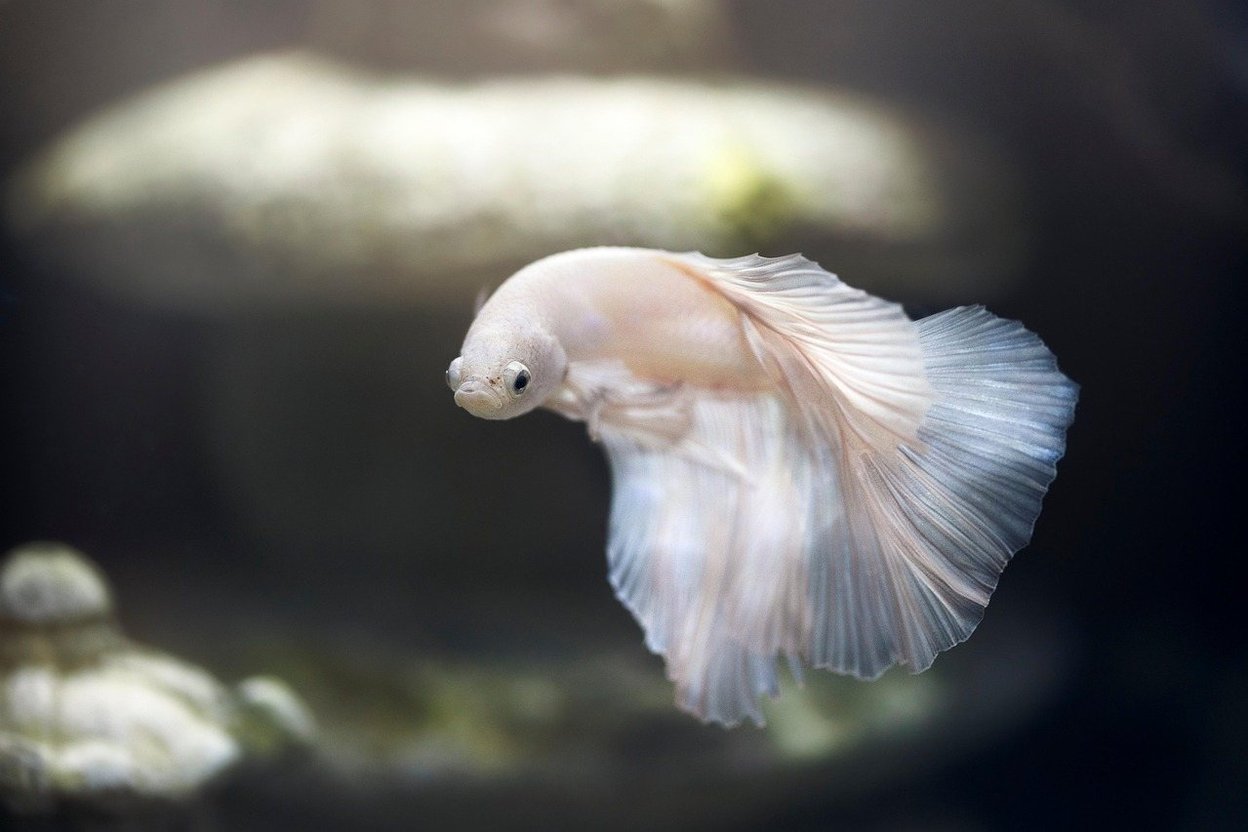
Photo by joshuaclifford123 on Pixabay.
Yes, a tank heater adds to your power bill, usually a few dollars to about $15 a month. Learn how to calculate your own heater's winter cost.
Vacation feeder blocks often hurt more than they help on a long weekend. Learn when fish can skip food and what to check at home.
Skipping feeding for a four-day trip is usually safe for healthy adult fish. Learn when a feeder helps, what goes wrong, and how to prepare.