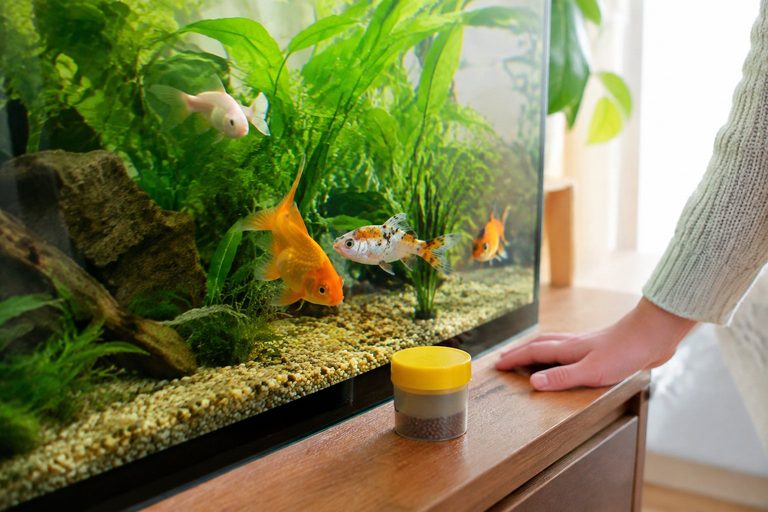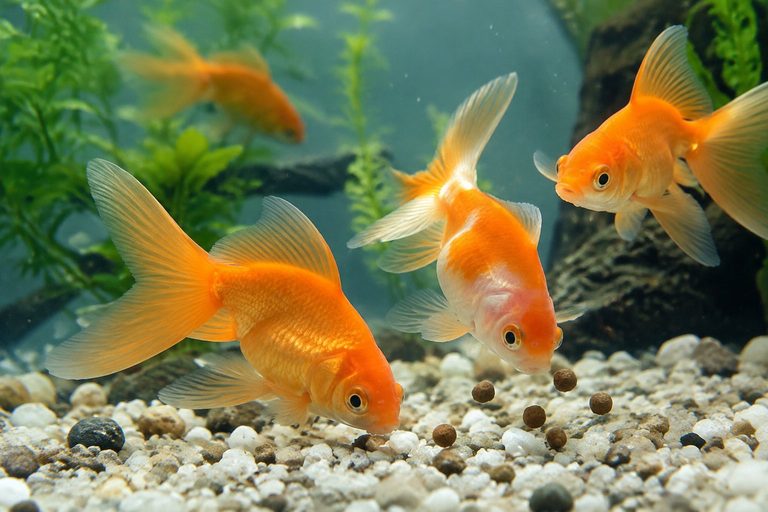
Do Fish Eat Less in Winter and Should You Feed Less
Fish eat less as water cools, but heated tropical tanks need no change. Get temperature-based feeding guidance for unheated tanks and ponds.
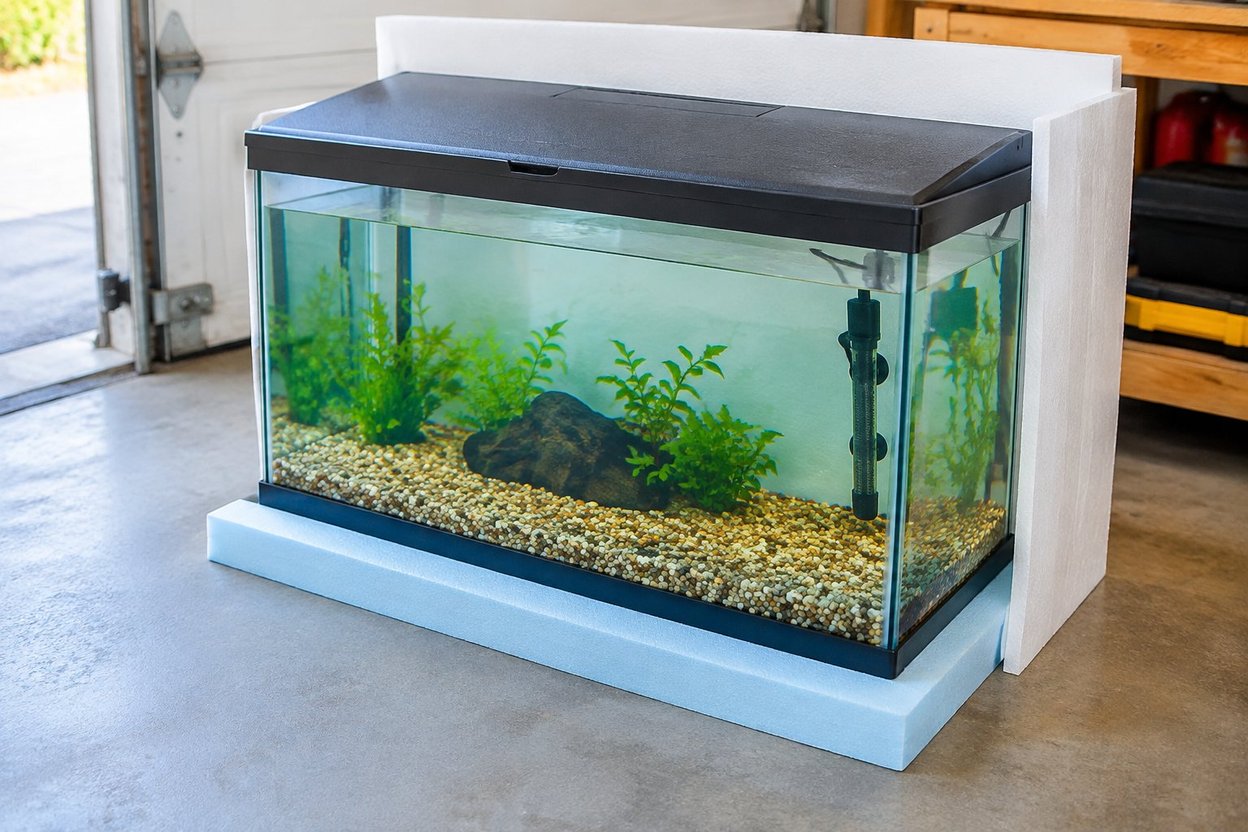
Keep a cold-room tank from freezing: size the heater for the room, add a lid and insulation, and plan for power cuts.
Jack·9 min read·November 22, 2026
It's mid-October. The first cold night comes, you go out to the garage or the back porch, and the glass on your tank feels cold when you touch it. You have to keep that water above freezing, and also warm enough and steady enough that the fish never get close to it. You need three things: a heater sized for the cold room rather than the house, a lid, and insulation on the sides and under the tank. You also need a plan for the night the power goes out.
Fresh water freezes at 32°F (0°C). For a tank to actually freeze, the room has to stay below that for a long time, so ice is rarely the first problem. The fish get into trouble well before that. Cold stress begins far above freezing. A heater can fail quietly. A winter power cut can take away heat and filtration at the same moment.
So think of a cold room as a heater-sizing problem. JBL, the German aquarium company, says room temperatures can fall to 12–14°C (about 54–57°F) at night, while most tank water needs to stay around 23–28°C (73–82°F). A heater sold for a tank in a warm living room may not be able to close that gap.
The setup that works has three parts:
Add a backup plan for outages and you've covered the real risks. The rest of this article goes through each part in order.
To know when to act, you need some numbers.
For tropical fish, the NC State College of Veterinary Medicine says most species can handle water in the low 60s°F, or even the high 50s, for several hours. Once the water reaches the mid-50s, you need to warm it. If you warm it by adding water, use dechlorinated water. NC State says changing about 10% of the water every hour or two shouldn't endanger the fish. Don't dump in a bucket of hot water all at once.
Steadiness matters as much as the number. JBL says fish and plants can handle winter water about 3°C (about 5°F) cooler than summer, but it shouldn't drop further than that. A tank that sits at 76°F and then slides to 70°F every night is getting a swing it shouldn't.
Goldfish are different, and the two kinds differ from each other:
The usual heater rule is about 1 watt per litre, which works out to roughly 4 watts per US gallon. JBL notes that the lighter 0.5 watts per litre you'll sometimes see only holds if the room stays above about 20°C (68°F). That's the catch with a garage or basement. The rule of thumb on the box assumes a heated house.
For my old 55-gallon long, the 4-watts-per-gallon rule comes out to about 220 watts. That's my own arithmetic from the rule, not a tested figure. In a room that drops into the 50s at night, I'd treat that as the minimum, not the target.
Placement matters as much as wattage. JBL says to put the heater where the water circulates, such as near the filter outlet or in the current from a powerhead. If it sits in a dead corner, the water around it reaches the set point and the heater shuts off, while the rest of the tank stays 3–4°C colder. In a river-style tank with real flow this is easy. In a still tank you may need to add movement.
Then think about how heaters fail. Bulk Reef Supply says the most common failure is a broken relay or switch, and that can leave the heater stuck on or stuck off. In a cold room, a heater stuck off is the one that hurts you.
That's why many hobbyists split the wattage across two smaller heaters instead of running one big one. Two 100-watt heaters on a 55 instead of one 200-watt, for example. If one dies, the other keeps the temperature from crashing. The tank will probably run cool until you replace the dead one, but cool is a long way from a crash. This is a common hobbyist preference, not a formal rule, but I think it's the right call for any tank in an unheated space.
A heater that's big enough still has to replace all the heat the tank loses, and insulation cuts that loss. JBL recommends three things:
On my river tank I swapped the light kit for a full screen lid, because crabs and some reptiles get out of almost anything. A screen keeps animals in, but it lets heat out. In a cold room you'd want a solid cover, or a glass panel over most of the screen, while still keeping escape artists in.
Don't seal the top completely. Keep some air exchange and keep electrical gear clear of any wrapping. Insulate the sides and the floor, cover the surface, and leave a gap.
One more thing: JBL says heating cables under the gravel don't meaningfully heat the water. Spend that money on a second heater.
Winter storms knock out power, and a cold room makes an outage dangerous fast. Put your kit together now, before Thanksgiving travel and the first big storm:
During the outage itself, don't feed. With the filter off, food turns into ammonia. NC State says to test the ammonia and change 10–30% of the water if it goes above 1 ppm. Use dechlorinated water close to the tank's temperature, and add any warm water gradually as described above.
The safest plan for a garage or porch tank is to stock fish that don't need much heat in the first place.
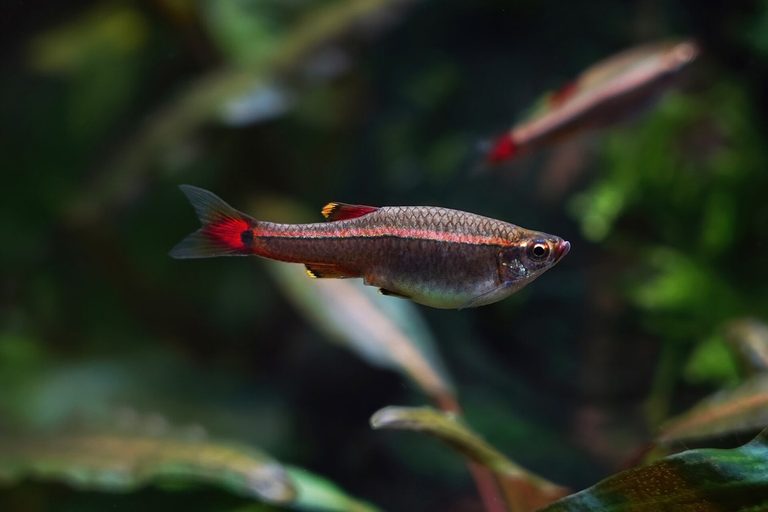
**White cloud mountain minnows** are the classic choice. Seriously Fish puts their comfort range at about 57–72°F and says keeping them warm all the time shortens their lives. One care guide says they only need extra heat if the room regularly drops below 55°F. Aquarium Co-Op forum members note that white clouds are more likely to overheat than to suffer from cold. Some pet-store listings give a warmer range, so ask where your fish came from. A small heater set low is still good insurance against a hard freeze.
Common goldfish handle cool water well, but they need room: a big tank, not a bowl. The cold changes how you feed them. Pond Informer says they need no food once the water falls to 39°F or below, and no more than twice a week at 40–50°F. Even with these hardy fish, I'd keep a heater in the tank set to keep it well above freezing. A tank isn't a pond.
Skip fancy goldfish in a room you can't heat. Orandas, bubble eyes and the other round-bodied types do poorly below about 59°F, so they belong in a heated tank inside the house.
The same goes for anything tropical, including the frogs, crabs and small reptiles that can share a river tank. Check each animal's temperature needs before it goes into a cold room. If the room can't keep them in range, with backup, they belong somewhere warmer.
Fish eat less as water cools, but heated tropical tanks need no change. Get temperature-based feeding guidance for unheated tanks and ponds.
Keep holiday guests from overfeeding your fish with one designated feeder, pre-measured portions, a written card, and a calm plan if extra food gets in.
Room sprays and artificial snow can harm fish. Learn what's risky, how to decorate safely, what warning signs to watch for, and what to do after a spill.