How to Keep Aquarium Water From Freezing in an Unheated Room
Keep a cold-room tank from freezing: size the heater for the room, add a lid and insulation, and plan for power cuts.
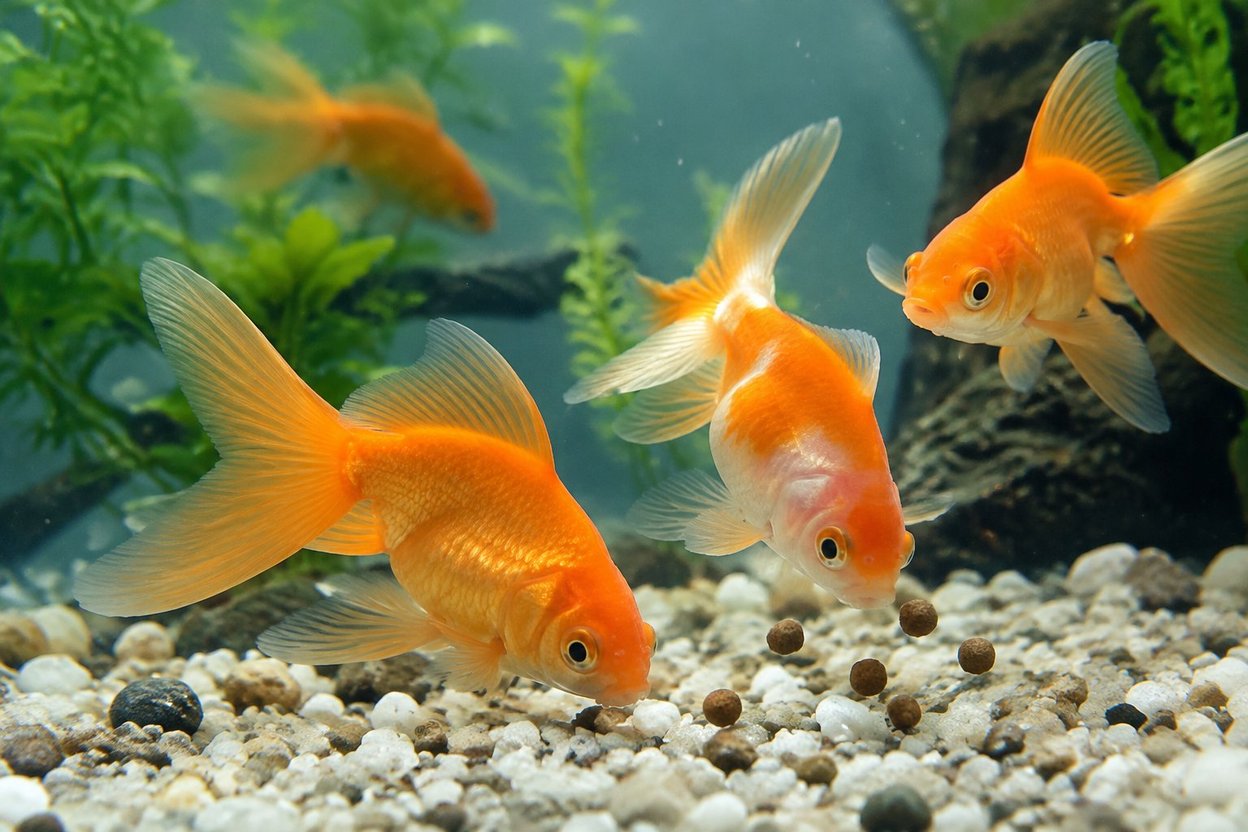
Fish eat less as water cools, but heated tropical tanks need no change. Get temperature-based feeding guidance for unheated tanks and ponds.
Jack·9 min read·November 21, 2026
It's mid-October, the house is cooler in the mornings, and you drop in the usual pinch of food. Half of it sinks to the gravel without anyone going after it. Yes, fish eat less when the water gets colder. Whether you should feed less depends on the tank. A cool or unheated tank needs less food, and eventually it needs none. A heated tropical tank that stays at its normal temperature shouldn't need much change. If it does, that's a warning sign. Here's how to tell which tank you have and how much to cut.
Fish are cold-blooded, so when the water cools, everything inside them slows down, including their appetite and digestion. A goldfish in cool water really does want less food than the same fish in summer. Its body isn't using as much energy.
That doesn't mean every tank needs a winter diet. What matters is the water temperature, not the date on the calendar:
One rule works in every tank, all year: feed only what gets eaten. If food is left over, you fed too much, whatever the season. In winter, leftovers do more damage because they sit longer and break down into ammonia in water where the fish are already sluggish.
Because fish are cold-blooded, their metabolism follows the water temperature. Cooler water slows their whole system, including how fast they can process food.
Researchers at the University of Hong Kong showed this in goldfish in a study published in Frontiers in Endocrinology in 2019. As the water cooled from about 28°C (82°F), their summer setting, to about 15°C (59°F), their winter setting, the goldfish foraged less and ate less. The change happened fast and went both ways. Moving goldfish to 15°C for just 24 hours reduced feeding, and warming cold-adapted fish back to 28°C brought their appetite back. This was a lab study on one species, and the authors say the effect varies from species to species. Still, it backs up what goldfish keepers already see: by the high 50s°F, a goldfish is eating noticeably less.
The bigger problem is digestion. Fish in cool water may still eat, but they can't digest the food properly. Protein-rich food that sits half-digested in a cold gut causes extra waste, raises ammonia and can lead to constipation.
There's also a catch in how fish are built. Fish don't have a true stomach, so many species keep eating after they're full. A fish that takes food is not proof that it needs food. You have to set the limit.
If your tetras, rasboras or plecos live in a heated tank, winter shouldn't change much. A heater that holds a steady temperature keeps the fish's metabolism steady, and its appetite should stay the same. I don't know of any good temperature rule for when tropical fish should eat less, because a tropical tank shouldn't be getting cold in the first place.
In a heated tank, the winter risk is the heater, not the season. A cold room makes the heater work harder. An old heater can fail or drift without you noticing, and a tank next to a drafty window or an outside wall can swing in temperature between day and night. Sudden swings stress fish.
So if your tropical fish suddenly lose interest in food this fall, don't cut back on feeding to match. Check the thermometer first. Less appetite is often the first sign that the water has dropped. Then:
If the temperature is right and the fish still aren't eating, look at water quality and health next. Winter doesn't explain it.
This is where feeding less really matters. Goldfish tanks, cool-room tanks, native-fish setups and outdoor ponds all cool with the season, and feeding has to follow the water down.
Most of the published schedules come from pond keepers, and they line up fairly well:
A goldfish tank in a cool room probably won't get that cold indoors, but the same steps apply to whatever temperature it reaches.
Native-fish keepers have a related experience. Many native species seem to like cool winter water. On fishkeeping forums, one keeper describes running a river tank in the low 50s°F in winter and up to about 75°F in summer. Others keep darters and shiners under about 70°F, and sunfish handle 78–80°F. These are hobbyist reports, not research, but they fit the idea that a native river tank can follow the seasons if you feed to match.
When I had my River Tank setup in a 55-gallon long, the fish shared the water with crabs, frogs and small turtles. If you run a mixed tank like that, remember this article is about fish. Frogs and reptiles have their own needs, so check each species before you change anything for the whole tank.
You don't need a chart for every degree. A few habits do most of the work:
Keep a cold-room tank from freezing: size the heater for the room, add a lid and insulation, and plan for power cuts.
Keep holiday guests from overfeeding your fish with one designated feeder, pre-measured portions, a written card, and a calm plan if extra food gets in.
Room sprays and artificial snow can harm fish. Learn what's risky, how to decorate safely, what warning signs to watch for, and what to do after a spill.