Party Noise and Your Aquarium: What Actually Puts Fish at Risk
Will party music stress your fish? Here's what the research shows, what actually causes party-day losses, and a five-minute checklist to prevent them.
Find out whether your pond fish can stay outside or need to come indoors in November, and how to set up a cold tank and move them safely.
Jack·7 min read·November 2, 2026
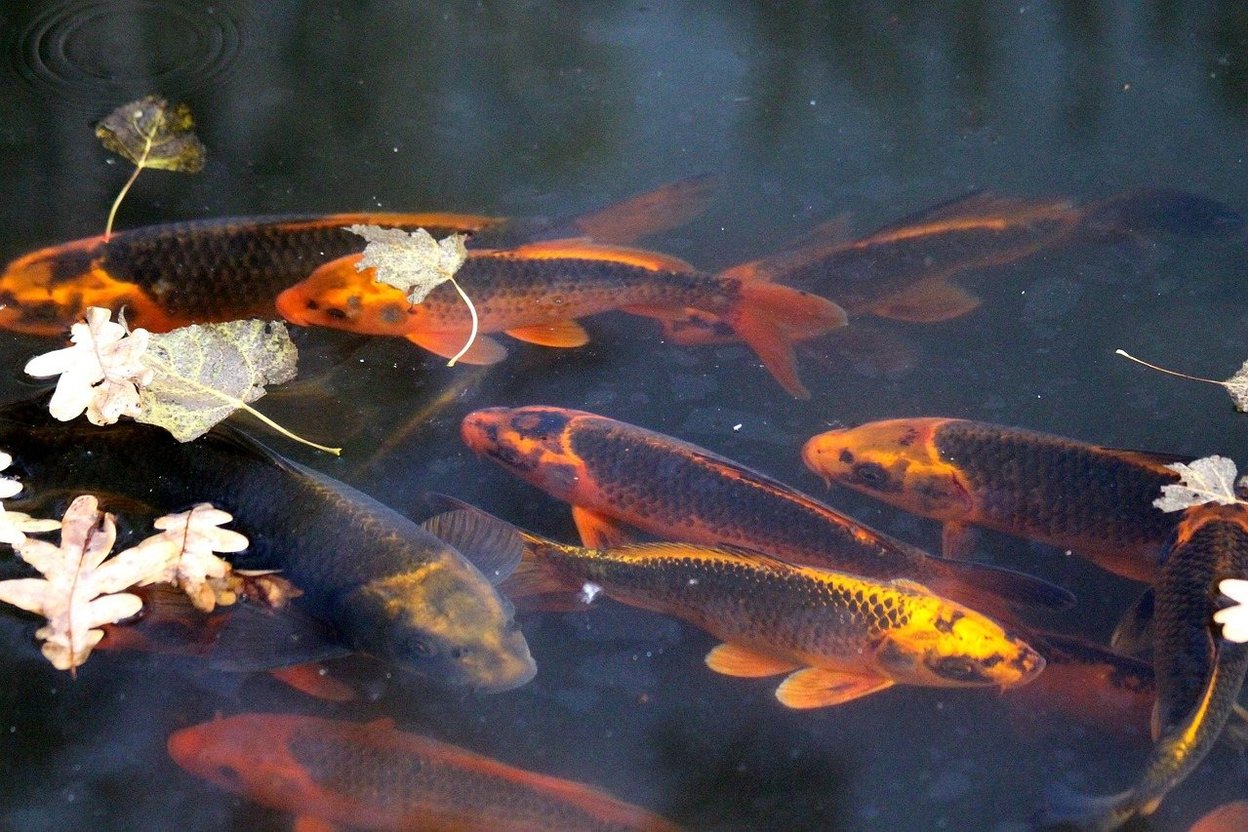
The leaves are down, the morning water in the pond is cold enough to make your hand ache, and the goldfish have gone slow and quiet near the bottom. You start wondering whether they'll be all right out there or whether they should spend the winter in the basement. For hardy goldfish and koi in a pond that suits them, the answer is usually that they can stay out. If your pond can't keep them safe, or the fish are fancy or tropical, November is late but still workable for bringing them in. Here's how to do it without losing any.
Often you don't. Hardy goldfish and koi are built for cold water. At about 40–50°F, koi stop eating and settle near the bottom in a dormant state, with a body temperature that matches the water around them. A pond that's deep enough not to freeze solid, with an opening in the ice for gas exchange, gets a lot of hardy fish through winter. Outdoor overwintering doesn't always go to plan, though. How it turns out changes from year to year with how harsh the winter is, how much leaf litter and waste has built up, and how healthy the fish were going in.
Bring them in if:
Hardy goldfish can come in any time before the pond freezes over for good, so November isn't too late for them.
If you've ended up with more fish than you can keep inside, don't release the extras into a creek or lake. Michigan State University Extension says never to do that. Take them back to the store, trade them with another keeper, or donate them to a school, a public aquarium or an aquatic business.
Bigger is better, and it's cheaper than you'd guess. Pond Trade Magazine recommends stock tanks of at least 100 gallons. It treats a 50-gallon container as tight even for five 4–5 inch goldfish, and only works if you change water often. A 25-gallon tank is too small for full-size goldfish. A more recent Pond Trade article gives a rule of thumb of about 30–40 gallons for each 4–6 inch fish.
The cheap containers are the big ones. Stock tanks run from 150 to 750 gallons, and an IBC tote usually holds 275. Either one costs about $150–$275, while a 240-gallon glass aquarium runs upwards of $3,000. Unless you want a winter display, the tote wins.
Set it up like this:
Keep the water cold. A garage or basement that holds around 40–50°F makes everything easier. Cold systems can hold more fish, and a system running near 70°F needs more filtration. A warm living room means a faster metabolism, more waste and more work for you. Heating a large tank isn't cheap either. One koi keeper on a forum reported spending about $1,600 every two months on several heaters before giving up on heat altogether.
The filter needs a working colony of bacteria before any fish go in. Cycling first, using a dechlorinator and testing the water are all on Pond Trade's list of basics. Experienced koi keepers allow four weeks or more for cycling. One suggests feeding the empty system ammonium chloride at about 1 teaspoon per 400 gallons while the bacteria get established. With Thanksgiving falling on November 26 this year, a tank set up in mid-October would be about ready around then, so start now. Keep testing until ammonia and nitrite both read zero.
On moving day, bring the pond with you. Moving 20–50% of the outdoor pond water into the indoor tank cuts down on acclimation stress.
Then let the temperatures meet slowly. Pond Trade's method is:
If the pond is at 45°F and the basement tank is at 60°F, stretch those waits from minutes to hours. Cover the bucket the whole time. Stressed koi jump, and the lid matters most during the move.
Keep hardy fish as cool as you can without letting the water freeze, ideally 40–50°F. That cold is what makes indoor overwintering easy.
Feeding. At 50°F or below, they don't need food. Their metabolism has slowed so far that food mostly just rots. Outdoors, pond keepers stop feeding completely once the water reaches 55°F and switch to wheat-germ food in early fall as the water cools. Wheat-germ food is the usual pick for the cool range between about 40 and 50°F, if the fish are moving around and you feed at all. Above 50°F, feed regularly but take out uneaten food right away. Pond Trade calls overfeeding "a fish killer," and indoors that's even more true than in the pond.
Water changes. Change at least 20% of the volume each time, and always dechlorinate the new water.
Testing. Test ammonia, nitrite and nitrate. Any elevated ammonia or nitrite is deadly, so act right away with a water change and less food. Nitrate above about 80–100 ppm may not kill koi or goldfish, but it means a water change is due.
Most indoor overwintering losses come from a short list of mistakes:
In spring, reverse the move. Wait until the pond is thawed and its temperature is close to the tank's, then use the same slow, stepped acclimation to get the fish back outside.
The lid lesson is one I learned with my River Tank. I swapped the light kit for a full screen lid because crabs and some reptiles get out of almost anything. Koi are no different. A cold, well-filtered tank with a heavy lid will get them through until spring.
Photo by zoosnow on Pixabay.
Will party music stress your fish? Here's what the research shows, what actually causes party-day losses, and a five-minute checklist to prevent them.
Learn how to dechlorinate tap water for your aquarium, check whether your city uses chloramine, and dose conditioner correctly for water changes.
Brown diatom film on a new tank's glass and stones is normal. Learn what causes it, how to wipe it off, and the fixes if it won't fade.