The $10 Vampire Crab: A Bad Halloween Impulse Buy
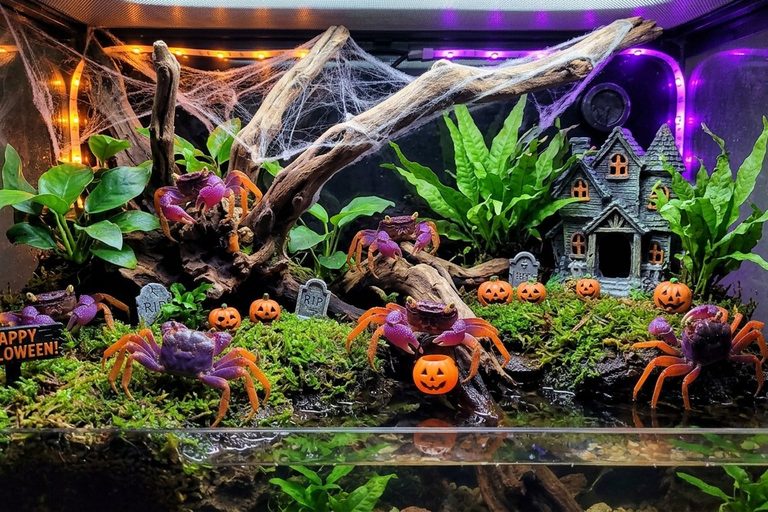
Vampire crabs make tempting Halloween impulse buys at $10, but they need a land-heavy paludarium to survive—not a traditional fish tank.
Can a crab get trapped in a pumpkin-house ornament? See which openings are risky, how to pick or seal a safe piece, and how to free a stuck crab.
Jack·5 min read·October 13, 2026
You may add a hollow pumpkin house to give your crab a place to hide, then wonder whether its openings are safe. Yes, a crab can get stuck in a pumpkin-house ornament if an opening or hollow space traps it. Reports involve similar aquarium decor and hardware, so a careful fit check is worth doing before the ornament goes into your tank.
The risk depends on the crab’s size, the ornament’s openings, and whether the crab is molting. You can reduce the danger by choosing a piece with roomy openings, sealing small holes, and checking the decor during routine feeding.
Yes, crabs have been documented stuck in ornaments and tank hardware. One hermit crab died inside a hollow ornament; another crab caught a leg in a small hole in a plastic cave; and a red claw crab became wedged in a filter outlet.
A long-time keeper offers an important counterpoint: crabs that look stuck often free themselves, and pulling can rip off their legs. That makes careful observation and gentle handling essential if you find a crab in a tight spot.
There is no documented report of a crab stuck in a pumpkin ornament specifically. The evidence comes from similar hollow ornaments and hardware, including cases involving hermit crabs, which are land crabs, and fish. Those examples establish a plausible risk for aquarium decor, but they do not show that pumpkin houses have trapped crabs.
The danger depends on the crab’s size and the openings in the ornament. Red claw crabs are semi-terrestrial brackish-water crabs that need both land and slightly salty water. They reach about 2 inches across the shell and can climb tubing and cords, so a secure tank setup matters as well.
Red claws are widely sold as freshwater crabs, but they need brackish conditions. If you are building a true freshwater river tank, a Thai micro crab is a more fitting example.
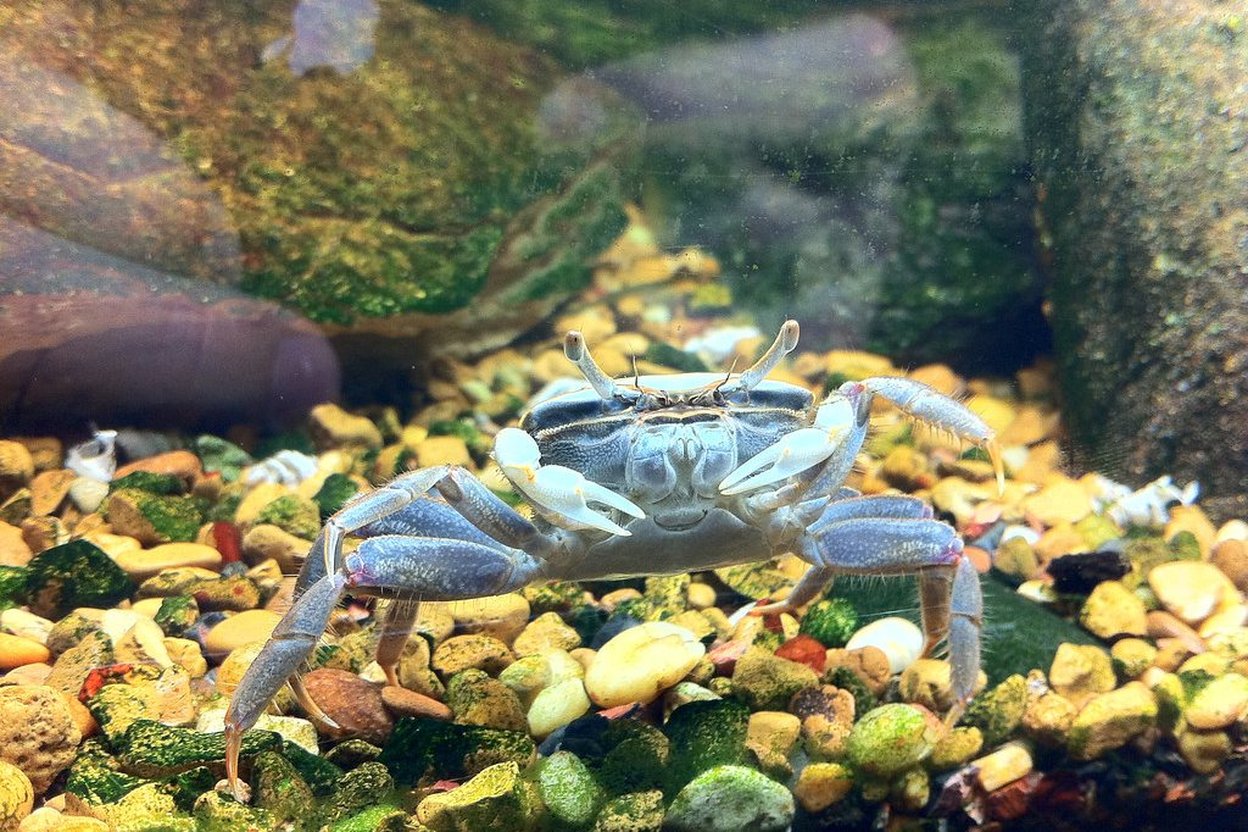
Thai micro crabs are fully aquatic freshwater crabs. Their shells are about 1 centimeter wide, their leg span is about 1 inch, and they spend much of the day in nooks and decorations. Their legs come off easily, so tight openings pose a handling risk even for these small crabs.
Measure the animal against the ornament’s smallest opening, including holes in the base. A gap that seems spacious for a Thai micro crab may still catch a leg, while a red claw crab’s larger shell changes which openings it can enter.
A pumpkin house can trap a crab when its small openings lead into a hollow space or a narrow inner chamber. These ornaments are sold as hideouts for fish and shrimp, and their design may include small windows, an open base, drain holes, or chambers inside.
Fish entrapment in hollow decor is common enough that aquarium guides advise plugging every opening smaller than your largest animal. Crabs also use caves to molt. During the days when a crab’s new shell is soft, a narrow opening or inner chamber can leave it vulnerable.
A blue crab grows about one-third larger after a molt by pumping in water. That biology gives you a reason to be cautious about tight spaces, though it is not a documented aquarium case of a crab outgrowing an ornament opening.
Hollow spaces also collect rotting food and waste, so an ornament can create both a trapping hazard and a hidden maintenance problem. PetSmart’s pumpkin ornament listing tells buyers to match the ornament’s size to their animals; check the size and openings before placing one in your tank.
Choose an ornament with openings clearly larger than your biggest crab, or with no openings that lead into a hollow space. Small windows, drain holes, and gaps in the base all count.
You can seal holes and the base with aquarium silicone, epoxy putty, or filter sponge. Pebbles or a shell can also fill an opening or inner chamber. Keep the material secure so it does not leave a new narrow gap for a leg or shell to catch in.
Leave about 2 inches between the ornament and the glass. That spacing helps prevent a wedge-shaped gap from forming between the decor and the tank wall. After setup, check under the base to make sure the crab cannot enter a tight space there.
First, check whether your crab is molting or hiding before you try to move it. A crab that is still and tucked away may be vulnerable, so avoid pulling on its body or legs.
If it is trapped, lift the ornament and crab together into a container of tank water. Guide the crab toward an opening with a soft tool, using gentle pressure around the ornament rather than tugging the animal. If the crab cannot be freed that way, cut or crack the ornament away from it. A clamp gives you better control on ceramic than pliers.
A missing leg is not the end of the crab’s recovery: lost limbs regrow over the next molts. Thai micro crabs need especially gentle handling because their legs come off easily. Keep the crab in tank water while you work and avoid direct pressure on its legs.
Count your crabs at feeding time. If one misses two feedings, check inside and under the ornaments.
Leave the tank undisturbed while a crab is molting. Take hollow pieces out occasionally and clean inside them so food and waste do not build up in hidden chambers.
Vampire crabs make tempting Halloween impulse buys at $10, but they need a land-heavy paludarium to survive—not a traditional fish tank.
Tell snail eggs apart by species (nerite dots, mystery snail clutches, ramshorn and bladder jelly) and decide whether to scrape, keep, or hatch them.
CPO dwarf crayfish care: size, temperature, safe tank mates, molting, breeding, how much flow they like, and the states where you can't buy them.