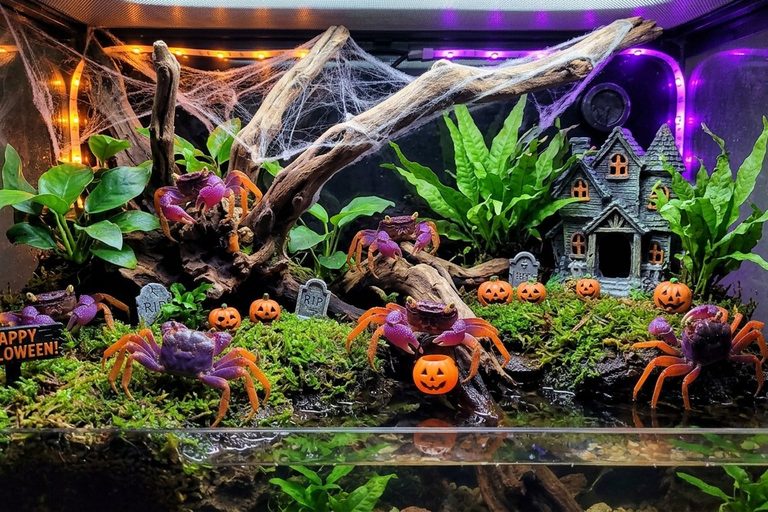
Can a crab get stuck in a pumpkin-house ornament?
Can a crab get trapped in a pumpkin-house ornament? See which openings are risky, how to pick or seal a safe piece, and how to free a stuck crab.
Tell snail eggs apart by species (nerite dots, mystery snail clutches, ramshorn and bladder jelly) and decide whether to scrape, keep, or hatch them.
Jack·8 min read·October 6, 2026
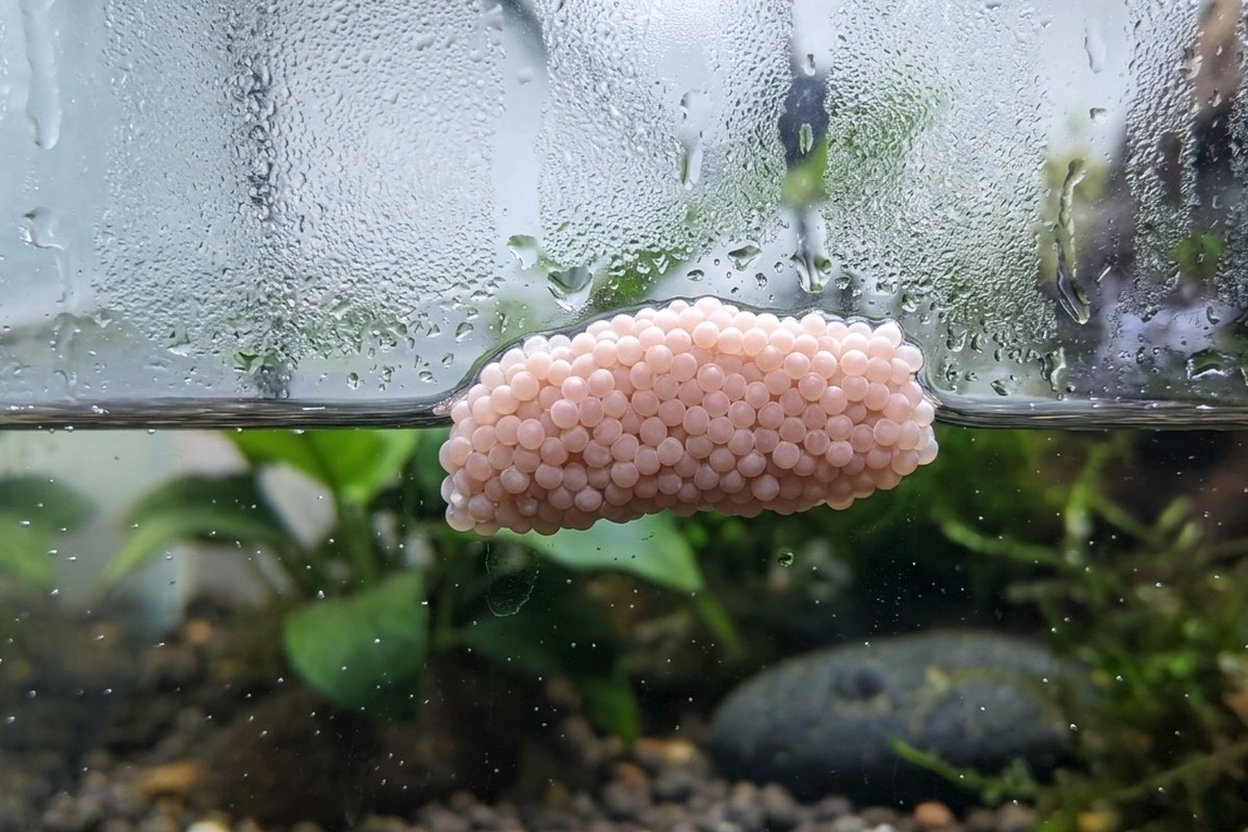
You can tell most snail eggs apart by where they are and how they feel. Hard white dots stuck all over rock and wood are nerite eggs, and they won't hatch in fresh water. A raspberry-shaped pink or cream cluster above the waterline is a mystery snail clutch, and it holds 50 to 200 babies. Clear, soft jelly blobs on glass or leaves come from ramshorn or bladder snails, and they hatch in one to three weeks. Nerite eggs only look bad, so leave them or scrape them. Pull jelly blobs if you don't want more snails. With a mystery clutch, you choose: hatch it or freeze it.
Below is how to tell each one apart, how long you have before hatching, and how to get rid of eggs you don't want.
Nerite eggs are tiny hard capsules about the size and shape of a sesame seed. They're white to pale yellow and laid one at a time, so you get a scatter of dots on driftwood, rocks, the glass, and sometimes on the shells of other snails. One snail can leave dozens over a few weeks.
They will not turn into baby snails in a freshwater tank. Nerite larvae hatch as free-swimming young that need brackish water to develop, around 5 to 10 parts per thousand salt. If they hatch in fresh water at all, the young die off quickly. So a nerite can't overrun your tank no matter how many eggs she lays.
The only problem is how they look. They're glued on hard and can stay there for months.
If the dots bother you, keeping fewer nerites helps. More on that in our nerite snail care guide.
Mystery snails (Pomacea diffusa) climb out of the water to lay. The clutch looks like a little bunch of grapes or a raspberry stuck to the glass, the underside of the lid, or a riparium ledge or planter just above the surface. It's soft when fresh and hardens within a day or so. A young female may lay 50 to 100 eggs. A big mature female can lay 200 or more.
Unlike ramshorns and bladder snails, mystery snails come in males and females. Having only one snail doesn't make you safe, though. A female can store sperm for weeks after mating, so a snail that lived with others at the store can still lay fertile clutches in your tank.
What happens next:
In the fall, check the lid. Once the heat comes on, indoor air gets drier, and a clutch under a loose or open lid can dry out before it hatches. In a cool unheated room, expect hatching toward the slow end of the range.
If you want babies: leave the clutch alone. Don't mist it directly, because soaking it can kill it. Hatchlings drop into the water by themselves. Then you need enough food for maybe a hundred small grazers: blanched vegetables, algae wafers, and biofilm. Line up homes for them before they hatch. Most pet stores won't take a hundred snails off your hands.
If you don't want babies: wait until the clutch has hardened, then push it off the glass with your thumb or a card. It usually comes off in one piece. Seal it in a bag, freeze it for a day to three days, and put it in the trash. Freezing stops development early. Don't just knock it into the water and walk away, because snails or fish may break it apart and leave rotting eggs behind.
For the adults themselves, see mystery snail care in a river tank.
Mystery snails belong to the apple snail genus, Pomacea. Some of their close relatives are invasive pests in the U.S. The channeled apple snail and the island apple snail lay bright, hot-pink egg masses above the waterline. Those species damage rice, crawfish ponds and wetlands.
Under USDA rules, apple snails can't be imported or shipped across state lines without a permit. Pomacea diffusa, the ordinary mystery snail, is the one exception. If a snail you got from a pond, a trade, or an unlabeled tank lays big vivid pink clutches, find out what it is before you raise any babies. Some states have their own rules on top of the federal ones, so check your state's rules.
The bright-pink eggs of the channeled apple snail carry a neurotoxin that can irritate skin and eyes. Extension services advise wearing gloves to handle them. You'd want gloves anyway when scraping the pink clutch of any snail you can't identify.
These are the eggs that cause snail "explosions." Both species can fertilize themselves, so one snail that rode in on a plant can start a colony.
Telling the two apart by their eggs alone is hard, and you handle them the same way, so it doesn't much matter which you have. Look at the adults. Ramshorns have a flat, coiled shell like a cinnamon roll. Bladder snails have a small teardrop shell that coils to the left.
To cut the numbers:
These snails aren't all bad. In small numbers they eat leftover food and soft algae. Read ramshorn snails: pest or helper before you wage war on them.
If you keep assassins, you may see one egg at a time inside a clear or slightly green capsule that's roughly square. They're laid on rock, wood or glass. These hatch slowly, in about 6 to 8 weeks, and the babies hide in the sand for a while. Assassins also have males and females, and only a few eggs show up at a time. Most keepers leave them alone.
Jelly eggs often ride in on store-bought plants. Before planting:
Don't dump unwanted snails, eggs, or tank water with eggs in it into a pond, ditch or storm drain. Several apple snail species got loose in the U.S. this way and now cost farmers and wildlife agencies real money. Freeze the snails and eggs, then put them in the trash.
Can a crab get trapped in a pumpkin-house ornament? See which openings are risky, how to pick or seal a safe piece, and how to free a stuck crab.
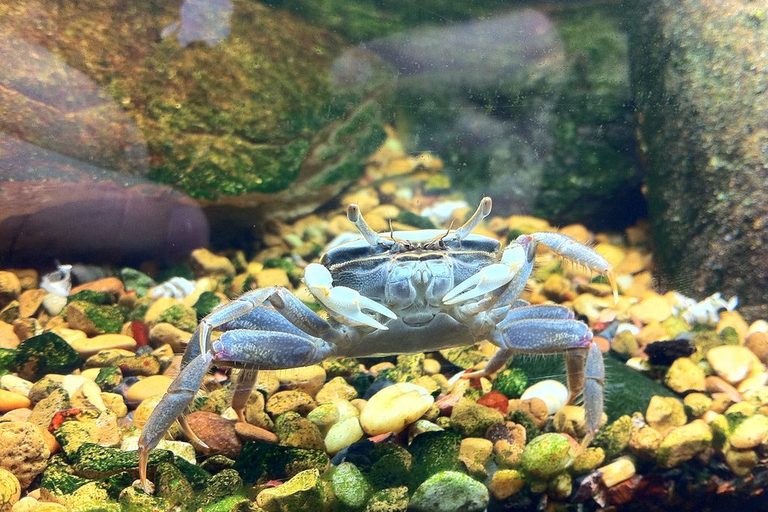
Vampire crabs make tempting Halloween impulse buys at $10, but they need a land-heavy paludarium to survive—not a traditional fish tank.
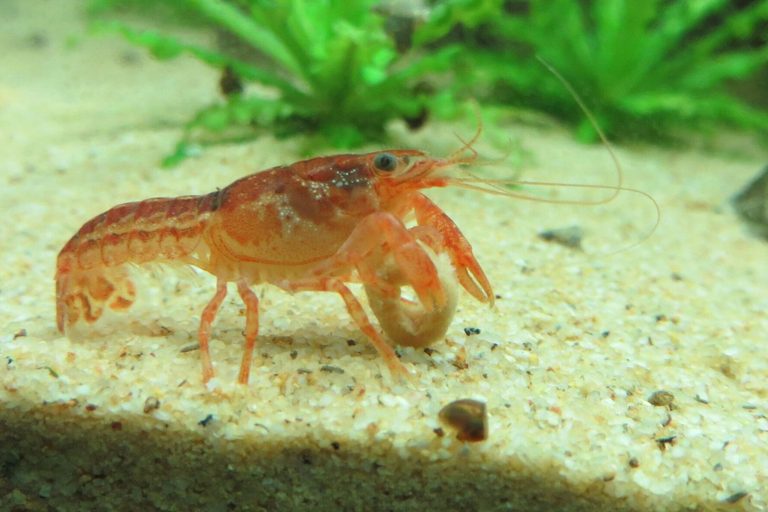
CPO dwarf crayfish care: size, temperature, safe tank mates, molting, breeding, how much flow they like, and the states where you can't buy them.