Are vacation feeder blocks safe for a long weekend?
Vacation feeder blocks often hurt more than they help on a long weekend. Learn when fish can skip food and what to check at home.
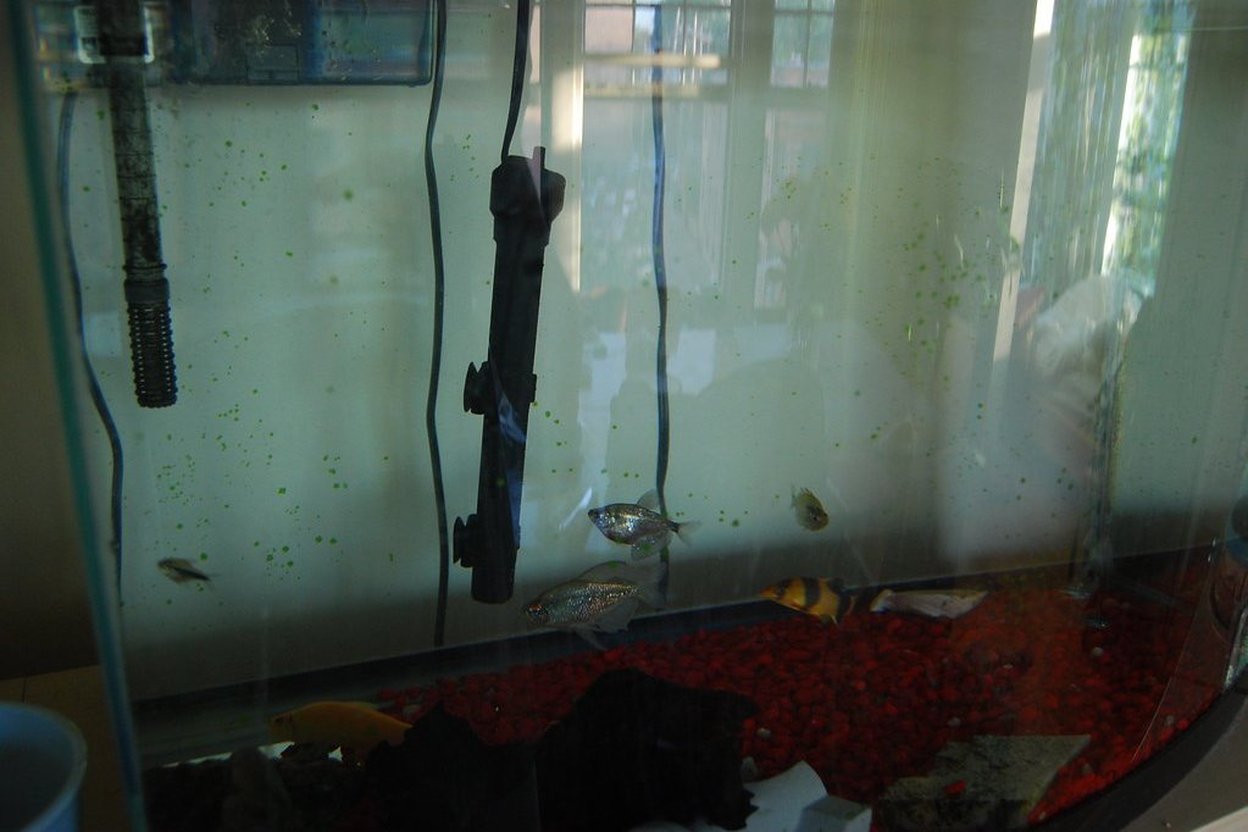
Yes, a tank heater adds to your power bill, usually a few dollars to about $15 a month. Learn how to calculate your own heater's winter cost.
Jack·8 min read·October 25, 2026
It's October, the first cold nights are here, and you notice your tank heater's light coming on more often than it did in August. Maybe your last power bill was already higher than you expected. So does the heater add to it? Yes. For one tropical tank in a normal living room, though, the heater usually costs somewhere between a few dollars and about $15 a month. Below I'll explain why winter pushes that number up and show you how to work out your own heater's cost with nothing more than a calculator.
A heater does raise your bill, and it costs more in winter than in summer. For one average tank the amount is small. Furry Critter Network puts the total monthly cost of running a typical freshwater tank, with filter, light and heater all together, at about $5 to $15. They call that general guidance, and that's how I'd treat it too. It's a ballpark figure, not a measurement of your tank.
A big tank in a cold room can cost more. One Monster Fish Keepers member running a 200-watt heater on a 75-gallon and a 100-watt heater on a 20-gallon tall said their bill "maybe went up by 20-30 bucks a month." That was back in 2013, and they didn't say what rate they paid. Still, it shows where the high end of the range can be.
Your actual number depends on three things:
That third one has been rising. Newsweek, citing EIA data, reported that average US residential electricity rates rose 7.3% from April 2025 to April 2026, to 18.83¢ per kWh. So the same heater costs more this winter than it did last winter, even if it runs exactly the same hours.
An aquarium heater isn't on all the time. Its thermostat switches it on only when the water drops below the temperature you set, and switches it off once the water is back up. So the heater only uses power while it's actually heating.
How long it runs depends on the gap between the room temperature and the tank temperature. If your room is 75 °F and your tank is set to 77 °F, the heater barely runs. Furry Critter says that in a warm room a heater rarely turns on, but in a cool basement it uses close to its full rated wattage almost nonstop.
Nights make the gap wider. Many of us turn the house thermostat down at night once the furnace comes on in the fall. JBL, the German aquarium company, says room temperatures at night can fall to about 54–57 °F (12–14 °C) while the tank needs to stay at 73–82 °F (23–28 °C). With a gap that big, the heater has to work continuously. Furry Critter also notes that heating demand goes up in homes that cool down at night.
Drafts make it worse. A tank next to a window, an outside door or an exterior wall loses heat faster than the room thermometer suggests, so the heater keeps switching back on.
The math is easy. Virginia Tech's extension service, repeating the Department of Energy's guidance, uses this formula:
watts × hours per day ÷ 1,000 = kWh per day
Multiply that by the number of days to get kWh for the month, then by your rate to get the cost. If your heater lists amps but not watts, multiply amps by volts. Most US household appliances run on 120 volts.
The tricky part is "hours per day." The wattage on the label is what the heater draws while it's switched on. What you actually use depends on how much of the day it's switched on, which is called the duty cycle. For a rough estimate in a typical room, Furry Critter suggests assuming the heater runs half the time.
Here are three examples at the July 2026 US average of 18.31¢ per kWh:
At California's rate of 33.61¢, that last heater costs about $48 a month.
You can skip the guessing by buying a plug-in watt meter. Plug it into the wall, plug the heater into it, and leave it there for a week. It records the kWh the heater actually used, which is the real number you need for the formula.
Where you live can matter more than which heater you own. EIA's July 2026 residential rates, in cents per kWh:
Take the same 100 W heater running half the time, 36 kWh a month. In Louisiana it costs about $4.58. In Texas it's about $5.72, in New York about $10.76, and in California about $12.10. That's more than 2.6 times the Louisiana cost for the exact same heater on the exact same tank.
Some utilities also use tiered pricing, where each kWh costs more once your monthly use passes a set amount. If you're on a plan like that, the heater's power may be billed at your highest tier in winter, when the furnace and holiday lights have already pushed your use up. Check your own bill to see your actual price per kWh, and whether it changes with how much you use or what time of day you use it.
The usual sizing rule for tropical fish is about 3 to 5 watts per gallon. JBL's version is about 1 watt per litre, which works out to roughly 4 watts per gallon. JBL says you can get away with half that only if the room stays above about 68 °F (20 °C). By the common rule, a 55-gallon tank needs somewhere between about 165 and 275 watts.
Does a bigger heater mean a bigger bill? The experts disagree. JBL says a higher-wattage heater uses about the same electricity over a year, because it reaches the set temperature faster and then shuts off. That makes sense: a heater turns essentially all the power it draws into heat in the water, so the total heat the tank loses is what you pay for. Furry Critter takes the opposite view, saying oversized heaters are less efficient because they switch on and off more often. I haven't found an independent test that settles it. What both sources agree on is that an undersized heater in a cold room is a problem, because it can run all the time and still not keep the tank warm enough.
Water movement matters more than most people realize. The heater only senses the water right around it. JBL warns that with poor circulation, the heater can shut off while the rest of the tank is 5–7 °F (3–4 °C) colder. Put the heater near the filter outflow or a powerhead so warm water gets moved around the whole tank. A river tank does this naturally. On my old River Tank EcoSystem, water was pumped up on the left, carried across, and cascaded down through three pools, so it never sat still in one corner.
Placement matters too. Furry Critter estimates that keeping a tank away from exterior walls, windows and doors can cut heating electricity by 20% or more. That's their estimate, not a measurement, but the reasoning holds: less heat lost means less heating.
Between now and Thanksgiving your furnace will use far more power than your fish tank. For most of us the heater ends up being one of the smaller costs of the hobby, and worth paying to keep your fish at the right temperature.
Photo: The New Red Rocks by kc_hendrix, BY-SA 2.0.
Vacation feeder blocks often hurt more than they help on a long weekend. Learn when fish can skip food and what to check at home.
Skipping feeding for a four-day trip is usually safe for healthy adult fish. Learn when a feeder helps, what goes wrong, and how to prepare.
Pothos can soak up some nitrate and add a green bank to a river tank. Learn how to root it, place it safely, and keep it trimmed.