How to Keep Aquarium Water From Freezing in an Unheated Room
Keep a cold-room tank from freezing: size the heater for the room, add a lid and insulation, and plan for power cuts.
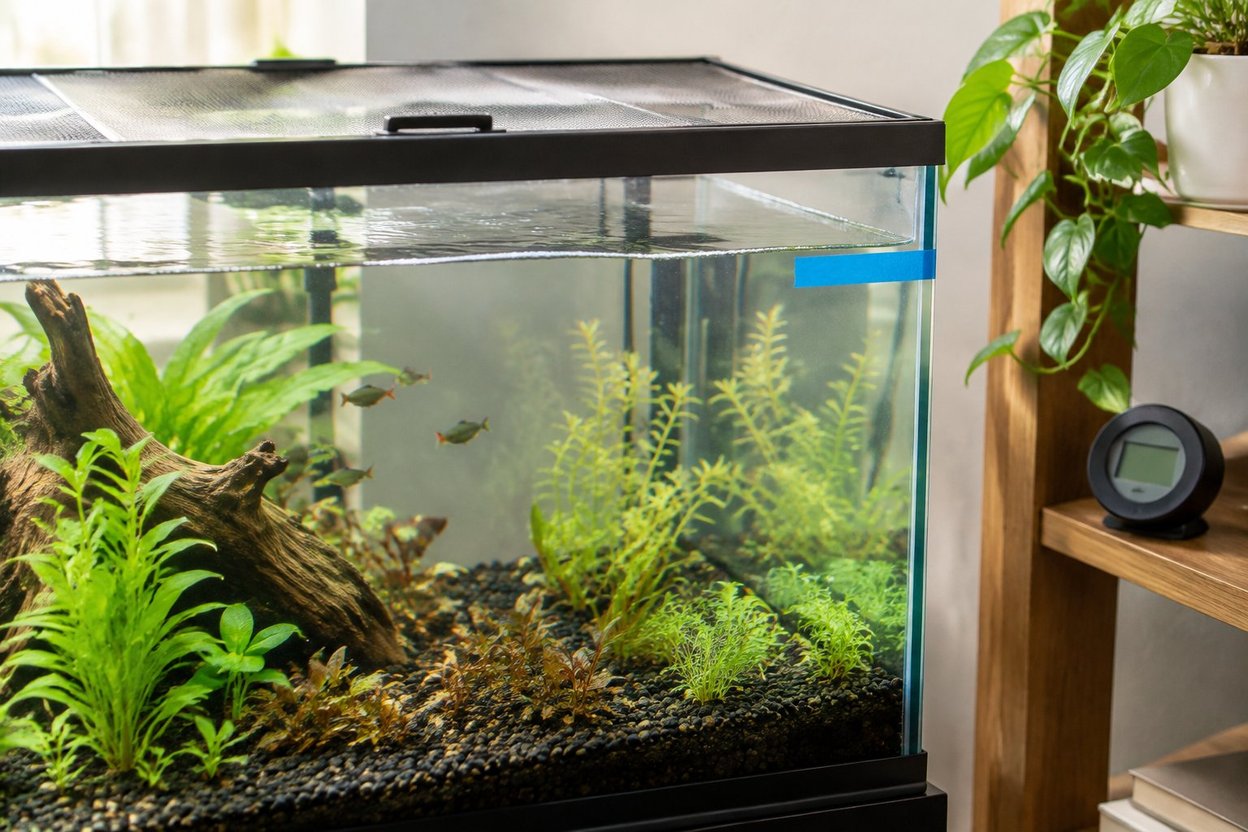
Winter heat dries indoor air and speeds evaporation, so your tank loses water faster. Learn how to measure your loss and slow it down.
Jack·7 min read·November 22, 2026
The furnace comes on for the first cold night of fall, and a week later the waterline in your tank is lower than usual. You top it off. A few days later it has dropped again. Your heater hasn't changed and you haven't spilled anything. The water is going into the air, and in winter it leaves faster because heated indoor air is very dry. Below I'll explain why that happens, how to measure how much your own tank loses, and what you can do to slow it down.
Three things drive winter evaporation, and they all push the same way.
First, your tank water is warm. A tropical tank sits in the upper 70s°F all year, and warm water gives off vapor easily.
Second, the air in your house is dry. Cold outdoor air can't hold much moisture. When it leaks into the house and the furnace warms it, it doesn't pick up any water, so its relative humidity falls a long way. Engineering Toolbox gives an example: outdoor air at 32°F and 90% relative humidity, heated to 68°F, ends up at about 23% relative humidity. Its table for a 20°F day is worse. Outdoor air at 80% humidity drops to about 11% once it's warmed to 70°F indoors. Those numbers assume nothing adds moisture back (cooking, showers and people all do), but they show the direction. Air that felt damp outside becomes very dry once it's heated.
Third, the air moves. Forced-air heat, drafts and a room fan carry the vapor away from the surface, so drier air keeps taking its place.
The odd part is that your tank's temperature barely changes between seasons. What changes is the air above it, which is much drier in winter.
Evaporation happens in every aquarium, every day. Water molecules at the surface are always moving. Some gain enough energy to break away and escape into the air. How fast that happens depends on four things:
One detail matters for everything that follows: only pure water evaporates. The minerals, salts and dissolved waste in your tank stay behind. Every inch that leaves makes what's left a little more concentrated.
The EPA recommends keeping indoor relative humidity below 60%, ideally between 30 and 50%. That's a general recommendation for the whole year, not a winter-specific one. But the math above shows how easily a heated house can fall below the bottom of that range on cold days, especially if it's drafty and outside air keeps leaking in.
You don't have to guess what your room is doing. The EPA describes a humidity meter (a hygrometer) as "a small, inexpensive ($10-$50) instrument" that many hardware stores sell. Put one near the tank, not across the house, and check it in the morning and evening for a few days. If it reads in the 20s or low 30s once the heat is running, you've found the reason your waterline keeps dropping.
It works the other way too. The EPA notes that condensation on windows, walls or pipes can be a sign of too much humidity. That matters if you decide to add a humidifier later.
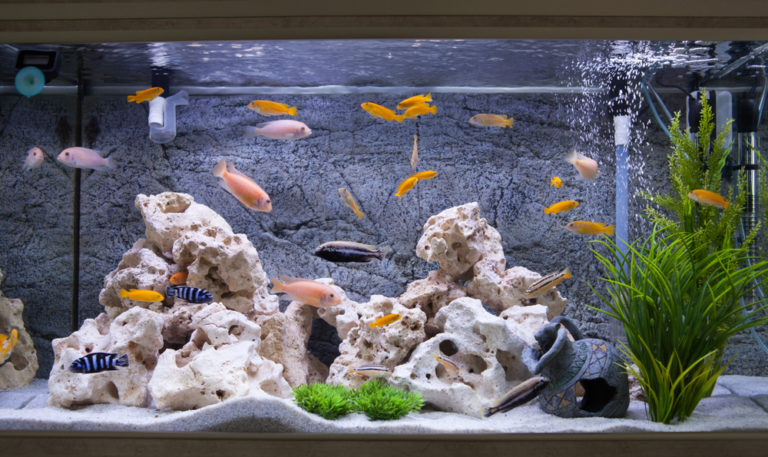
Water loss isn't only an annoyance. Since only pure water leaves, topping off with tap water replaces the water but not the minerals that stayed behind. If you only ever top off, those minerals keep building up. Regular water changes fix this because they actually remove some of the old water.
Tank size makes a big difference. Half an inch of loss is a large share of a 5-gallon nano but barely matters in a 100-gallon tank. Nano tanks need a check and top-off every day or two.
River tanks have it worse than most. A pump pushing water up and letting it cascade back down, a rippling surface, a wide footprint: each of these adds surface area and air contact. My old setup was a River Tank EcoSystem by Finn Strong Designs, the X-Large kit, in a 55-gallon long. Water was pumped up on the left, carried across, and fell down through three pools. That design looks like a real stream, and it also gives water every chance to evaporate.
Always top off with dechlorinated water, never straight from the tap. Then measure your loss:
Do this once now and again after the heat has been on for a few weeks. If your tank is near the room where you'll be cooking for Thanksgiving, the oven, the extra people and the open doors can change your reading, so measure on a normal week.
Cover the top. Glass, acrylic or plastic lids trap moisture well, and a glass lid for a standard tank costs about $15–30. Egg crate or screen covers are estimated to cut evaporation by roughly 30–40%. They also stop fish from jumping out, and they suit CO2-injected planted tanks better than tight lids. Whatever you use, don't seal the tank so tightly that gas exchange suffers. Leave a gap.
Choose a cover your animals need, not just one that holds water in. Some setups, like ripariums with plants growing out the top, have to stay partly open. But if you keep frogs, crabs or anything that climbs or jumps, you need a secure cover regardless. I learned this quickly: replace the light kit with a full screen lid, because crabs and some reptiles get out of almost anything. A screen lets more water escape than glass does, so you'll be topping off more often, but that's the right trade.
Add humidity to the room. Running a humidifier during the dry months slows evaporation. Aim for the EPA's 30–50% range, and watch your windows for condensation so you don't overdo it.
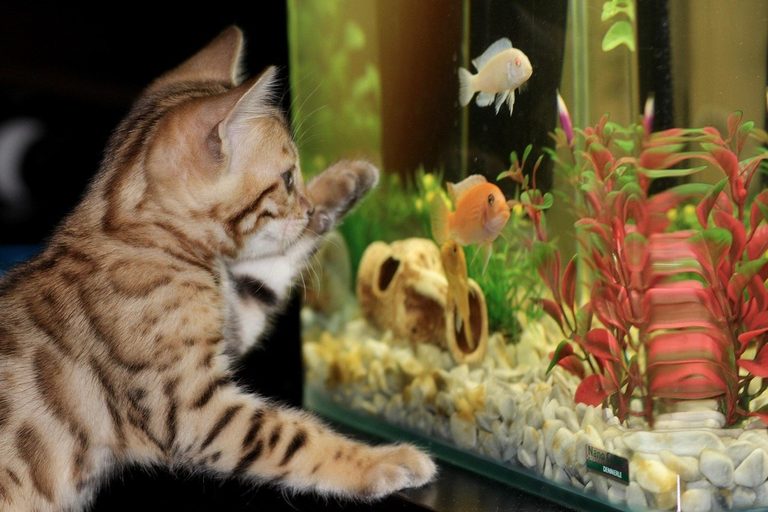
Move the tank. Keep it away from heating vents and direct sunlight. A tank right under a vent sits in the warmest, driest moving air in the room.
Automate it on bigger setups. Auto top-off systems run about $40 for a simple float valve and up to a couple hundred dollars for electronic models. They keep the level steady, but they only replace water. You still need water changes to control the mineral buildup.
Get a hygrometer, mark your waterline, and give it one week. Then you'll know how much your tank loses and what's causing it.
Keep a cold-room tank from freezing: size the heater for the room, add a lid and insulation, and plan for power cuts.
Fish eat less as water cools, but heated tropical tanks need no change. Get temperature-based feeding guidance for unheated tanks and ponds.
Keep holiday guests from overfeeding your fish with one designated feeder, pre-measured portions, a written card, and a calm plan if extra food gets in.