Orange Shrimp in a River Tank: Which Ones to Buy and Which Fish Will Leave Them Alone
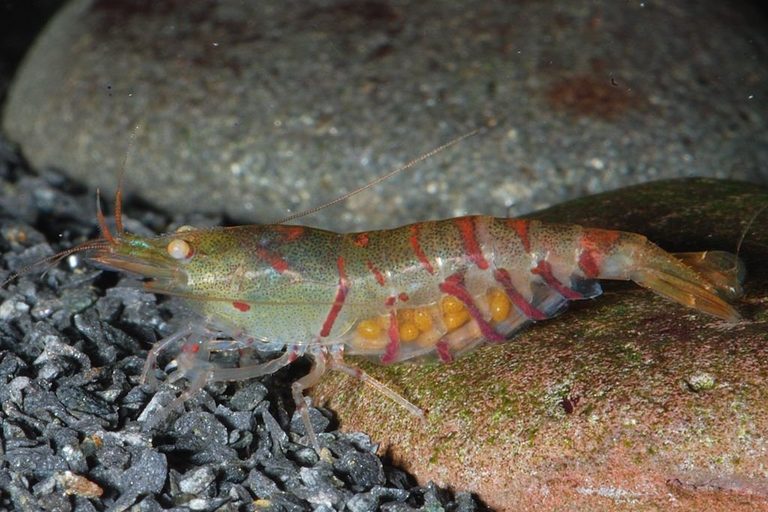
Orange Pumpkin, Sunkist and Orange Rili are all Neocaridina davidi. Here's which fish can share a river tank with them and which will eat them.
A 2026 plan would raise South Toe River hellbender eggs at the Tennessee Aquarium. Here's how hellbenders hatch, grow and return to the river.
Jack·12 min read·November 25, 2026
If you've ever turned over a big flat rock in a cold creek to see what was under it, you've looked at hellbender nesting habitat. In October 2026 the U.S. Forest Service reported a plan to collect hundreds of hellbender eggs from North Carolina's South Toe River and raise them at the Tennessee Aquarium through the risky larval stage. So far that's a plan. No hatch count has been published. The "Chattanooga hellbender hatch" stories you may have seen are a different project at a different place, the Chattanooga Zoo. Here's how the whole thing works, from egg to river.
Hurricane Helene hit the South Toe watershed at a bad moment for hellbenders. Adult males were guarding nests, and the floodwater carried nest rocks, eggs and even adult hellbenders downstream or out into the floodplain. Nearly two years later, a field team went back into the river to look. It included Pisgah National Forest wildlife biologist Michael Knoerr, the North Carolina Wildlife Resources Commission, Clemson University and the Tennessee Aquarium Conservation Institute.
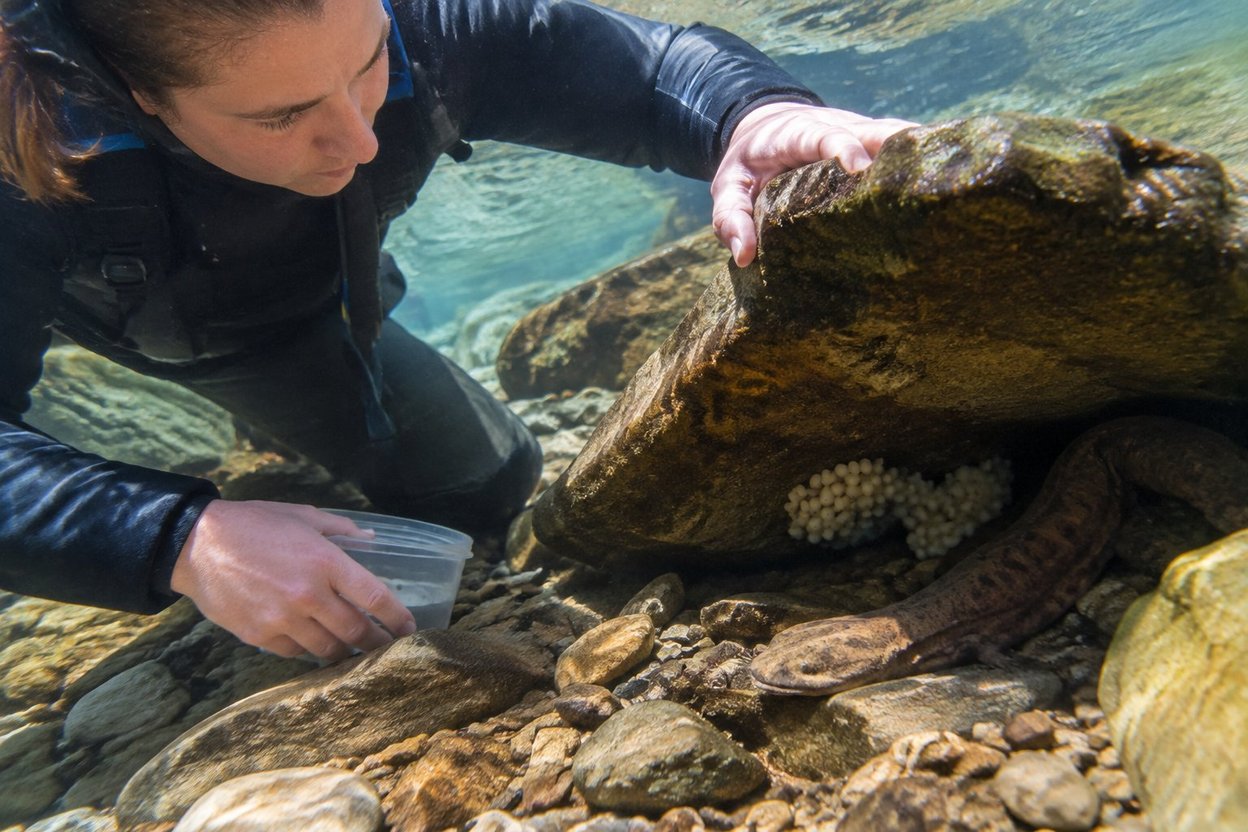
The Forest Service's October 16, 2026 feature describes the next step. The team plans to collect hundreds of eggs and raise them at the Tennessee Aquarium through their vulnerable larval stage, so more of them survive those early months, with the goal of strengthening the South Toe population. Photos with the story show a biologist collecting eggs and eggs sitting in a clear tub of water. The feature doesn't give a final egg count, a hatch date, the incubation setup, or a release schedule. Until the Aquarium publishes results, the honest summary is "planned and underway," not "hatched."
Knoerr put the real problem plainly: "These animals depend on clean, cold water and are intolerant to blankets of sediment." He also said, "Restoring the South Toe River and releasing head-started hellbenders into those places will make a difference." Both halves of that sentence matter. Raising eggs only helps if the river can take the animals back.
If you visit, keep two things separate. The Aquarium has a resident adult hellbender in the Tennessee River gallery, in a habitat that was enlarged and reopened in September 2022. That's the animal the public sees. The conservation rearing is a separate project, and nothing published says there will be a visible egg nursery.
Most coverage mixes up the Tennessee institutions. Here's who does what:
Hellbenders are big. Smithsonian's National Zoo puts sexually mature adults at 12 to 29 inches long and up to 5 pounds. They don't rely on lungs the way you might expect. They take in oxygen through their skin, and the loose, wrinkly folds along their sides add surface area for it. That's why they need cold, fast, oxygen-rich water, and why silt and warm, stagnant water hurt them so badly.
Breeding happens in late summer and early fall, which makes this hellbender season. According to Smithsonian:
The Tennessee Wildlife Resources Agency adds that several females can lay in one male's nest, so a single nest can hold 1,000 or more eggs. If you count from a September nest, 68 to 75 days lands right around Thanksgiving. That fits Chattanooga Zoo's report of a batch hatching in early November 2023.
Don't treat any single number as fixed. In a Saint Louis Zoo study of zoo-bred Ozark hellbender eggs, development averaged 51 days, with a range of 29 to 64 days from laying to hatch. The timing depends on subspecies, water temperature and how the eggs are reared.
After hatching, the larvae keep feathery external gills for about a year and a half, or until they reach about 4 inches long, according to TWRA. That long stretch with gills is the "vulnerable larval stage" the South Toe project is aimed at.
The Tennessee Aquarium hasn't published its own method. One published example is J. Greathouse's Eastern Hellbender Egg Rearing Protocol. It shows what careful egg work involves, but it isn't the Aquarium's procedure. Its steps:

I spent years running a River Tank EcoSystem on a 55-gallon long, with water pumped up the left side, carried across, and dropped through three pools. So the shaker detail jumps out at me. These eggs evolved under rocks in moving water, and even in a lab, people end up recreating the current.
To be clear for this site's readers: none of this is a home-aquarium project. The eastern hellbender is listed as endangered in Tennessee's revised state rule, and this is professional conservation work done under agency partnerships.
Headlines use "hatch" for very different achievements. Here's the timeline of the big captive milestones:
That gives you three separate categories:
Some institutional pages still say hellbenders have never bred in captivity. That's out of date, given the milestones above.
Once the eggs hatch, the slow part begins. Programs hold young hellbenders until they're big enough to have a fighting chance, and the timelines vary a lot:
Those tags do different jobs. A PIT tag is an ID chip that gets read when someone handles the animal again. A radio transmitter lets biologists actually find it in the stream. Being ready for release also isn't the same as being able to breed. A two- or three-year-old hellbender going back into a creek is a juvenile with better odds, not a breeding adult.
Release totals are easy to report. They don't tell you whether the animals survived, or whether a population is rebuilding. The stronger evidence is a released animal breeding in the wild, and Missouri has two cases:
That's the outcome everyone in Tennessee and North Carolina is hoping for: South Toe eggs that become South Toe parents years from now.
There's real loss along the way, even in the best facilities. The Saint Louis Zoo study reported average total mortality of 63% from the original egg clutch through age one. That figure counts infertile eggs, removals and humane euthanasia, so it isn't only hatchlings dying. But it shows why a photo of a tub full of eggs tells you only part of the story. Researchers there also found differences in results between breeding groups.
The bigger limit is the river. TWRA identifies sediment that embeds stream bottoms as a cause of lost hellbender shelter and nesting habitat in Middle Tennessee. When silt fills the gaps under rocks, an adult has nowhere to hide and nowhere to nest. Knoerr made the same point about the South Toe after Helene: "When a storm changes the river as dramatically as Helene did, even species designed to tolerate floods can take a major hit." Head-starting buys time. Clean, cold, rocky water decides whether that time pays off.
Legal protection is moving too. Missouri's eastern hellbender population has been federally endangered since 2021. In December 2024 the U.S. Fish and Wildlife Service proposed protection across the subspecies' whole range, and that rule is still listed as proposed. Tennessee already lists the eastern hellbender as state-endangered.
Did these eggs hatch at the Tennessee Aquarium? Not yet reported. The October 2026 Forest Service feature describes a plan to collect hundreds of South Toe eggs and rear them at the Aquarium. No collection total, hatch date or hatch count has been published. The 2016 hatch story was the Chattanooga Zoo.
How long do hellbender eggs take to hatch? Smithsonian gives a typical 68 to 75 days. A Saint Louis Zoo study of zoo-bred Ozark eggs averaged 51 days, with a range of 29 to 64. It depends on conditions and subspecies.
Why do the babies have gills? Larvae keep external gills for about a year and a half, or until they're about 4 inches long. After that they rely mainly on breathing through their skin, which is why they need cold, oxygen-rich water.
Are they endangered? In Tennessee, yes: the revised state rule lists the eastern hellbender as endangered. Federally, Missouri's eastern population is endangered, and range-wide protection has been proposed.
Are hellbenders dangerous if I find one in a creek? No. Kentucky's wildlife agency says they're neither aggressive nor poisonous. Leave it and its rock where they are. Rocks you flip and put back crooked can destroy a nest.
Orange Pumpkin, Sunkist and Orange Rili are all Neocaridina davidi. Here's which fish can share a river tank with them and which will eat them.
Can a crab get trapped in a pumpkin-house ornament? See which openings are risky, how to pick or seal a safe piece, and how to free a stuck crab.
Vampire crabs make tempting Halloween impulse buys at $10, but they need a land-heavy paludarium to survive—not a traditional fish tank.