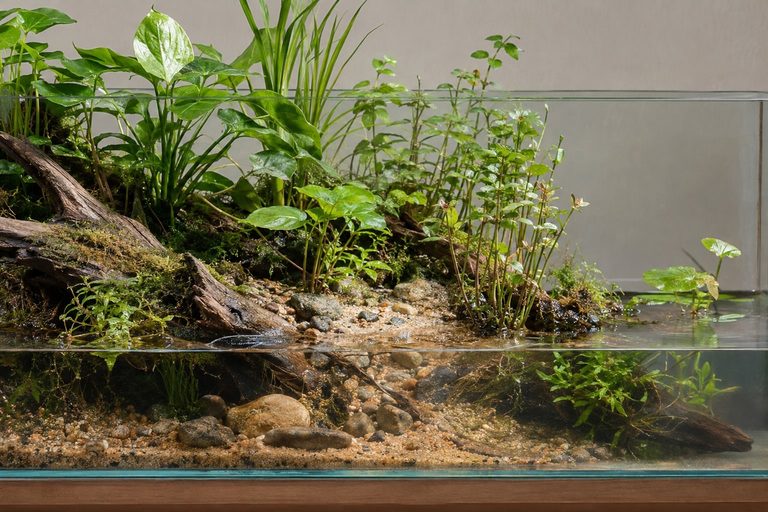
A riparium is a tank with a shoreline. What you actually need
Learn what a riparium is and what you need to build one: an open-top tank, planters, plants that tolerate wet roots, and light above the water.
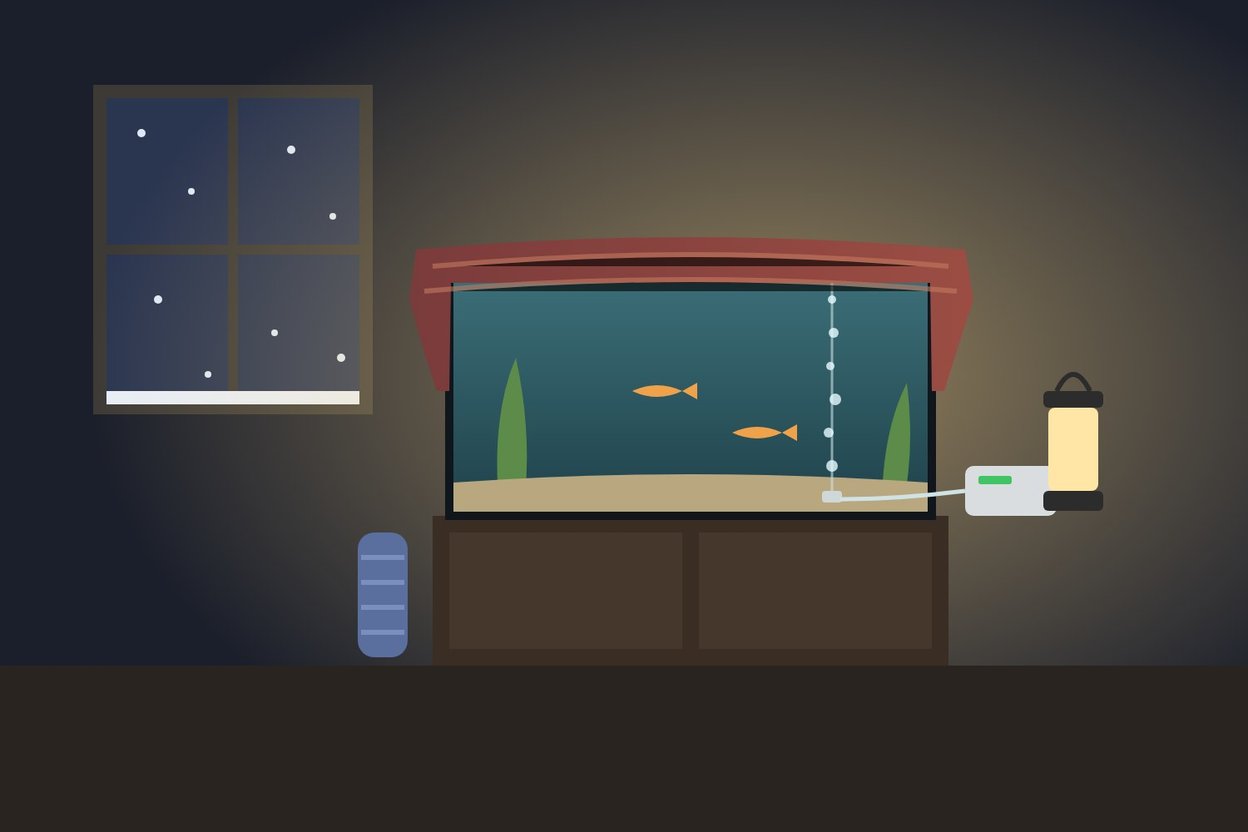
When the power goes out, fish face two threats: falling temperature and falling oxygen. What to do in the first hour, how to keep a tank warm without power, and what to have ready before winter.
Jack·4 min read·October 1, 2026
A power outage is scary for fish keepers. The filter stops, the heater goes cold and the room starts cooling down. The good news is that a healthy tank can survive much longer than most people think, if you know what to do. Winter storms and long outages are coming, so now is the time to plan.
There's a third, slower problem: the beneficial bacteria in a filter that sits without flow for many hours start to die off. When the power returns, a dirty, stagnant filter can release a slug of bad water. We'll get to that.
Most tropical fish tolerate a slow drop into the high 60s for a while. A slow drop is much safer than trying to heat it fast. Cold-water fish like White Cloud minnows and hillstream loaches barely notice.
A small portable power station can run a tank for a long time if you're smart about it. Run the air pump first; it uses very little power. Run the filter next. Heaters use a lot of power, so run them in short bursts only if the water is getting cold. Our sister site has a guide to power stations and generators for the whole house.
Ten minutes of prep before winter can be the difference between a scary night and a dead tank.
Learn what a riparium is and what you need to build one: an open-top tank, planters, plants that tolerate wet roots, and light above the water.
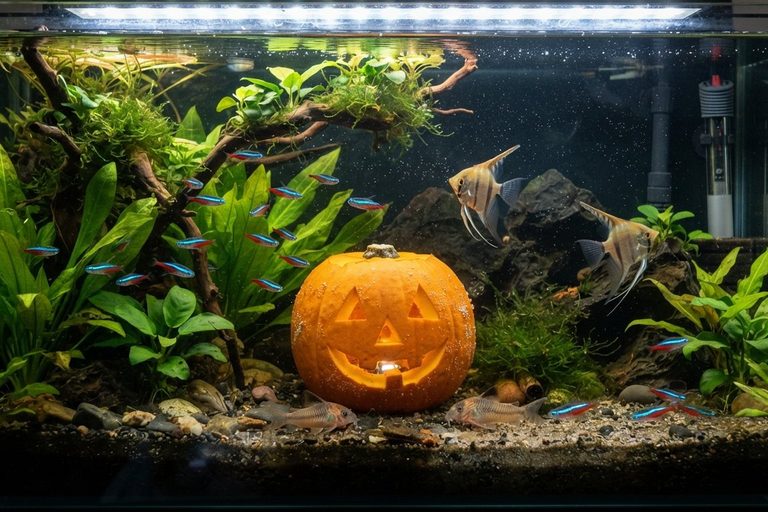
Learn which Halloween ornaments are safe in a fish tank, why craft-store decor is risky, and a simple screening test before adding one.
Discover why whole pumpkins damage aquarium water and how to safely offer small pieces as seasonal treats.