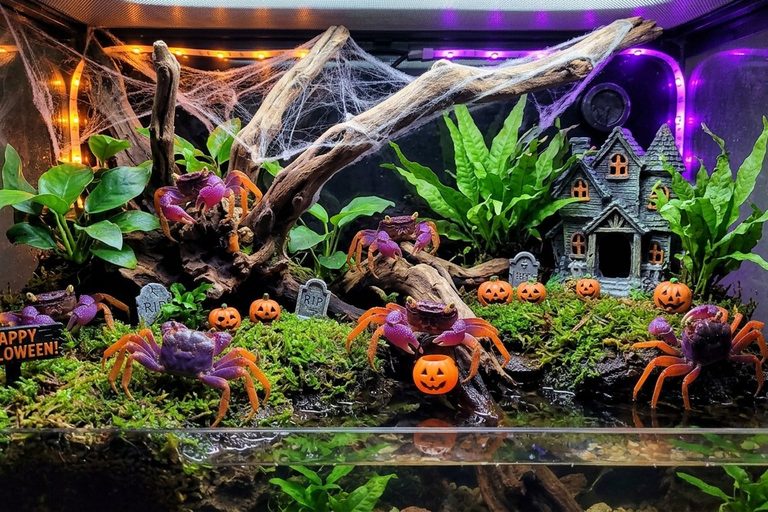
Can a crab get stuck in a pumpkin-house ornament?
Can a crab get trapped in a pumpkin-house ornament? See which openings are risky, how to pick or seal a safe piece, and how to free a stuck crab.
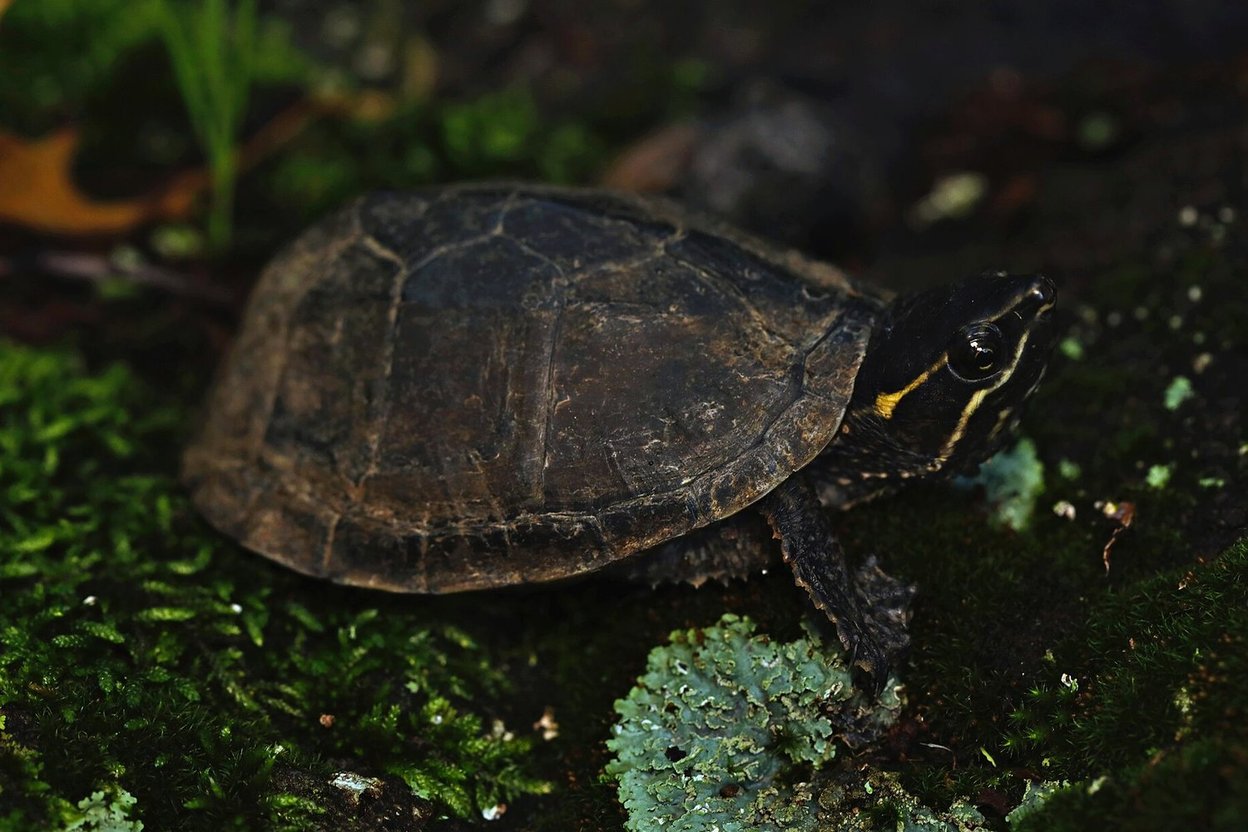
Musk turtles stay small, walk the bottom instead of swimming, and can live for decades. What they need in a riparium, what they'll eat, the federal 4-inch rule, and the salmonella precautions.
Jack·4 min read·October 5, 2026
Small turtles were part of the original river tank idea: fish, crabs and a turtle or two sharing one tank with water and land. If you want to try it today, the common musk turtle is the species most keepers point to. It stays small and spends most of its time in the water. It's also a decades-long commitment.
The common musk turtle (Sternotherus odoratus), also called the stinkpot, is native to the eastern U.S. and southeastern Canada. Adults usually reach 3 to 5 inches. They got the "stinkpot" name from a musky smell they release when they're scared, which most captive turtles stop doing once they settle in.
Musk turtles are poor swimmers. They walk along the bottom, climb branches and roots, and come up for air. They rarely leave the water, which suits a riparium better than most turtles.
Since 1975, federal law (21 CFR 1240.62) has banned the sale of turtles with a shell under 4 inches long. The reason is salmonella: in the early 1970s, tiny pet turtles were blamed for a big share of salmonella cases in children. The ban has exceptions for things like scientific and educational use, but it means a pet store shouldn't be selling you a hatchling.
Musk turtles stay small, so buy from a reputable breeder, ask how big the turtle is, and check your state's rules too. Some states also limit keeping native turtles taken from the wild. Don't collect one from a pond.
Any turtle can carry salmonella, even a healthy one. The CDC's advice: wash your hands after handling the turtle or anything in its tank, keep it out of the kitchen, and don't let young children handle it.
Here's the hard truth for a community river tank: musk turtles are carnivores. They eat snails, shrimp, crayfish and any fish slow enough to catch. Fast fish that stay up in the current often do fine, but anything small, slow or bottom-dwelling is food. Snails and shrimp won't last.
Don't house them with crabs or crayfish, which can injure each other. And don't keep two turtles together unless the tank is big; they can bite.
Commercial turtle pellets as the base, plus occasional earthworms, snails, shrimp and small feeder fish. Adults only need to eat every day or two.
Musk turtles commonly live 30 years or more in captivity, and some have lived over 50. Plan on it.
Small turtles were part of our first river tank, along with fish, crabs and fire-bellied toads. Read the story on our About page.
Reptiles Magazine: Common Musk Turtle Care Sheet · eCFR: 21 CFR 1240.62, Turtles Intrastate and Interstate Requirements · CDC: Salmonella Outbreaks Linked to Small Turtles
Photo: Gewöhnliche Moschusschildkröte (Sternotherus odoratus), Seitenansicht,_Seitenansicht.jpg) by Peter Paplanus, CC BY 2.0.
Can a crab get trapped in a pumpkin-house ornament? See which openings are risky, how to pick or seal a safe piece, and how to free a stuck crab.
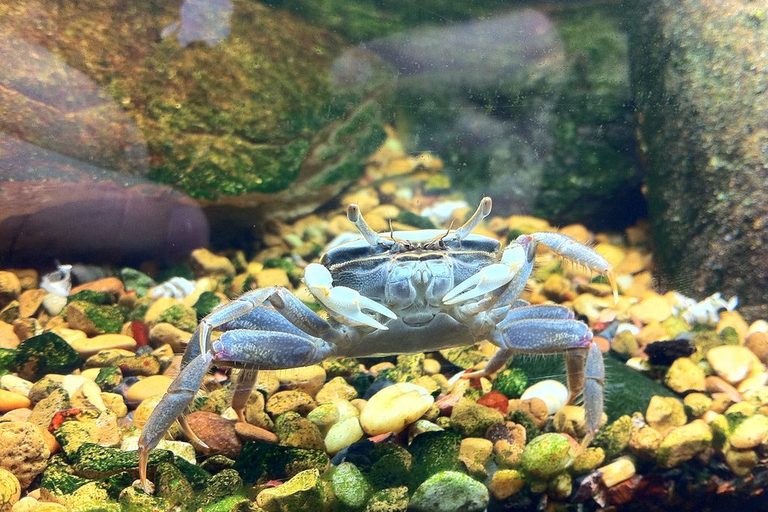
Vampire crabs make tempting Halloween impulse buys at $10, but they need a land-heavy paludarium to survive—not a traditional fish tank.
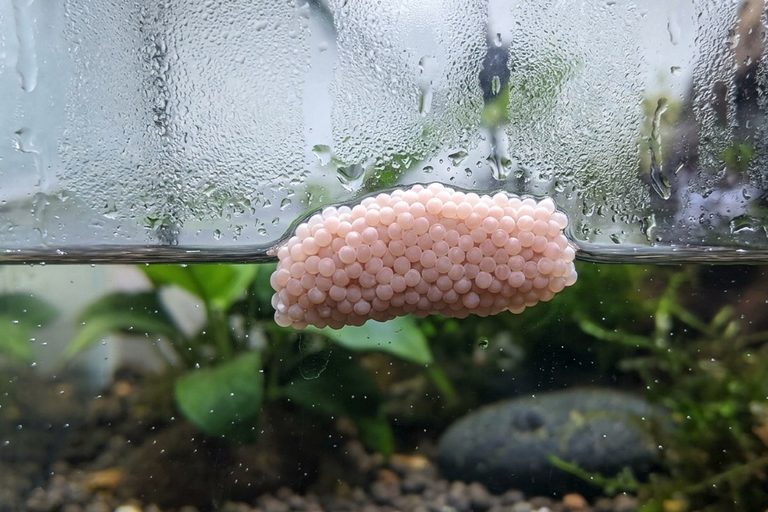
Tell snail eggs apart by species (nerite dots, mystery snail clutches, ramshorn and bladder jelly) and decide whether to scrape, keep, or hatch them.