A riparium is a tank with a shoreline. What you actually need
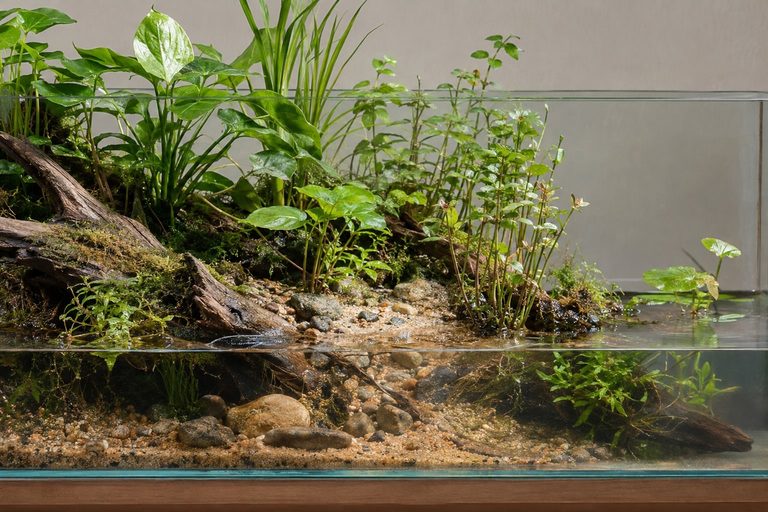
Learn what a riparium is and what you need to build one: an open-top tank, planters, plants that tolerate wet roots, and light above the water.
The three numbers that tell you whether your tank is safe. What each one means, the readings you want, how to test without fooling yourself, and what to do when a number is high.
Jack·3 min read·October 3, 2026
Clear water isn't the same as clean water. A tank can look perfect and still have levels of ammonia or nitrite that are slowly poisoning your fish. A test kit is how you know for sure, and the three tests that matter most are ammonia, nitrite and nitrate.
Fish waste, uneaten food and dead plants break down into ammonia, which is toxic. Beneficial bacteria in your filter and substrate turn ammonia into nitrite, which is also toxic. A second group of bacteria turns nitrite into nitrate, which is much less harmful and builds up until you remove it with water changes. That's the cycle. See how to cycle a new aquarium for setting it up.
Any ammonia or nitrite in an established tank means something is wrong.
For a new tank, or if fish are sick, use a liquid kit.
Test before a water change, not right after.
Ammonia is more toxic at higher pH and temperature, so a small reading matters more in warm, hard water.
Testing takes five minutes and catches problems before your fish show them.
Learn what a riparium is and what you need to build one: an open-top tank, planters, plants that tolerate wet roots, and light above the water.
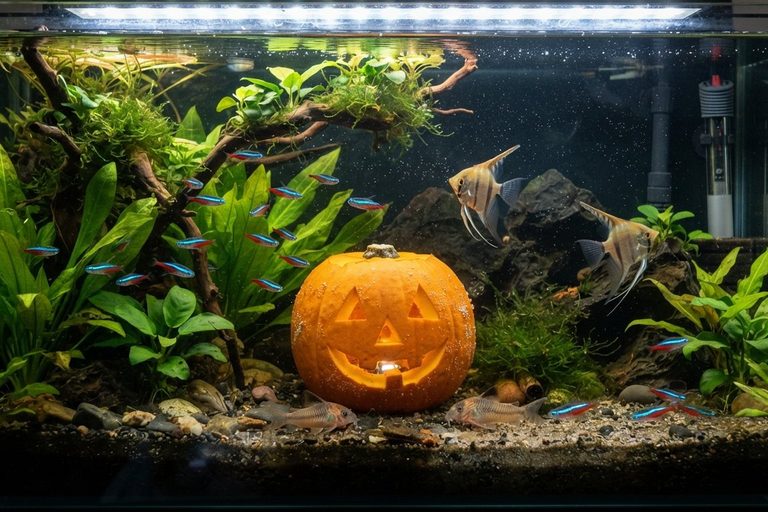
Learn which Halloween ornaments are safe in a fish tank, why craft-store decor is risky, and a simple screening test before adding one.
Discover why whole pumpkins damage aquarium water and how to safely offer small pieces as seasonal treats.