Can You Put a Small Christmas Tree Ornament in a Fish Tank
Most store-bought ornaments aren't safe underwater because of paint, glitter, and metal. Learn what to buy instead and how to test one first.
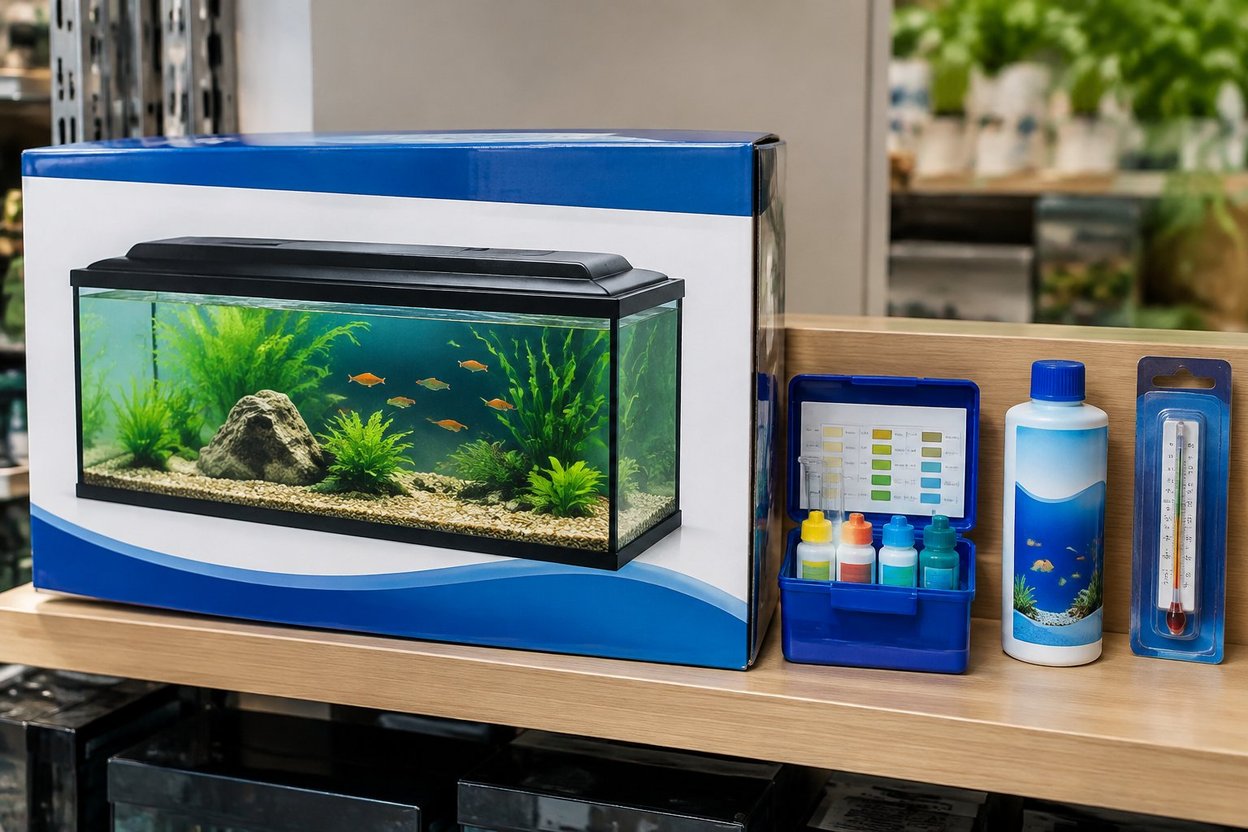
The best beginner aquarium gift: a 20-gallon kit, liquid test kit, conditioner and thermometer. Skip the fish and explain why in a note.
Jack·7 min read·November 19, 2026
You're in the pet store aisle looking at boxed tanks. The cheap one is small and the big one costs more than you planned, and you're not sure what goes in the cart besides the box. Here's the answer: buy a 20-gallon long kit, or a 10-gallon only if the plan is one betta or a few shrimp. Add a liquid test kit, a concentrated water conditioner and a thermometer. Leave the fish out and put in a note explaining why. That's the whole gift, and it's the version that still has living fish in it come spring.
I've kept fish tanks since I was a kid. The setups that go wrong early almost always fail for the same few reasons: the tank is too small, there's no way to test the water, or fish went in on day one. A good gift fixes all three before the wrapping paper comes off.
Here's the shopping list:
What you leave out matters just as much: no live fish in the gift. A new tank can't support fish yet, and the section on fish below explains why. Every item above has a reason behind it, so here's how to choose each one.
A 10-gallon is about 20 by 10 inches. A 20-gallon long is about 30 by 12 inches. The 10 can sit on sturdy, level furniture. The 20 needs a proper aquarium stand, so check whether the recipient has one or has room for one before you buy.
A lot of people assume a smaller tank is easier for a beginner. It isn't. More water evens out swings in temperature and water chemistry. That doesn't make ammonia harmless, but it does give a beginner more room for mistakes. A 10-gallon takes more discipline with feeding and stocking.
Stocking is the other reason to go bigger. Many tetras, rasboras, danios and small catfish need to live in groups, and a group of them doesn't fit well in 10 gallons. A 20-gallon long can hold something like eight neon tetras, six small corydoras of one species and one honey gourami.
Size also changes the budget less than you'd expect. A test kit, conditioner, siphon and thermometer cost about the same for either tank, so doubling the water doesn't double the cost of the setup.
Kit contents vary a lot. Some boxes include a filter, heater, light, thermometer, net, food and conditioner. Others don't include a heater at all. Read the contents list on the box before you pay. Don't assume anything is in there.
Here are the gaps to check for:
A liquid test kit, not strips. Strips can't reliably tell 0 ppm of ammonia from 0.25 ppm, and that's exactly the difference that matters in a new tank. The API Freshwater Master Test Kit is the usual pick. It tests pH, high-range pH, ammonia, nitrite and nitrate, and it comes with test tubes and seven test solutions. Two tips worth putting in your note:
A concentrated conditioner like Seachem Prime. It neutralizes chlorine and chloramine. According to Seachem, it also binds ammonia, nitrite and nitrate. The dose is 5 mL per 50 gallons of new water, about 0.1 mL per gallon. That's around 2 mL to fill a 20-gallon tank and a fraction of that for a weekly change, so one small bottle lasts a long time. It can be dosed again every 24 to 48 hours, and Seachem allows up to 5 times the normal dose in an emergency, when ammonia or nitrite climbs above 2 ppm.
Substrate and a net. Add these if the kit doesn't include them. If there's still room in the budget, a gravel vacuum and a bucket kept only for the aquarium complete the basic maintenance kit.
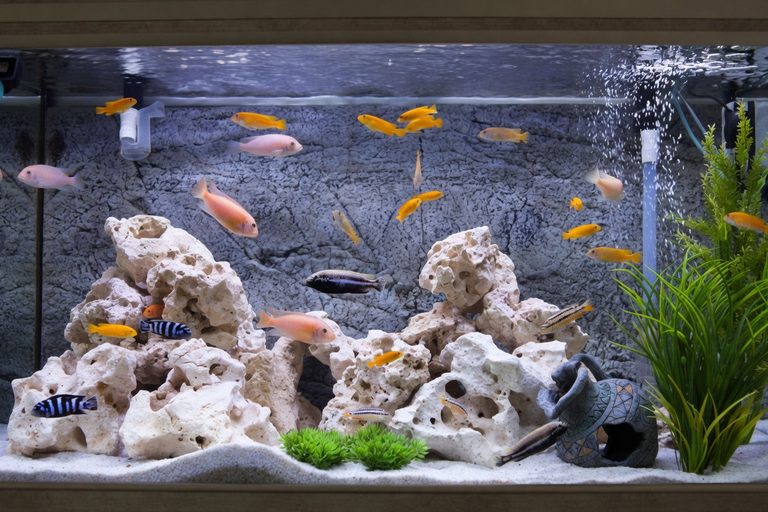
A new tank isn't ready for fish. Fish produce ammonia, and ammonia and nitrite are toxic to every aquatic animal. In a mature tank, bacteria turn ammonia into nitrite and then nitrite into nitrate, which is only a problem at very high levels. A new tank doesn't have those bacteria yet. Growing them is called cycling, and it usually takes somewhere between two and eight weeks. Sources give different ranges, so plan for at least a month.
A tank is "cycled" when the test kit shows 0 ammonia, 0 nitrite and some nitrate. That's why the liquid test kit matters so much in this gift. If fish go in too early, the result is what's called New Tank Syndrome: fish die, and the cycle can take even longer. Many keepers suggest a fishless cycle, using an ammonia source instead of live fish, when it's possible.
That's what the gift note is for. Something short like this works: "Set it up, add conditioner, and test every few days. When ammonia and nitrite both read zero and nitrate shows up, it's time for fish, and that's my treat." If you're giving it in late fall, there's an upside: fish shopping becomes a second outing together in the new year.
Put that money toward the 20-gallon tank instead. The bigger tank is the upgrade that actually makes the hobby easier.
Most store-bought ornaments aren't safe underwater because of paint, glitter, and metal. Learn what to buy instead and how to test one first.
Loud parties can stress fish through tank vibration and tapping. Here's what research shows and a quick checklist to protect your tank.
A fish tank makes a good first-timer gift if you plan the cycle. Get the timeline, the must-have kit, and what to put in the box.