Does a Loud Holiday Gathering Stress Aquarium Fish?
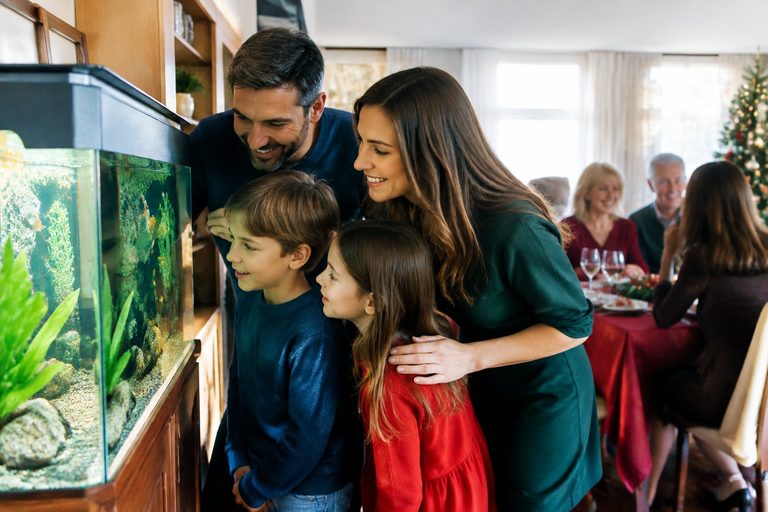
Loud parties can stress fish through tank vibration and tapping. Here's what research shows and a quick checklist to protect your tank.
Most store-bought ornaments aren't safe underwater because of paint, glitter, and metal. Learn what to buy instead and how to test one first.
Jack·8 min read·November 20, 2026
You're unpacking the holiday box, maybe sooner than you planned once Thanksgiving is in sight, and you find a tiny glass ball or a little painted Santa. Your eye goes to the aquarium. It would look great sitting in the gravel. Usually it's not worth it. Most ornaments are made to hang in dry air, not to sit underwater for weeks. If you want a holiday touch in the tank, buy decor made for aquariums, or test the piece first.
A standard Christmas ornament doesn't belong in your tank. The shape isn't the issue. A little ceramic snowman can't hurt a fish just by being shaped like a snowman. The trouble is what goes on it and into it: paint, glossy coatings, glitter, glue, and the metal cap and hook on top. None of these are made to sit in water around the clock, and your fish have no choice about breathing that water.
Practical Fishkeeping puts it plainly. You need to be "100% sure that everything in the set-up is non-toxic," and its rule of thumb is short: "If in doubt, don't add it." With a store-bought ornament you almost never know what the paint or glitter contains, so you're nearly always in doubt.
A Singapore aquarium shop gives the same advice. It says to leave out anything "coated, painted, or treated," because color can leach out slowly even when the piece seems fine at first. An ornament can look fine on day one and still be leaching into the water by week three.
The safe option is easy to find. Some companies make Christmas decor meant for aquariums, and that's the first place to look. If you have your heart set on a piece you already own, there's a way to test it before it goes near your fish, covered below.
Here's what's actually on a typical ornament.
There's evidence that the metal concern is real. An independent tester used XRF, a handheld X-ray scanner that reads the metals in a surface, on holiday ornaments. The yellow bands on vintage Shiny Brite glass ornaments read 23,400 ppm lead. The tester counts anything from 90 ppm up as unsafe for kids. On other pieces she found arsenic, antimony and mercury in red glitter, and a plastic ornament ball tested positive for lead, cadmium and arsenic. She is an advocate, not a regulator. Still, the readings show these metals can be present in ordinary decorations.
Copper deserves its own warning. The University of Florida's IFAS extension says some fish die at copper levels below the doses used to treat disease. Copper damages the gills, liver, kidneys and immune system. Most invertebrates are highly sensitive to it and won't survive it. That publication is about saltwater tanks. It also notes that copper bound to tank decorations can be released when pH drops. My old river tank had little crabs living in it, and crabs are exactly the kind of animal copper hits hardest.
One limit is worth stating. XRF tells you what's in an ornament's surface. It doesn't tell you how much of it gets into tank water, and nobody has published a measurement of that. So the case against ornaments rests on caution, not on proven harm. With live animals, caution is the right call.
If you've ruled out the box from the attic, you still have good options.
Aquarium-labeled holiday decor. This is the safest choice. Practical Fishkeeping suggests buying from aquatic retailers and names Arcadia (its Classica line) and Aqua One as brands that have made Christmas ornaments designed for aquariums. Labeled pieces are made to sit in water.
Unpainted ceramic. A fish-tank decor guide calls ceramic safe as long as it's unpainted. Plain glazed or bare ceramic is a better bet than anything with painted details.
Resin and plastic sold for aquarium use. The same guide says painted resin is acceptable when it's sold as aquarium decor. Plastic should be labeled food-grade or aquarium-use. The label matters because it's your only clue about how the paint was made.
The guide also lists what to avoid:
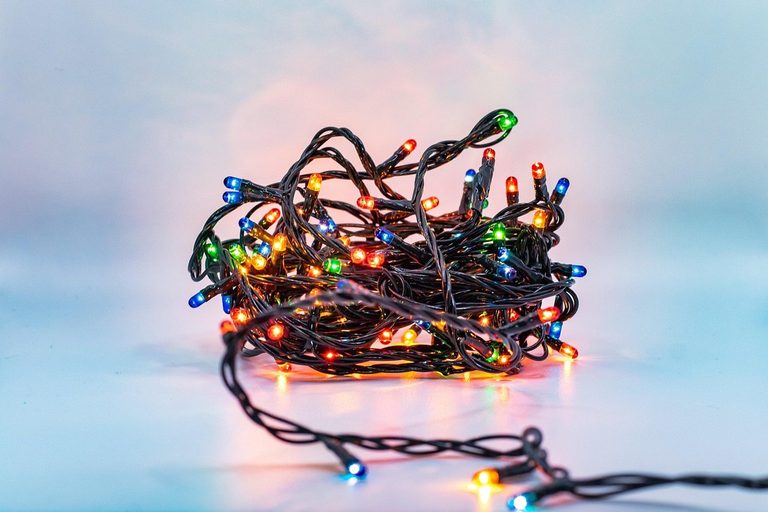
I'd add two more of my own. Keep real tree clippings out of the tank, because sap and any spray the tree was treated with don't belong in your water. And never put string lights in the water. They're electrical, and fairy lights aren't made to be submerged. If you want lights, run them around the outside of the stand or the back of the tank.
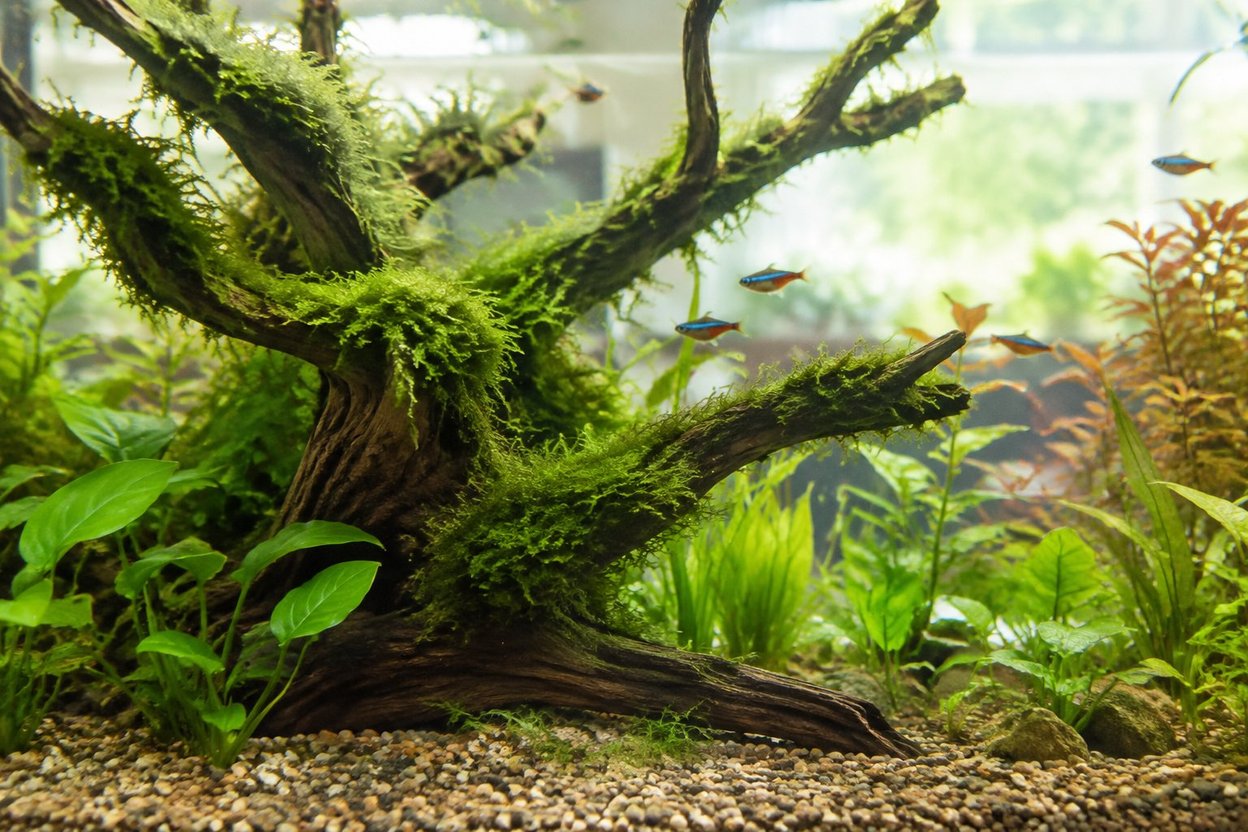
For a natural look, Practical Fishkeeping suggests twisted driftwood with moss tied on as a stand-in for a model tree. It reads as a tiny evergreen, and it's safe for fish and shrimp. In a stream-style tank it fits in better than a plastic tree would.
Say you have a small ornament with real sentimental value and you want to try it. Test it outside the tank first.
A pass doesn't make an ornament proven safe. It means nothing obvious came off in a day. A TDS meter can't tell you which substances are dissolved, only that something is.
If you keep shrimp, snails or crabs, I'd skip the test entirely and buy aquarium-labeled decor. Invertebrates are the animals most sensitive to metals like copper, and a 24-hour bucket test isn't enough to protect them. Even Practical Fishkeeping's writer, after a week of testing beads and model trees with shrimp and seeing no ill effects, still set up the finished holiday tank without livestock.
Once a piece has earned its spot, a few habits keep it from causing trouble.
If you want a snow-globe look with drifting bits, Practical Fishkeeping suggests running the filter on its lowest setting. Keep in mind that slower flow also means less water movement and surface agitation, so watch your fish.
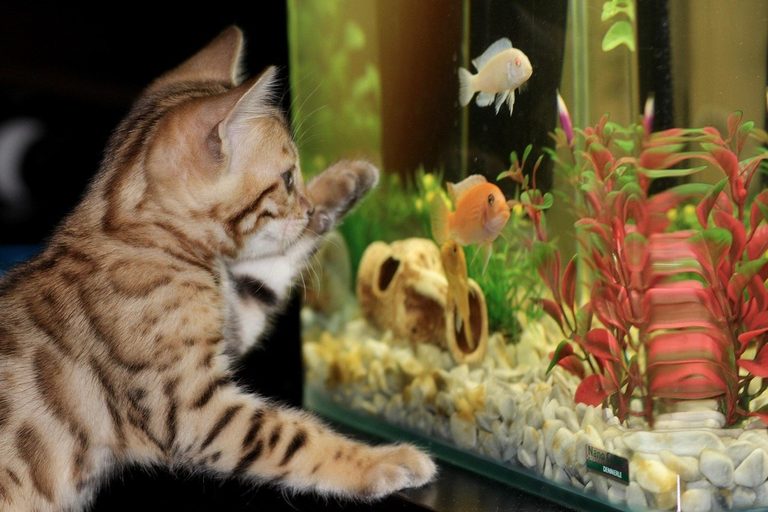
Also think about where the tank sits once the house fills up with holiday things. Practical Fishkeeping warns against putting a tank near radiators or in strong sunlight, because temperature swings can harm your fish. If you rearrange furniture for a tree, don't push the tank next to a heat vent. Most tropical fish do best when the temperature stays steady, without swings from day to night.
So the short answer holds. Skip the random ornament from the attic, buy something made for the water, or test it in a bucket first. When in doubt, leave it out and decorate the room around the tank instead.
Loud parties can stress fish through tank vibration and tapping. Here's what research shows and a quick checklist to protect your tank.
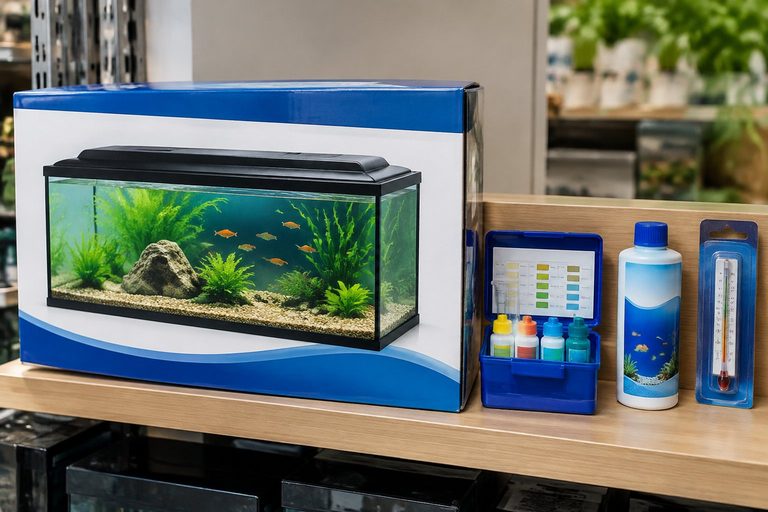
The best beginner aquarium gift: a 20-gallon kit, liquid test kit, conditioner and thermometer. Skip the fish and explain why in a note.
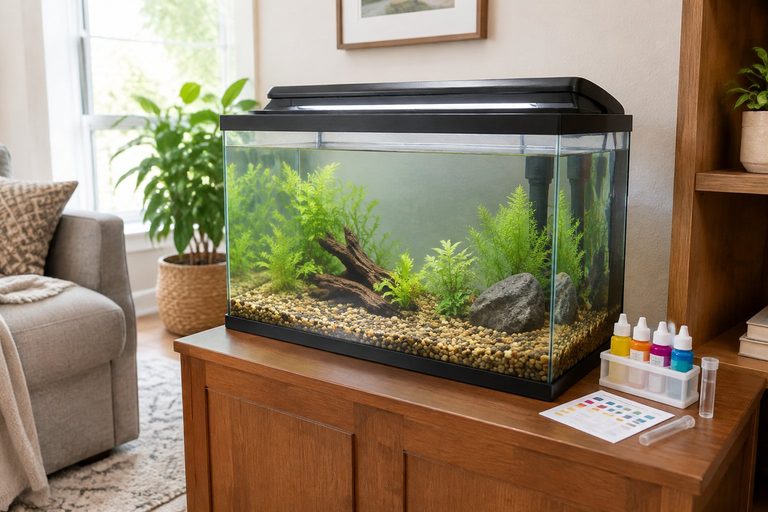
A fish tank makes a good first-timer gift if you plan the cycle. Get the timeline, the must-have kit, and what to put in the box.