How to Get Rid of Brown Algae (Diatoms) in a New Tank
Brown diatom film on a new tank's glass and stones is normal. Learn what causes it, how to wipe it off, and the fixes if it won't fade.
Learn how to dechlorinate tap water for your aquarium, check whether your city uses chloramine, and dose conditioner correctly for water changes.
Jack·8 min read·October 30, 2026
You've got a bucket under the tap, the tank is down a few inches, and you're wondering whether this water is safe to pour in. Straight from the faucet, it isn't. Your city adds chlorine or chloramine so the water is safe for you to drink, and both harm fish and the bacteria in your filter. The fix is cheap and takes a few minutes. Add a liquid water conditioner, dosed for the volume of new water, before it goes into the tank. Here's what's in your tap water, how to find out which disinfectant you have, and how to do it right every time.
Chlorine damages fish gills. It can also kill the beneficial bacteria living in your filter, the bacteria that turn fish waste into less harmful compounds. Lose those bacteria and you can get an ammonia spike and sick fish a few days later, long after you've forgotten the water change.
Most liquid dechlorinators use sodium thiosulfate, which turns chlorine into harmless chloride. Products generally neutralize chlorine within about two minutes and chloramine within about five. At normal doses they're safe for fish. Overdosing only becomes a concern at what Practical Fishkeeping calls "ludicrous dose rates."
The basic rule is to dose for the gallons of new water you're adding, following the label. Two habits keep you safe:
I keep this as a fixed habit because a stream tank isn't just fish. My old 55-gallon long had water pumped up on the left and cascading down through three pools, and fish, little crabs and fire-bellied frogs all lived in that same water. When untreated water goes in, everything in the tank gets it.
Chlorine is the classic disinfectant. Over time it escapes from water into the air.
Chloramine is chlorine combined with ammonia. According to the EPA, it's a weaker disinfectant than chlorine but much more stable. That stability is the reason utilities use it, and the reason it's a problem for aquariums. Chloramine doesn't fade when water sits, and boiling doesn't remove it either. The EPA says it plainly: fish owners "must neutralize or remove chloramines from water used in aquariums or ponds."
One more number worth knowing: the EPA's legal limit for both chlorine and chloramine in drinking water is 4.0 mg/L. That limit is set for people. It doesn't mean 4 mg/L is safe for fish.
How to find out what's in your water:
Watch for temporary switches. Utilities that use chloramine sometimes switch to free chlorine for a few weeks of system maintenance, often called a "chlorine rinse" or "free chlorine conversion." Round Rock, Texas ran one this past August. The city told aquarium owners to use a conditioner that handles both chlorine and chloramine, and noted that most standard aquarium dechlorinators do. If you've just moved, or you got a utility notice in the mail this summer, check again.
Liquid water conditioner: works for both, if the label says so. Not every product handles chloramine. Some brands can't neutralize chloramine at all, so look for the word "chloramine" on the bottle. Conditioners come in two broad types:
Aeration: works for chlorine only. If your utility uses plain chlorine, heavy aeration in a bucket for at least 12 hours will drive it off. That means an air stone running hard, not a light splash. It does nothing useful against chloramine.
Letting water stand: fails for chloramine. The old advice to leave a bucket out overnight comes from the days when chlorine was the only disinfectant. Chloramine doesn't go away on standing.
Boiling: fails for chloramine. The EPA says so directly, and a pot of boiling water isn't practical for a 55-gallon tank anyway.
Carbon: activated carbon filtration comes up in this discussion, but how well it works depends on the carbon. For a normal tank, a conditioner is the simpler and more reliable choice.
The bottom line: if you don't know which disinfectant you have, or it could change, a conditioner labeled for chloramine is the only method that covers you either way.
These are the label doses for two common brands, in US gallons:
For example, say you're changing about 20 percent of a 55-gallon tank, or 11 gallons. With Prime, that's about 1.1 mL. With API on chloramine water, it's about 1.8 mL. Rounding up is fine. Rounding down is how you get trouble.
Bucket vs. dosing the tank. Treating the bucket before pouring is best. If you refill straight from a hose (a python-style refill), Seachem says to dose based on the whole tank volume, not just the gallons you're adding. Add the conditioner before the new water starts flowing.
High chloramine. Seachem says a double dose of Prime is safe when chloramine levels are exceptionally high. This is another reason to know what's in your CCR.
Hot water. Seachem recommends a half dose if the water is above 86 °F (30 °C) and chlorine or ammonia levels are low. Most tropical stream setups run well below that, but this matters in a heat wave.
The ammonia from chloramine. When chloramine is broken apart, the ammonia part doesn't just disappear. You have three ways to handle it:
**Prime can throw off ammonia tests.** Seachem says Nessler-based ammonia kits can read off the scale or show a muddy brown color when Prime is in the water. Seachem suggests its MultiTest Ammonia kit, which isn't affected, or waiting about 24 hours before testing, since Prime is out of the system by then. If you get a scary ammonia reading right after a water change, this is a likely reason.
Utility rinse notices. When your utility announces a switch to free chlorine, keep dosing as usual with a conditioner rated for both. When the rinse ends and chloramine comes back, you're still covered. The danger is relying on aeration or standing water during the rinse and forgetting to switch back afterward.
Checking after treatment. If you're unsure about a new product or new water source, test a treated bucket with a chlorine test kit before it goes in the tank. If it shows anything, dose more or find out why.
The most common mistake: under-dosing big water changes. Someone doses for a 10-gallon top-off, then runs a hose for a 30-gallon change. Or they use the chlorine dose on chloramine water. Dose for the actual volume, and for chloramine if that's what your utility uses. If you're cleaning tanks before guests come for Thanksgiving, this is especially easy to get wrong in a hurry.
Measure it, treat it, and pour it in. Your fish and your filter bacteria will be fine.
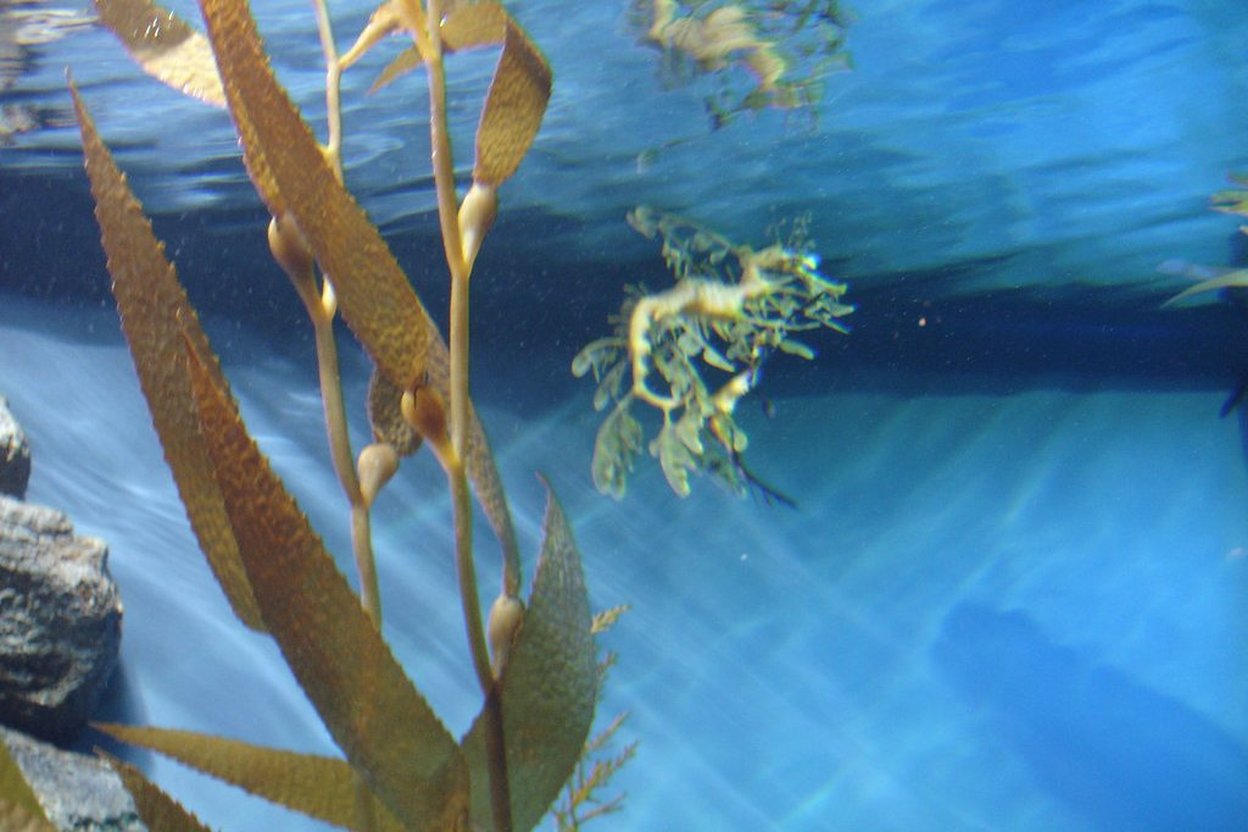
Photo: DSC01619-The leafy sea dragon by lyng883, BY 2.0.
Brown diatom film on a new tank's glass and stones is normal. Learn what causes it, how to wipe it off, and the fixes if it won't fade.
How many times an hour your filter should turn over your tank's water, with GPH math, river-tank targets, and why box ratings overstate flow.
Heating vents and radiators can push your tank's temperature past what the heater controls. Learn why to avoid them and how to test a spot.