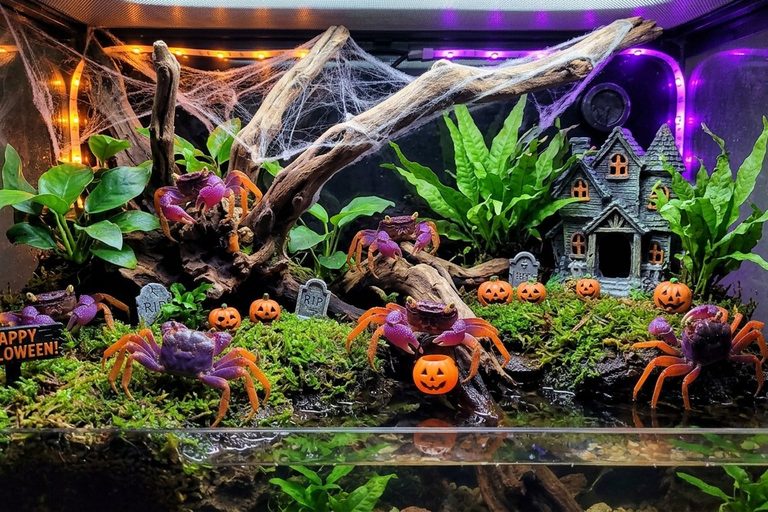
Can a crab get stuck in a pumpkin-house ornament?
Can a crab get trapped in a pumpkin-house ornament? See which openings are risky, how to pick or seal a safe piece, and how to free a stuck crab.
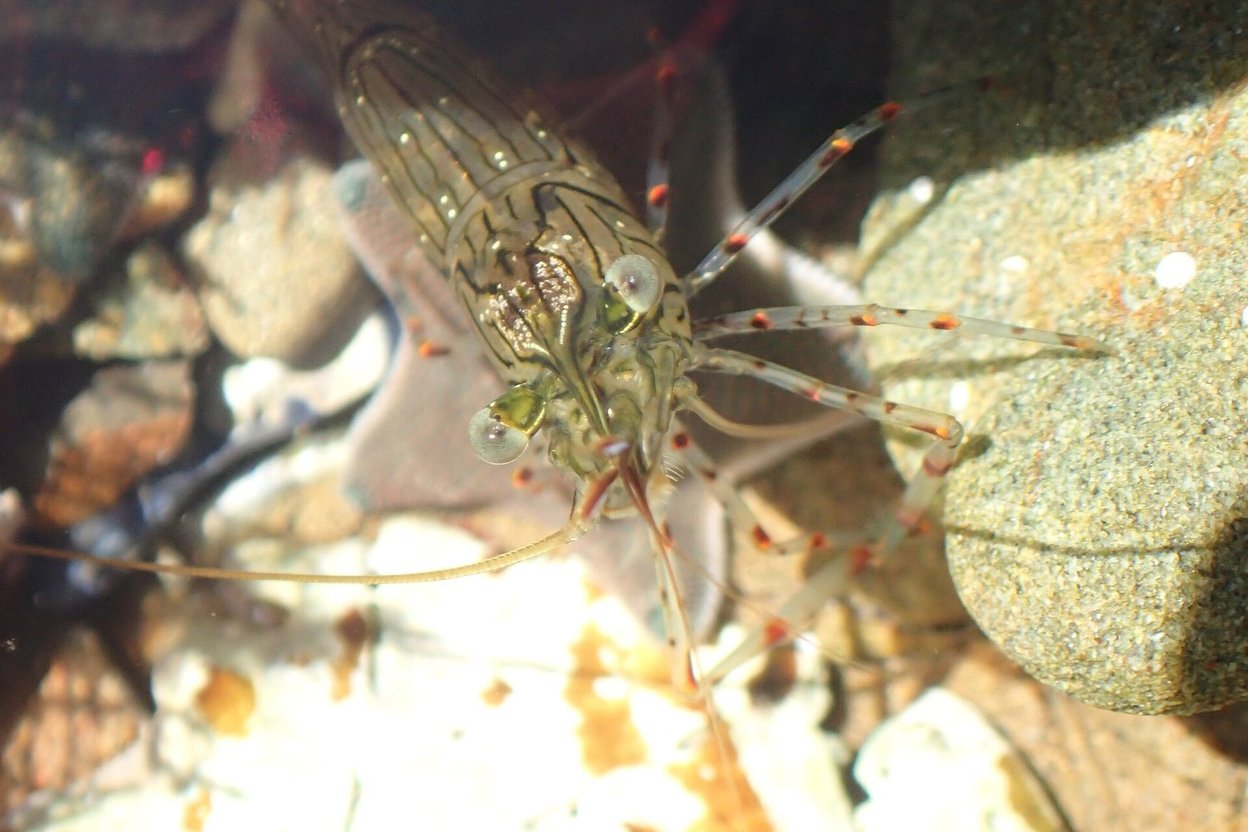
Ghost shrimp are sold by the bag as fish food, but they make great see-through scavengers. How to keep them alive, what they eat, who they can live with, and the look-alike shrimp to watch out for.
Jack·3 min read·October 5, 2026
Ghost shrimp are sold by the dozen in the feeder tank at most pet stores, for less than a dollar apiece. Most of them get dropped in front of a cichlid and that's the end of the story. But kept on their own terms, they're one of the most entertaining scavengers you can put in a tank, and you can watch their food move through their see-through bodies.
"Ghost shrimp" or "glass shrimp" is a catch-all name for small, clear freshwater shrimp, usually Palaemonetes species from the southeastern U.S. They grow to about an inch and a half and usually live about a year.
Feeder bags sometimes include other clear shrimp, especially whisker shrimp and other Macrobrachium species. They look almost the same when they're small, but they have long, thin claws on the second pair of legs, and they're predators. They'll pick off small fish, shrimp and snails at night.
Look closely before you buy. Ghost shrimp have tiny claws. If you see one with arms noticeably longer than the rest, leave it in the store.
The reason so many die in the first few days isn't the shrimp. It's the trip: crowded feeder tanks and a sudden change in water.
Almost anything: leftover fish food, algae, biofilm, and bits of dead plant. In a busy tank they may not need extra food at all. Otherwise, a sinking pellet or a piece of an algae wafer every day or two is plenty.
They're fine with small, peaceful fish like White Cloud minnows, rasboras, small tetras and corydoras. Bettas, larger cichlids, big loaches and most catfish will hunt them.
In a river tank, they handle moderate current well and will spend time picking through the rocks in the calmer spots. Our White Cloud minnow guide is a good match: both are inexpensive and happy in cooler water.
If you do keep them as food for bigger fish, quarantine the bag first. Feeder tanks are notorious for carrying disease, and a sick feeder can bring it straight into your tank. Our guide to quarantining new arrivals applies to inverts too.
Ghost shrimp females carry green eggs under their tails for about three weeks. The babies are tiny and get eaten quickly in a community tank, so you'll need a separate tank if you want to raise them.
Want something bigger and spookier? See our Halloween fish list, which ends with the vampire shrimp.
Photo: Glass shrimp 001 by Tony Wills (iNaturalist username: tony_wills), CC BY-SA 4.0.
Can a crab get trapped in a pumpkin-house ornament? See which openings are risky, how to pick or seal a safe piece, and how to free a stuck crab.
Vampire crabs make tempting Halloween impulse buys at $10, but they need a land-heavy paludarium to survive—not a traditional fish tank.
Tell snail eggs apart by species (nerite dots, mystery snail clutches, ramshorn and bladder jelly) and decide whether to scrape, keep, or hatch them.