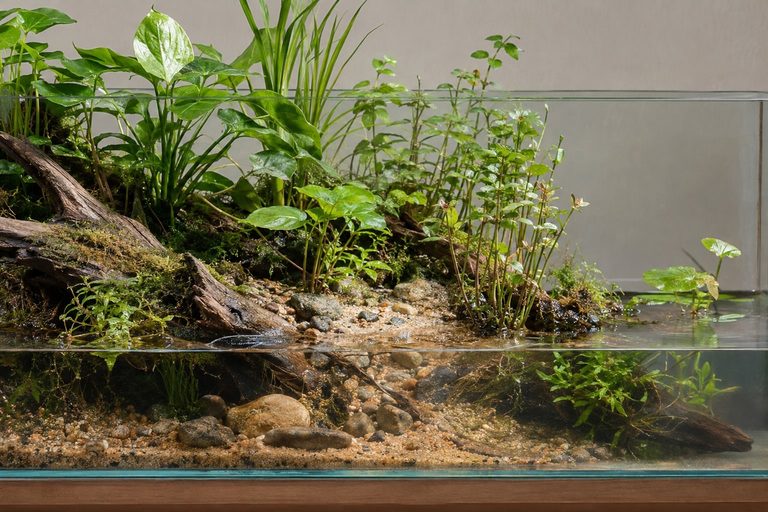
A riparium is a tank with a shoreline. What you actually need
Learn what a riparium is and what you need to build one: an open-top tank, planters, plants that tolerate wet roots, and light above the water.
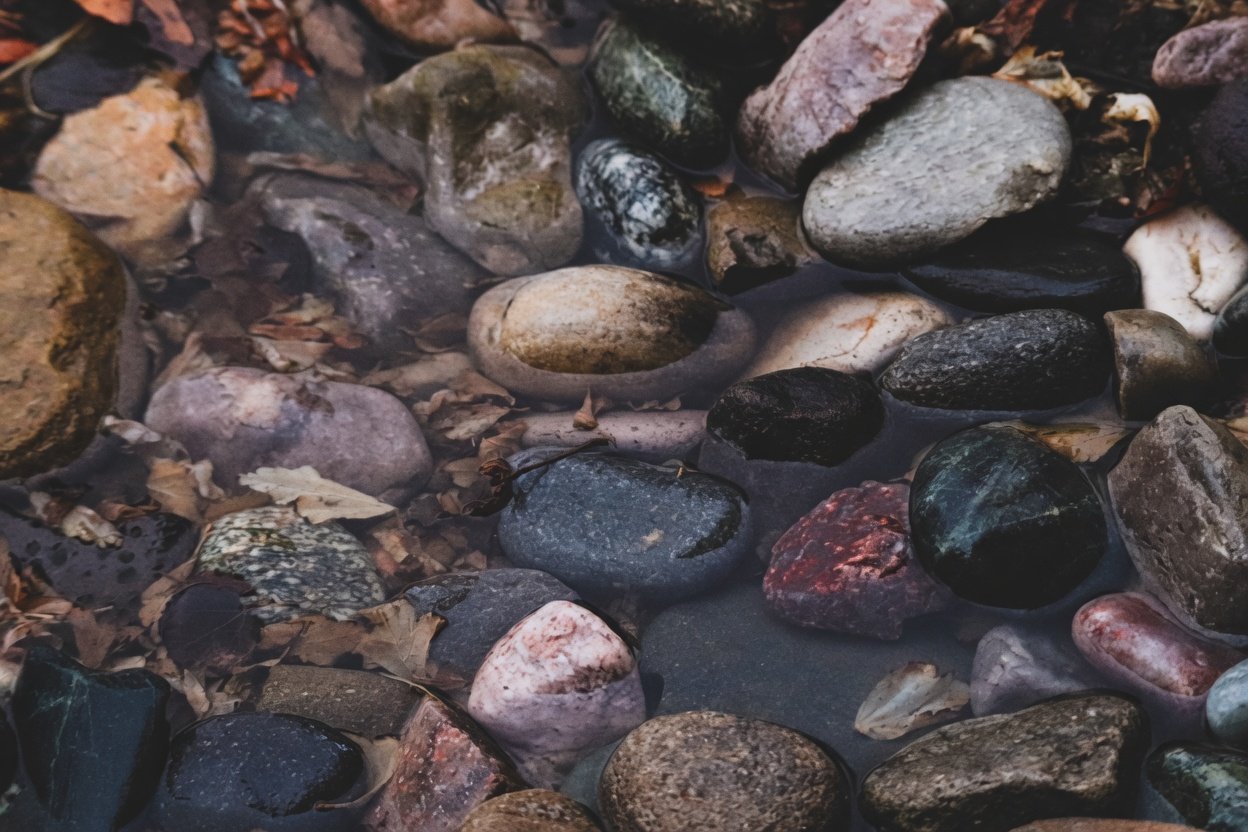
Real rivers have layers: sand in the slow spots, gravel and smooth stones in the current. How to choose and layer substrate for a natural-looking river tank that's safe for bottom dwellers.
Jack·2 min read·October 2, 2026
Look at a real stream bed and you'll see the plan for a river tank: fine sand where the water slows down, gravel and pebbles where it moves, and smooth rocks where the current is strongest. Copying that is what makes a river tank look real, and it's what keeps bottom-dwelling fish happy.
Sand - Natural for slow-water areas and for fish that sift or bury (many loaches, assassin snails). - Easy on the barbels and bellies of bottom dwellers. - Too fine a sand can blow around in strong current. Use it in calmer zones or behind rocks.
Fine to medium gravel - Stays put in moderate current and holds plant roots. - Choose smooth, rounded gravel, not sharp, crushed stone.
Pebbles and river rock - The signature river-tank look. Mix sizes, from marble size to fist size. - Stays in place in strong flow. Smooth rocks are where hillstream loaches cling and graze. - Leave gaps that make caves and hiding spots.
Debris collects in the slow zones; that's normal in a river too. Vacuum those spots during water changes. See also cleaning aquarium rocks.
Get the bottom right and the rest of the river tank (flow, plants and fish) falls into place. See the river tank owner's guide.
Learn what a riparium is and what you need to build one: an open-top tank, planters, plants that tolerate wet roots, and light above the water.
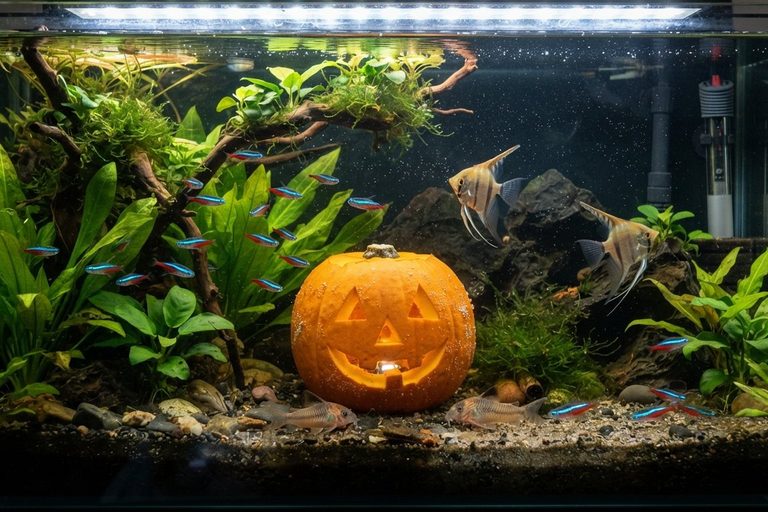
Learn which Halloween ornaments are safe in a fish tank, why craft-store decor is risky, and a simple screening test before adding one.
Discover why whole pumpkins damage aquarium water and how to safely offer small pieces as seasonal treats.