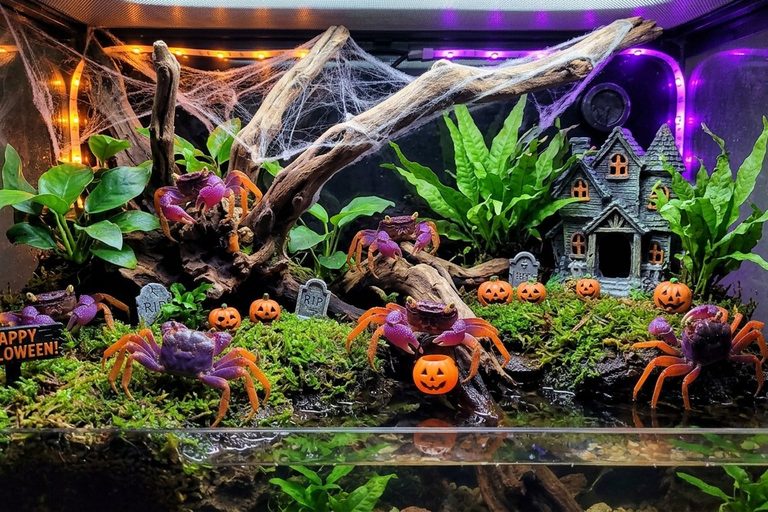
Can a crab get stuck in a pumpkin-house ornament?
Can a crab get trapped in a pumpkin-house ornament? See which openings are risky, how to pick or seal a safe piece, and how to free a stuck crab.
Assassin snails eat bladder, ramshorn and trumpet snails. How fast they work, how many you need, what water they like, and how to keep them from going lazy.
Jack·4 min read·October 1, 2026
It starts with one tiny snail on the glass. A week later there are twenty. A month later the tank is crawling with them. Pest snails usually ride in on live plants as eggs you never see, and once they find leftover food, they multiply fast.
Plenty of fishkeepers have an easy answer: assassin snails. They're small, good-looking, and they eat other snails for a living. Here's how they work and how to use them right.
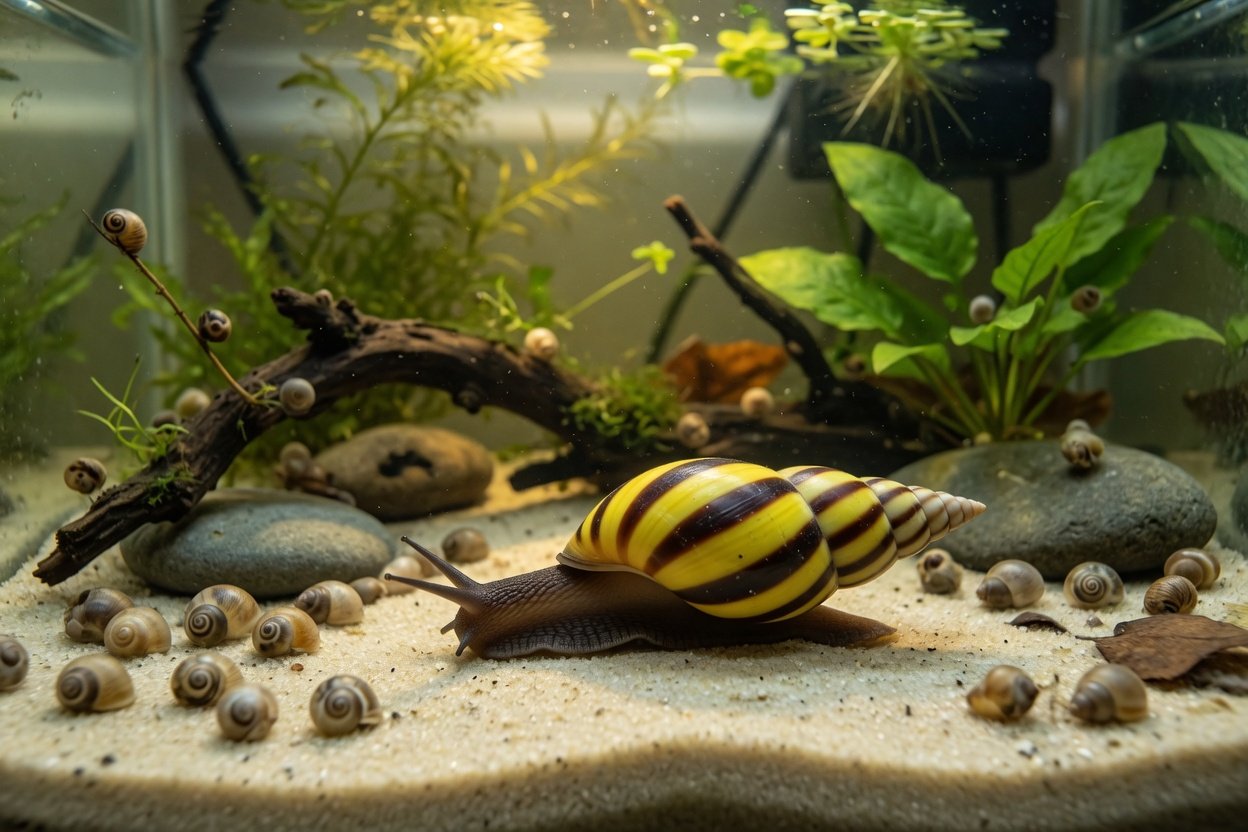
The assassin snail (Anentome helena, also sold as Clea helena) is a freshwater snail from Southeast Asia. It's easy to recognize: a cone-shaped shell, about an inch long when grown, striped in bright yellow and dark brown bands, like a little bumblebee.
Unlike most aquarium snails, it doesn't graze on algae. It hunts. It finds another snail, latches on, and uses a long feeding tube to eat it out of its shell. Their favorite targets are the classic pest snails:
Slower than you might hope, but steadily. In one controlled test reported by Aquarium Breeder, 10 assassin snails ate 38 Malaysian trumpet snails in the first week, about one snail every two days per assassin. That's real progress, but not overnight.
For a moderate outbreak, a common starting point is a few assassins for a small tank and more for a large or heavily infested one. Give them several weeks to a couple of months. They won't wipe out every last pest snail, and that's fine. They keep the population low.
This is the best part. Most snails that get into an aquarium explode in numbers. Assassins don't.
So even a breeding group grows slowly, and once the pest snails are gone, their numbers level off.
If there's always fish food lying around, assassin snails will eat that instead of hunting. They scavenge leftovers and sinking pellets happily. To keep them working:
This also solves the root problem. Pest snail outbreaks almost always come from overfeeding. Fix the feeding, and the assassins do the rest.
Assassins are generally peaceful with fish and with adult shrimp. They may go after very small or newborn shrimp, and they will eat other snails you might want, including small nerites and baby mystery snails. If you keep snails on purpose, think twice. See our guide to snails with bettas for more on tank mates.
Assassin snails, like any aquarium animal, should never be dumped in a pond, creek or lake. A snail that eats other snails can do real damage to native species. If you end up with extras, give them to another hobbyist or a local fish store.
For a pest snail outbreak, assassin snails are one of the easiest fixes in the hobby. Keep the water warm, feed lightly, be patient for a few weeks, and you'll watch the snail population on your glass shrink while a handful of striped hunters patrols the sand.
Can a crab get trapped in a pumpkin-house ornament? See which openings are risky, how to pick or seal a safe piece, and how to free a stuck crab.
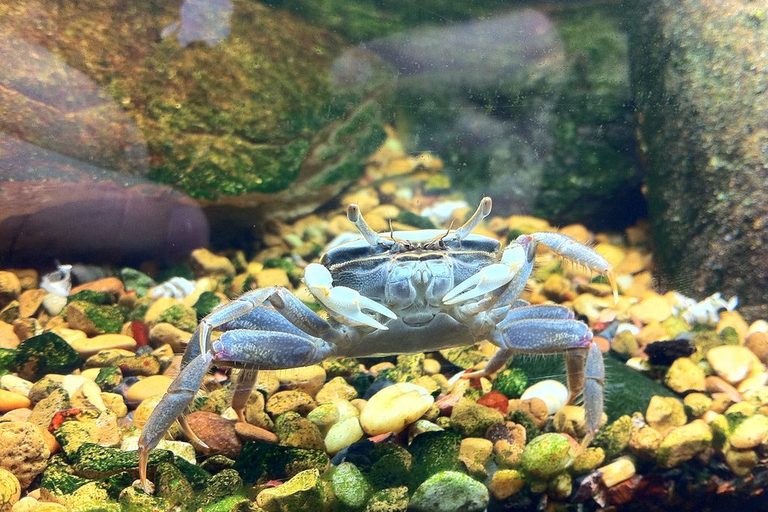
Vampire crabs make tempting Halloween impulse buys at $10, but they need a land-heavy paludarium to survive—not a traditional fish tank.
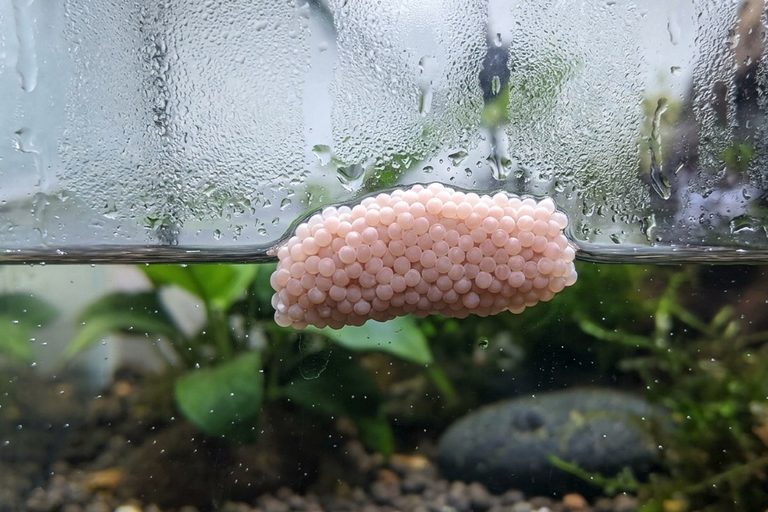
Tell snail eggs apart by species (nerite dots, mystery snail clutches, ramshorn and bladder jelly) and decide whether to scrape, keep, or hatch them.