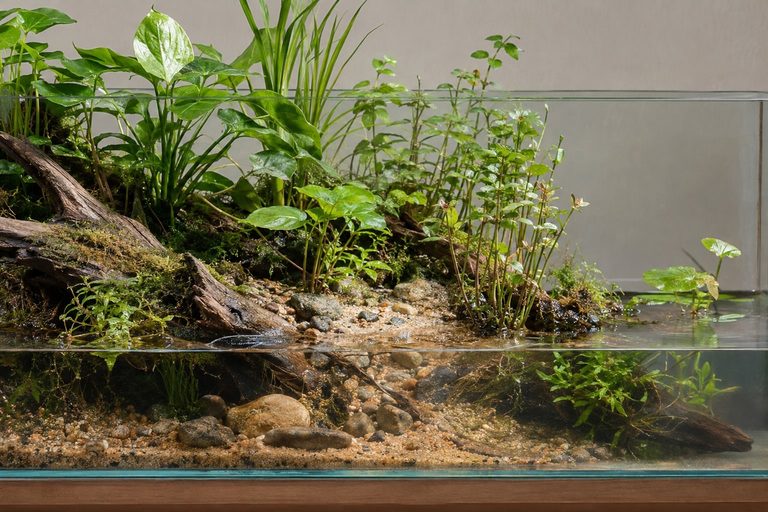
A riparium is a tank with a shoreline. What you actually need
Learn what a riparium is and what you need to build one: an open-top tank, planters, plants that tolerate wet roots, and light above the water.
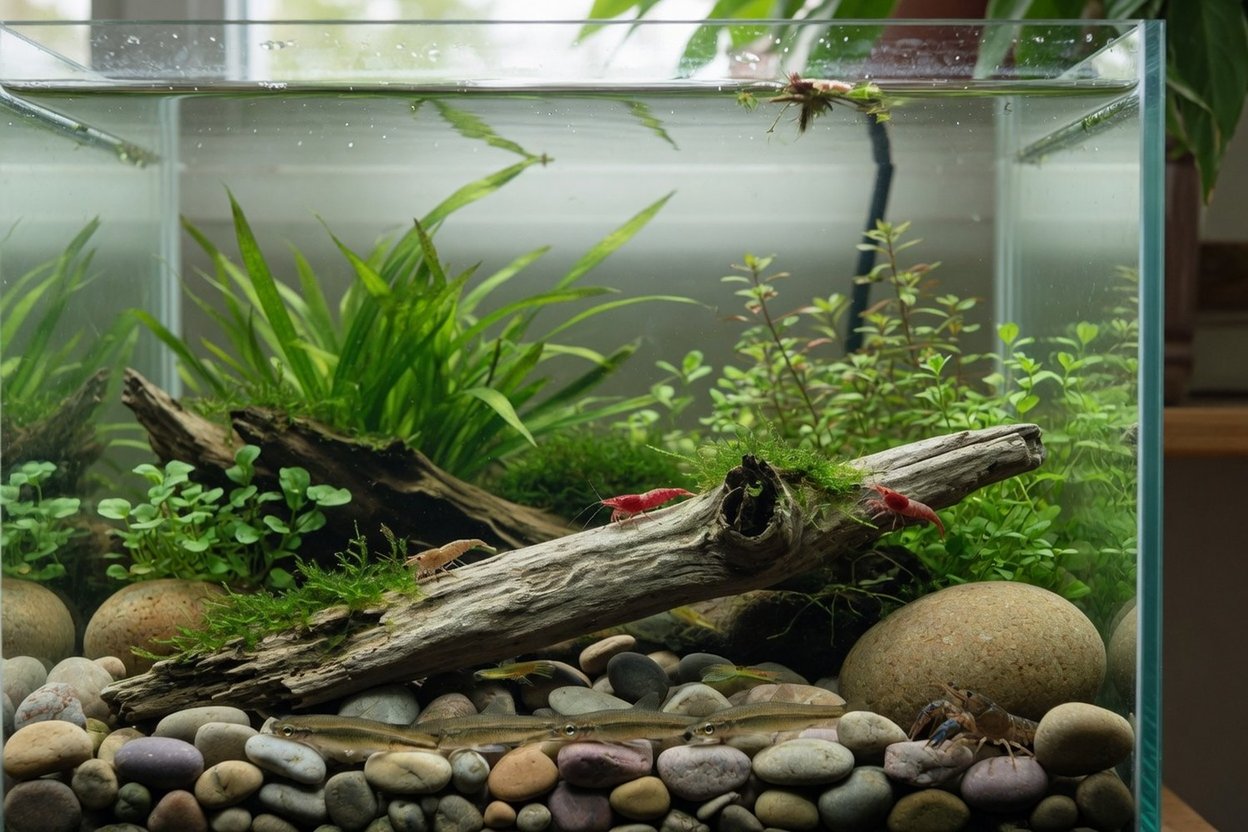
A river manifold pushes water in one direction down the length of the tank, like a real stream. How it works, what you need, a simple DIY layout, and which fish love it.
Jack·3 min read·October 3, 2026
Most aquarium filters push water around in circles: out of the outlet, around the tank, back into the intake. A river manifold tank does something different. It sends water in one direction, from one end of the tank to the other, in a smooth sheet, like a stream running over rocks. Fish that come from fast water love it, and it looks amazing.
A manifold is a pipe with several outlets (holes or nozzles) running along one end of the tank, usually across the width near the bottom and mid-water. Water from the pump or filter comes out of all those outlets at once, which spreads the flow across the whole end of the tank instead of one strong jet.
At the other end, the water is pulled back out through an intake, an overflow, or a sump. The result is unidirectional flow: water moving steadily from one end to the other.
Some hobbyists use a sump with an overflow so the water level stays steady; others run a powerful canister. Both work.
Strong flow keeps debris moving toward the intake, which makes cleaning easier. Rinse the prefilter sponge often in old tank water, and keep up with water changes.
Like any new tank, a manifold tank needs to be cycled before you add fish. See how to cycle a new aquarium.
A one-way-flow tank takes a little more planning than a standard setup, but watching fish hold their place in a real current is worth it.
Learn what a riparium is and what you need to build one: an open-top tank, planters, plants that tolerate wet roots, and light above the water.
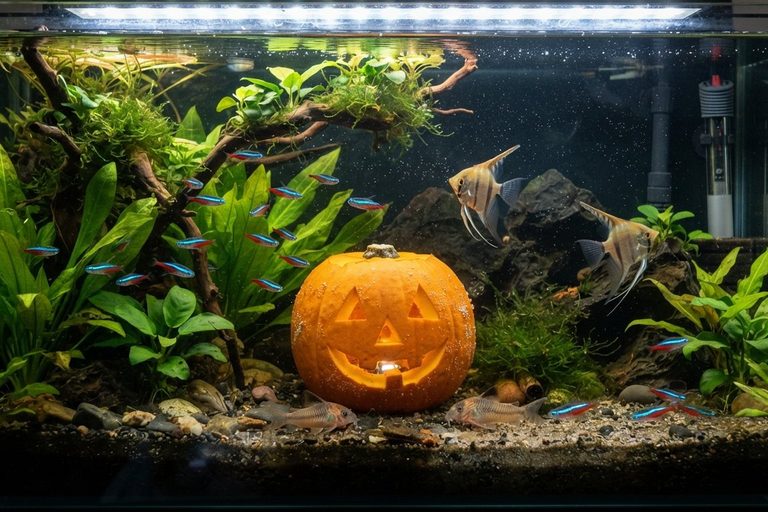
Learn which Halloween ornaments are safe in a fish tank, why craft-store decor is risky, and a simple screening test before adding one.
Discover why whole pumpkins damage aquarium water and how to safely offer small pieces as seasonal treats.