Why Is There So Much Condensation Under My Aquarium Lid in Winter?
Winter condensation under an aquarium lid is usually normal. Learn why it forms, when it signals a real problem, and what to check first.
Tiny bubbles after a winter water change are usually dissolved air. Learn how to tell air from a real problem and prep refill water.
Jack·8 min read·November 24, 2026
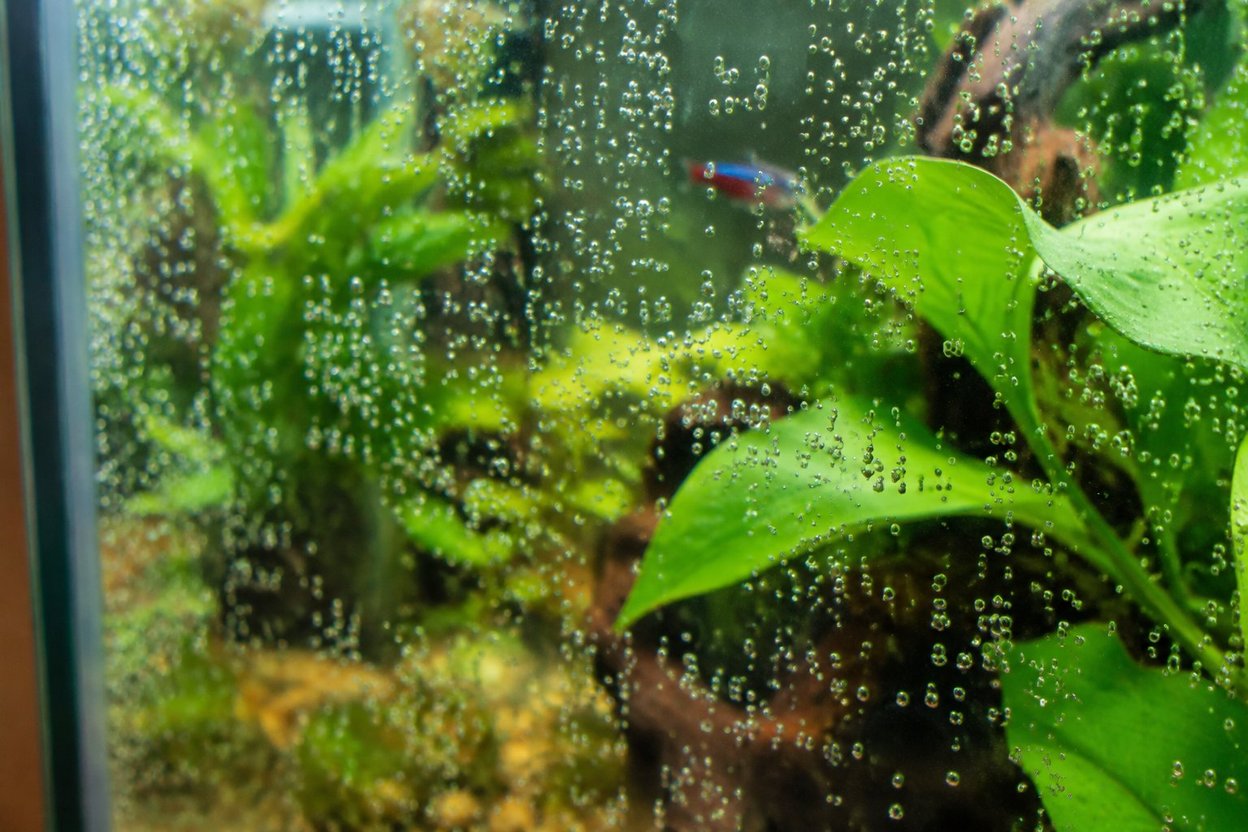
You finish a water change on a cold fall evening, and an hour later the glass, stones and plant leaves are covered in tiny silver bubbles. In most cases this is dissolved air coming out of the new water. Cold tap water arrives under pressure, and it can hold extra gas that escapes once the water warms up and the pressure drops. The bubbles alone don't mean your fish are sick. They are a good reason to look at the fish, test the water, and fill the next bucket a little differently.
Two things let tap water hold more air than it can keep. The first is cold, because cold water holds more dissolved air than warm water. The second is pressure, because water in a pressurized pipe can hold more gas than water sitting in an open container. When you open the tap, the pressure drops. When that water warms up in your aquarium, it can hold even less gas, so the extra nitrogen and oxygen come out as bubbles.
Winter makes this easier to see because the water in the mains is coldest then. The gap between tap temperature and a heated tank is bigger, so more gas has to come out. The same effect is why winter tap water sometimes looks milky in a drinking glass.
The bubbles cling to surfaces instead of rising straight away. One expert explanation says they form at tiny flaws in surfaces like glass. Aquarium guidance describes the same post-change bubbles collecting on the glass, substrate, plants and decorations. That's what you're looking at, and it's a physics effect rather than a diagnosis. Whether the fish are fine is a separate question, covered below.
Water utilities suggest a simple test. Fill a clean, clear glass with the same cold tap water you use for refills and set it on the counter. If it looks cloudy at first and then clears from the bottom upward, the cloudiness is air. The bubbles rise and leave through the surface, so the bottom of the glass clears first.
Aquarium Co-Op says ordinary post-change microbubbles should mostly be gone after a few hours. Treat that as a rough guide, not a deadline that applies to every tank.
Two things don't fit this explanation:
The test has limits. It tells you the tap water carries extra air. It doesn't measure how much gas is in your aquarium, and it tells you nothing about chlorine, chloramine or water chemistry. Clear water can still be unhealthy water, so a clean-looking tank still needs testing.
Bubbles on the glass are harmless on their own. The thing to know about is gas bubble disease. It isn't an infection. It happens when there is so much dissolved gas in the water that bubbles form inside the fish, in their tissues or blood vessels. The cause is the water itself, which is why it's tied to the same conditions that put bubbles on the glass.
Signs that deserve real concern:
Bubbles on the glass alone can't confirm the disease. The same bubbles show up after perfectly ordinary water changes. Veterinary guidance does list surface bubbles as a possible clue to too much dissolved gas, but only as a reason to look further. If the fish are swimming, eating and holding their position normally, the bubbles on the glass are most likely just leftover air from the refill.
One more point. Your water company may tell you milky tap water is safe to drink, and for people it is. That doesn't make it safe for a tank. Fish live in the water all the time and breathe through their gills, and drinking water is disinfected with chemicals that harm aquarium animals. "Safe to drink" and "safe for fish" are different standards.
If I saw a coat of bubbles after a winter refill, I would check things in this order:
If you suspect too much dissolved gas, especially if fish are showing balance problems, the standard fix is strong aeration. An air stone, or a filter outlet that churns the surface, lets the extra gas escape into the air.
Then check your equipment. Veterinary guidance notes that if air gets into the plumbing on a pump's intake side, the pump can force it into the water under pressure and add more gas. This matters in a river tank. My old River Tank EcoSystem pumped water up on the left and let it cascade down through three pools, and setups like that have plenty of joints and tubing where a small air leak could hide. If the bubbles keep coming back days after a water change, check the intake side first: loose fittings, cracked tubing, or a low water level that lets the pump draw in air.
The simplest fix is to stop adding cold, gassy water straight from the tap. As the tap water gets colder toward Thanksgiving, it helps to get the refill ready in a separate container before it goes near the tank.
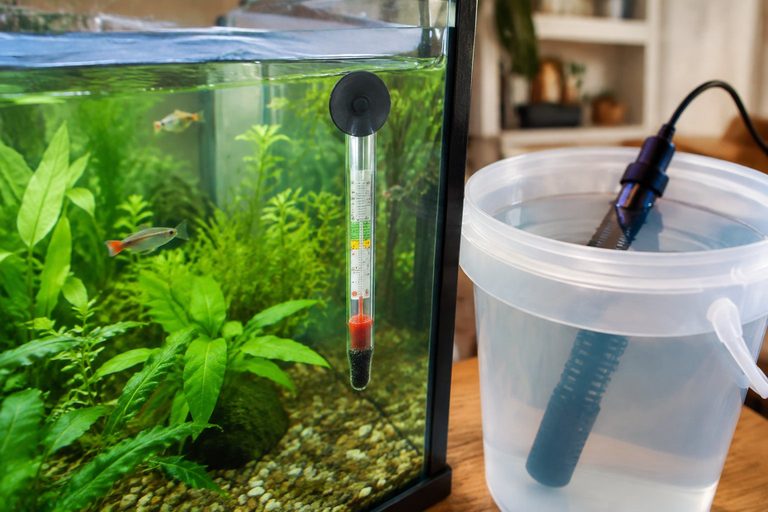
Warm it first. Bring the new water up to the aquarium's temperature before you add it. A spare aquarium heater in a clean bucket or storage tub does this well. This avoids a sudden temperature change for your animals. It also means most of the extra air comes out in the bucket instead of on your glass. Warm water holds less gas, so heating it in an open container lets the extra escape before it reaches the fish.
Remove the disinfectant as a separate step. Letting air out and making water safe for fish are two separate jobs. Standing water can release extra air, but chlorine and chloramine still have to be removed. Chloramine matters most here. Leaving water out for a few days doesn't reliably get rid of it, so the old "let it sit" advice isn't enough. Find out which disinfectant your water supplier uses, and use a water conditioner made for it at the right dose for the volume you're preparing.
Add it gently. Once the water is the right temperature and treated, pour it in slowly. If you run a cascade or stream setup, give the pump a minute to settle and check that the intake stays fully under water.
My routine for a winter refill would be this checklist:
Do this and the silver coat on the glass should mostly stop appearing. If it does show up, you'll have a better idea of whether it's leftover air or a problem worth looking into.
Winter condensation under an aquarium lid is usually normal. Learn why it forms, when it signals a real problem, and what to check first.
Warm and treat replacement water to match your tank's temperature before a winter water change, and measure it instead of guessing by feel.
Winter heat dries indoor air and speeds evaporation, so your tank loses water faster. Learn how to measure your loss and slow it down.