Why Are There Tiny Bubbles on the Glass After a Winter Water Change?
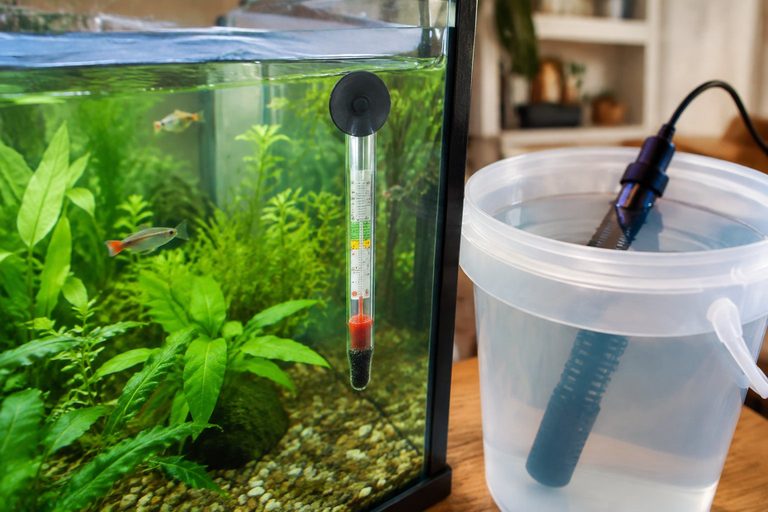
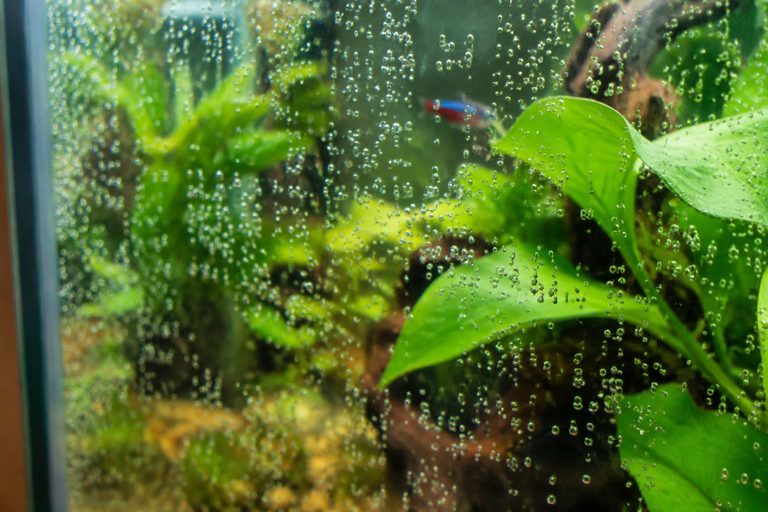
Tiny bubbles after a winter water change are usually dissolved air. Learn how to tell air from a real problem and prep refill water.
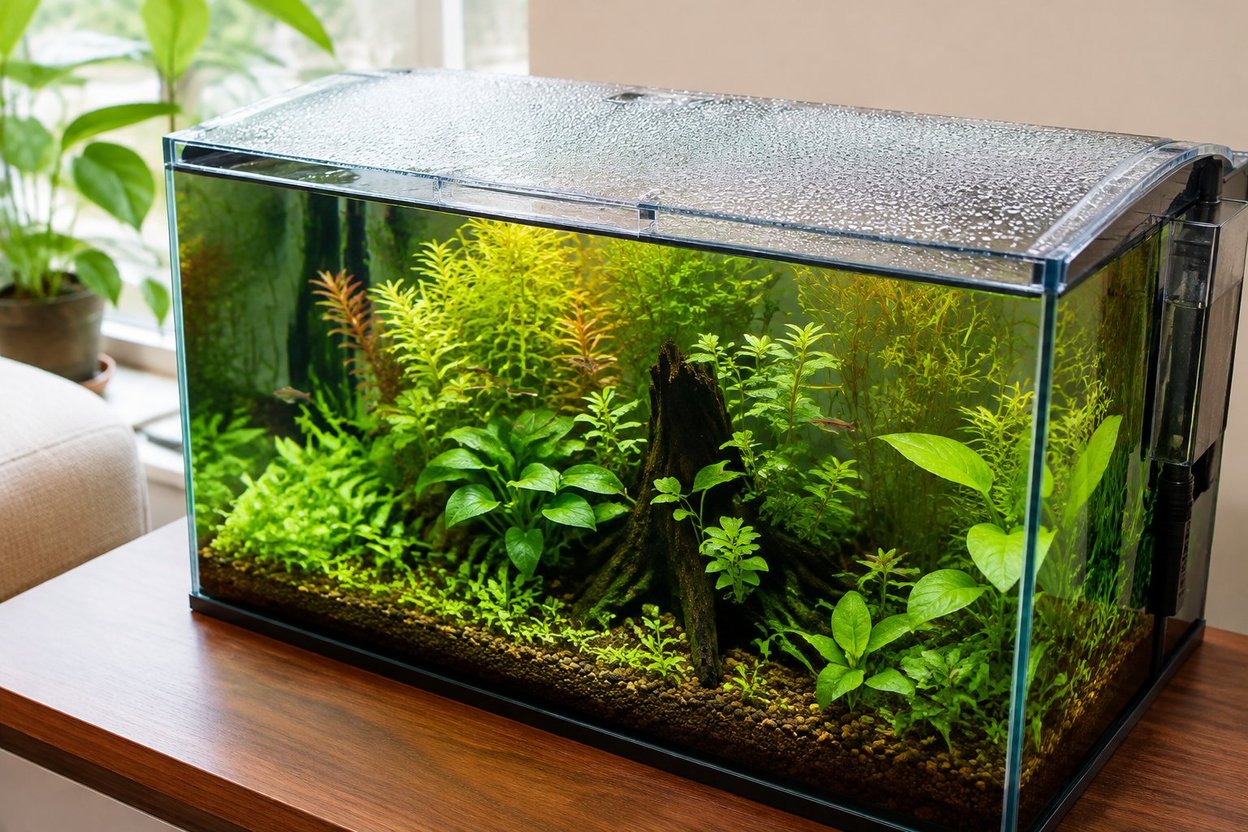
Winter condensation under an aquarium lid is usually normal. Learn why it forms, when it signals a real problem, and what to check first.
Jack·7 min read·November 24, 2026
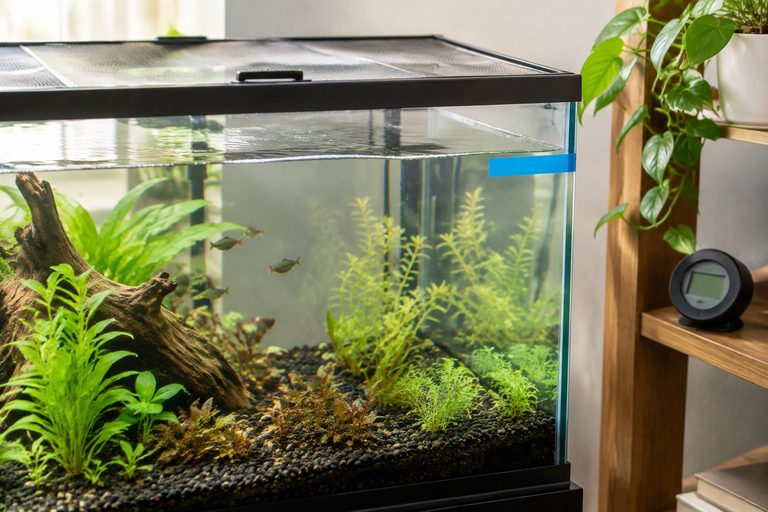
The heat comes on for the first chilly week of fall, and one morning you lift the aquarium lid and water runs off its underside onto the stand. The glass is beaded and foggy, and it wasn't like that in August. This is usually normal. Your tank water is warmer than the room, some of it evaporates, and that water vapor turns back into droplets wherever it touches a surface cool enough. In winter the lid is often that surface.
Every open water surface loses a little water to the air as vapor. In a heated aquarium that happens all day, so the air trapped between the water and the lid holds a lot of moisture.
The National Weather Service describes the dew point as the temperature air has to cool to before its water vapor condenses into liquid. Air near warm tank water carries plenty of vapor, so its dew point is fairly high. A lid sits between that warm, damp air and the cooler room. When the room cools down in fall and winter, the lid cools with it. Once the lid's underside drops below the dew point of the air under it, vapor turns into droplets on the lid, the same way dew forms on grass on a cold night.
Here's a made-up example to show the idea. Say your water stays at 76°F while the room drops into the mid-60s at night. The lid ends up somewhere between those two temperatures, and that can be cold enough for droplets to form. In summer, with a warmer room, the same lid may stay above the dew point and look much clearer.
Fluval's own FAQ treats water evaporating and condensing on the cover as normal. Winter doesn't mean every tank has to drip more. A colder lid just makes condensation more likely, and some droplets under the lid are expected.
The droplets are a sign the lid is working. Aqueon and Aquarium Co-op both note that a cover cuts evaporation and stops fish from jumping out. Evaporation also takes heat out of the water, so a lid helps the heater hold its temperature on cold nights.
Whether the water stays in the tank matters more than how the lid looks. If the condensation runs back down into the aquarium, the cover is doing its job: the water and heat stay in the tank. If water is escaping into the room, running off the edges, soaking the stand or misting nearby furniture, that needs fixing.
So you're not aiming for a bone-dry lid. You want one that keeps the water inside and doesn't let anything wet reach places it shouldn't.
Actual water temperature. I'd read a thermometer in the water rather than trusting the number on the heater dial. Aqueon and Aquarium Co-op both recommend a separate thermometer. If the reading matches your target, the heater isn't the problem.
Drafts. Feel for cold air near the tank. Outside doors that get opened a lot (Halloween night, or a house full of Thanksgiving guests) and heating or cooling vents can chill the lid and cause sudden swings in water temperature. Both sources advise keeping tanks away from them.
Lid seating. Make sure the cover sits the way its maker intended. Aqueon's glass-top instructions say the cover is designed to rest inside the tank's supporting lip so water doesn't seep out over the rim. A lid that's been knocked onto the outer edge can send water down the outside of the glass.
Where the water ends up. Droplets on the underside of the lid that fall back into the tank are fine. Wet light fixtures, cords, power strips, plugs or outlets are a different, more serious problem.
Every cord should hang in a drip loop: part of the cord dips below the outlet or connector, so water running down the cord drips off at the low point and doesn't reach the plug. If you find a plug or outlet already wet, don't reach for it. Aqueon's safety instructions say to switch off power at the breaker or fuse first, and only then unplug the equipment.
Once the checks come up clean, the fixes are simple:
There are a few things I wouldn't do. I wouldn't rig a homemade heater on the lid, spray coatings on anything above the water, or prop the lid open by some measured gap I read about online. None of those has good support, and the risk falls on the animals.
When a lid keeps dripping, it's tempting to take it off or turn off the air pump. Both cause bigger problems.
Taking the cover off gets rid of the droplets, but you also lose water faster, lose heat on cold nights, and leave an open top for anything that wants to leave. Cutting aeration is worse. Aquarium Co-op explains that a moving surface is where oxygen gets into the water and carbon dioxide gets out. Making the lid look nicer isn't worth that.
This matters even more in a stream-style tank. My River Tank kit pumped water up on the left side of a 55-gallon long and let it cascade down through three pools. That moving water is the reason the setup works, so keep it. The other lesson I learned with that tank was to swap the light kit for a full screen lid, because crabs and some reptiles get out of almost anything. Aquarium Co-op makes the same point: openings for filters, airline tubing and cords should fit closely enough that nothing can squeeze through. Mixed tanks with frogs, crabs or reptiles also need cover and ventilation that suit those particular species, so check their needs before changing your lid setup.
Condensation under the lid is the tank's business. Damp windows, sweating walls or musty furniture near the aquarium are a room problem, and you should check them separately.
For the house, the EPA recommends keeping indoor relative humidity below 60%, ideally between 30% and 50%, and dealing quickly with condensation on windows, walls or pipes. A cheap humidity meter tells you where the room stands, and the EPA lists a dehumidifier as an option if the reading is high. Those numbers are for the room. The pocket of air right above warm tank water will always be much more humid than that.
A quick checklist:
Tiny bubbles after a winter water change are usually dissolved air. Learn how to tell air from a real problem and prep refill water.
Warm and treat replacement water to match your tank's temperature before a winter water change, and measure it instead of guessing by feel.
Winter heat dries indoor air and speeds evaporation, so your tank loses water faster. Learn how to measure your loss and slow it down.