How Long Can a Fish Tank Go Without a Water Change When Cold Weather Slows Everything Down
Cold slows your filter as well as your fish, so skipping a water change is risky. Learn to test ammonia, nitrite and nitrate before you decide.
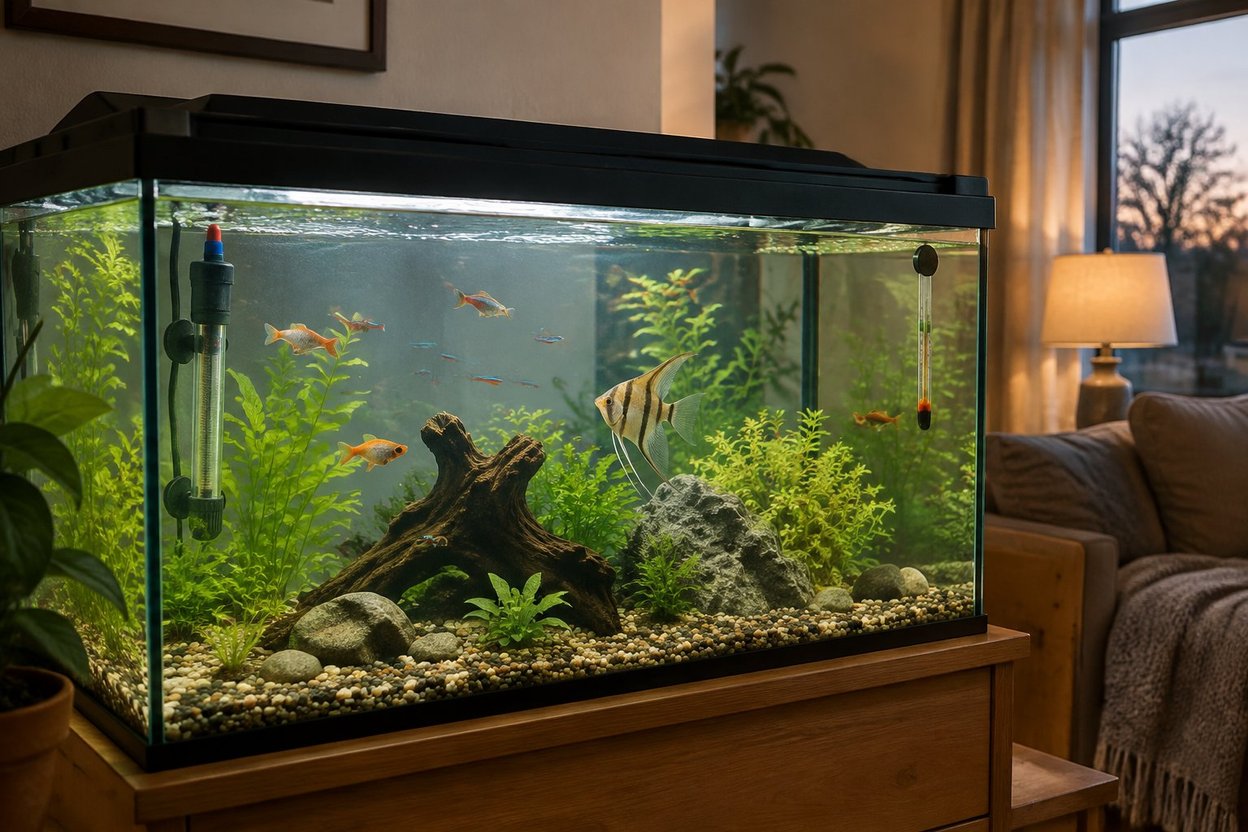
Usually, leave the heater alone. Learn why, which risks matter most while you're away, and a simple plan by trip length.
Jack·7 min read·November 27, 2026
You've packed, booked the dog sitter, and you're thinking about turning the house thermostat down for the Thanksgiving trip. Then you look at the tank and wonder whether the aquarium heater should go down too, to save a little power and maybe slow the fish down while you're gone. For most trips the answer is no. Leave the heater where it is, or lower it by only a couple of degrees if your fish are hardy. The real risks while you're away are a heater that fails, too much food, and a room that gets cold.
For a normal trip of a few days to two weeks, I'd leave the heater alone. A drop of a few degrees won't hurt hardy tropical fish. Don't turn the heater off, though, and don't set it near the bottom of your species' range. No vet or manufacturer gives a vacation number, so this is my opinion. I'd stay at about 70–72°F or above for typical tropical community fish.
Here's why lowering it isn't worth much:
There are two exceptions. Cold-water and temperate river species, such as many native fish, often don't need a heater at all, so there's nothing to turn down. And if the tank sits in a room that gets cold, the heater has to stay on and set properly.
Fish are cold-blooded, so cooler water does slow them down. Metabolism in cold-blooded animals usually has a "Q10" of about 2 to 3. That means a 10°C (18°F) drop cuts the metabolic rate to roughly a half or a third. A 3°C (5°F) drop has only a modest effect. The number varies by species: one crayfish study measured a Q10 of only 1.47 between 23 and 31°C. Lower metabolism means fish use less oxygen and make a bit less waste. That is the real but small upside.
Your filter bacteria slow down too. Nitrifying bacteria are often said to work best around 77–86°F, and a common rule says their growth rate halves for every 18°F below that. Treat those numbers as a rough guide. Keepers also report that sudden swings are harder on the bacteria than a steady cool temperature.
How cold is too cold? Aquariumscience.org says most freshwater tropical fish do fine at normal home temperatures of 65–85°F, and that a community tank can run down to 65°F without a heater. The same page warns that some tropical fish die quickly below 60°F. It cites a Corydoras study where water fell to 57°F and 20% of the fish died. It also describes discus that survived being cooled from 82°F to 57°F at 1 degree per hour, and it calls the old "more than 2 degrees shocks fish" rule a myth. Other keepers dispute those claims, so take them carefully. "Tropical" covers a lot of fish with very different needs, so check the range for each species you keep.
That goes double for a river tank. My old River Tank held fish, little crabs, small turtles and fire-bellied frogs in one 55-gallon long tank. A mixed tank like that only works if you know every animal's range and keep the water where they overlap. A vacation is the wrong time to push that overlap colder.
Fine-tuning the setting matters far less than whether the heater works at all. Bulk Reef Supply says plainly: "Your heater is the #1 most likely piece of equipment to fail on your aquarium." LiveAquaria notes that heaters sometimes crack and fail.
A heater can fail in two ways. If it fails off, the tank drifts down to room temperature. If it sticks on, it can cook the tank, and the second way is often worse. Lowering the setting does nothing about either one. These steps do:
Food causes more vacation problems than temperature does.
When you get home, check the thermometer before anything else. If you lowered the heater, raise it back gradually over a day or so. Then feed lightly, test the water, and do a water change within a few days.
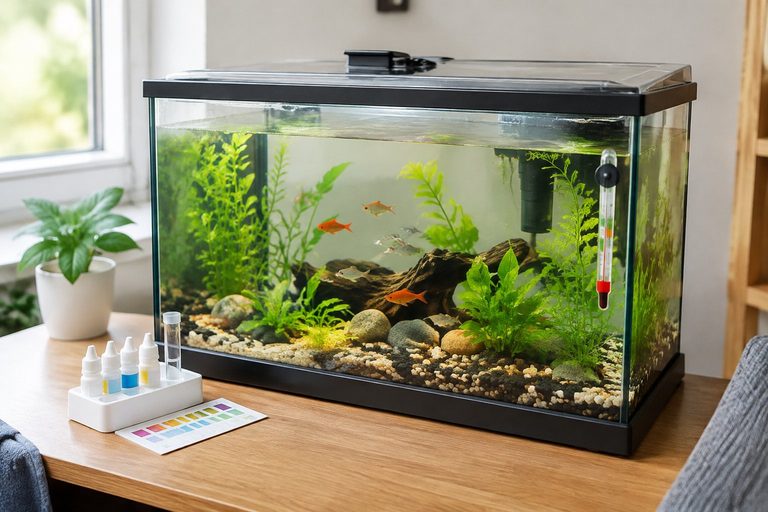
Cold slows your filter as well as your fish, so skipping a water change is risky. Learn to test ammonia, nitrite and nitrate before you decide.
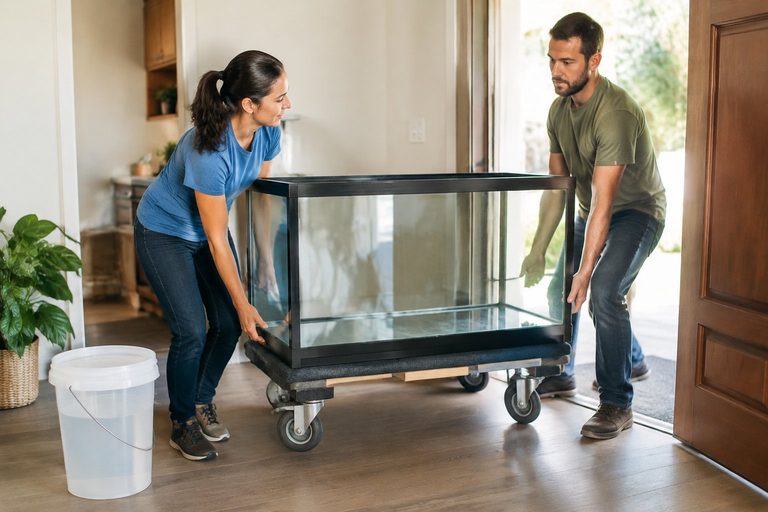
Move your aquarium without losing fish: bag them safely, keep filter bacteria wet, carry the tank empty, and test ammonia after the move.
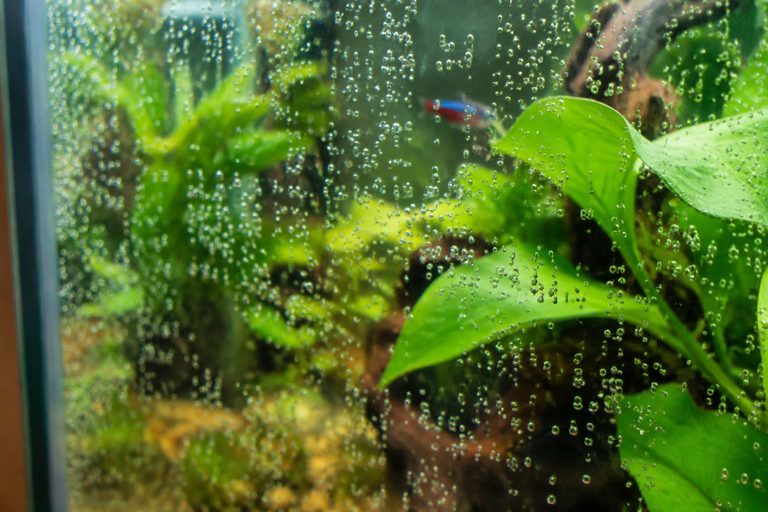
Tiny bubbles after a winter water change are usually dissolved air. Learn how to tell air from a real problem and prep refill water.