Fish Tank Next to a Heating Vent or Radiator? Here's Why to Move It
Heating vents and radiators can push your tank's temperature past what the heater controls. Learn why to avoid them and how to test a spot.
How many times an hour your filter should turn over your tank's water, with GPH math, river-tank targets, and why box ratings overstate flow.
Jack·8 min read·October 28, 2026
You're in the store aisle holding two filter boxes, one rated 200 GPH and one rated 350, trying to work out which one your tank needs. Here's the short answer. A typical freshwater community tank does well when about 4–6 times its water volume passes through the filter each hour. Messy or crowded tanks need 8–10 turnovers. River and hillstream tanks need far more, roughly 10–20. Below I'll show you how to turn that into a gallons-per-hour number, and why the number printed on the box is almost always more than you'll actually get.
"Turnover" is how many times your tank's volume passes through the filter or pump in one hour. Most hobbyists use these targets:
These numbers are the hobby's rule of thumb. They come from retailers, calculators and experienced keepers, not from controlled studies, and keepers disagree about them. On one Monster Fish Keepers thread about canister filters, a member said 10× or 15–20× "isn't necessary" and called 4–5× a luxury standard. Another member on the same thread aims for about 5× on a canister and 10× on a hang-on-back filter.
Treat the target as a starting point. Some tanks need less: fry, seahorses and slow, long-finned fish don't want to fight a current all day. We'll come back to those.
The math is simple:
Turnover = flow in gallons per hour (GPH) ÷ water volume in gallons
A 300 GPH filter on a 55-gallon tank gives about 5.5 turnovers an hour.
There's a catch, though: your 55-gallon tank doesn't hold 55 gallons of water. Substrate, rock, driftwood and the gap at the top all take up space, and a heavily scaped river tank loses more than most. Use your real water volume. The easiest way to find it is to count buckets while you fill the tank, or after a full teardown.
Here's a worked example. Say your 55-gallon long actually holds about 45 gallons once the gravel and stones are in. (That figure is only for illustration; measure your own tank.)
So you'd look for a filter rated at least around 270 GPH. The 20% is a common planning cushion, not a measured figure. The next section explains why you might want even more.
The GPH on the box is a best case: an empty filter with no media, no tubing and the water barely lifted. Your filter will be packed with sponge and ceramic, connected by hoses, and pushing water up from a cabinet or over the rim, and each of those things cuts the flow.
Adrian Tappin's Rainbowfishes — Their Care & Keeping in Captivity, republished by the Australian rainbowfish society ANGFA, says to expect "a further decrease in flow rate from 10 to 50 percent once filter material is added." That loss comes before tubing, lift and the slow clogging that builds up between cleanings.
Here's a real example. On that Monster Fish Keepers thread, one member estimated that a Fluval 406, rated at about 380 GPH, would give "a bit less than 3×" on a 120-gallon tank once media and tubing were counted. On paper it's about 3.2×. His figure is an estimate, not a measurement, but it shows the direction. Another poster in that thread said it plainly: "High flow is usually misleading."
The ANGFA page makes one more point that surprised me. Even at a 10-minute turnover, not every drop of water has gone through the filter after 10 minutes, because filtered water mixes back in with unfiltered water. In the page's example (a 1,000-liter tank on a 100-liter-per-minute pump), it takes about 90 minutes before essentially all of the water has passed through the filter. The formula is volume ÷ flow rate × 9.
What to do about it:
This is where the numbers jump. My old River Tank EcoSystem (Finn Strong Designs' X-Large kit, on a 55-gallon long) pumped water up on the left, carried it across, and let it cascade down through three pools. The whole point of a tank like that is moving water, and a normal community filter by itself won't give you a river.
Hillstream loaches and other fast-water fish come from shallow, oxygen-rich streams, and their tanks need a lot more flow:
Experienced keepers land anywhere from 10× to over 25×, so there isn't one right number. The common ground is that hillstream tanks need far more turnover than community tanks.
Where the flow comes from. Most people don't get 15× out of a single filter. Gensou suggests a canister rated for three to four times the tank volume for filtration and some flow, with powerheads, wavemakers or several filter outlets added to set up a one-way current. Some builders use a manifold, which is a pipe with several outlets along the back that spreads one pump's output across the tank's length. Loaches Online keepers noted that powerheads alone tend to tumble the water around rather than make a clean one-way current, but their fish still did well.
Cover the whole bottom. Gensou says to aim for visible water movement across the entire bottom, with dead spots kept to a minimum. A strong jet in one corner and still water everywhere else isn't a river. It also leaves waste piling up in the still areas.
Measure where the fish actually sit. Hold a piece of fine thread or drop a pinch of food near the substrate in different spots and watch which way it goes and how fast. Hillstream loaches cling to rocks in the current, and you want them working, not pinned flat. If the moving water is in the middle of the tank and the fish are all hiding behind a rock at the end, aim the flow where they are.
Not every tank wants a current.
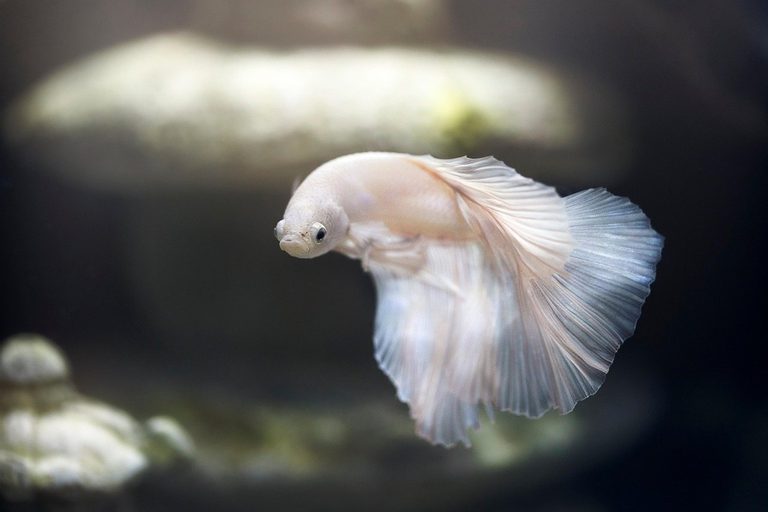
Bettas, fancy goldfish and other long-finned or slow fish fall into the same group. Too much current wears out fish that aren't built for it. If they're hiding behind decor or struggling to hold their position, turn the flow down.
Turnover targets by tank type:
Three steps:
If you're planning a new setup over the long Thanksgiving weekend, run these numbers before you buy anything. A powerhead costs a lot less than a second filter you didn't need.
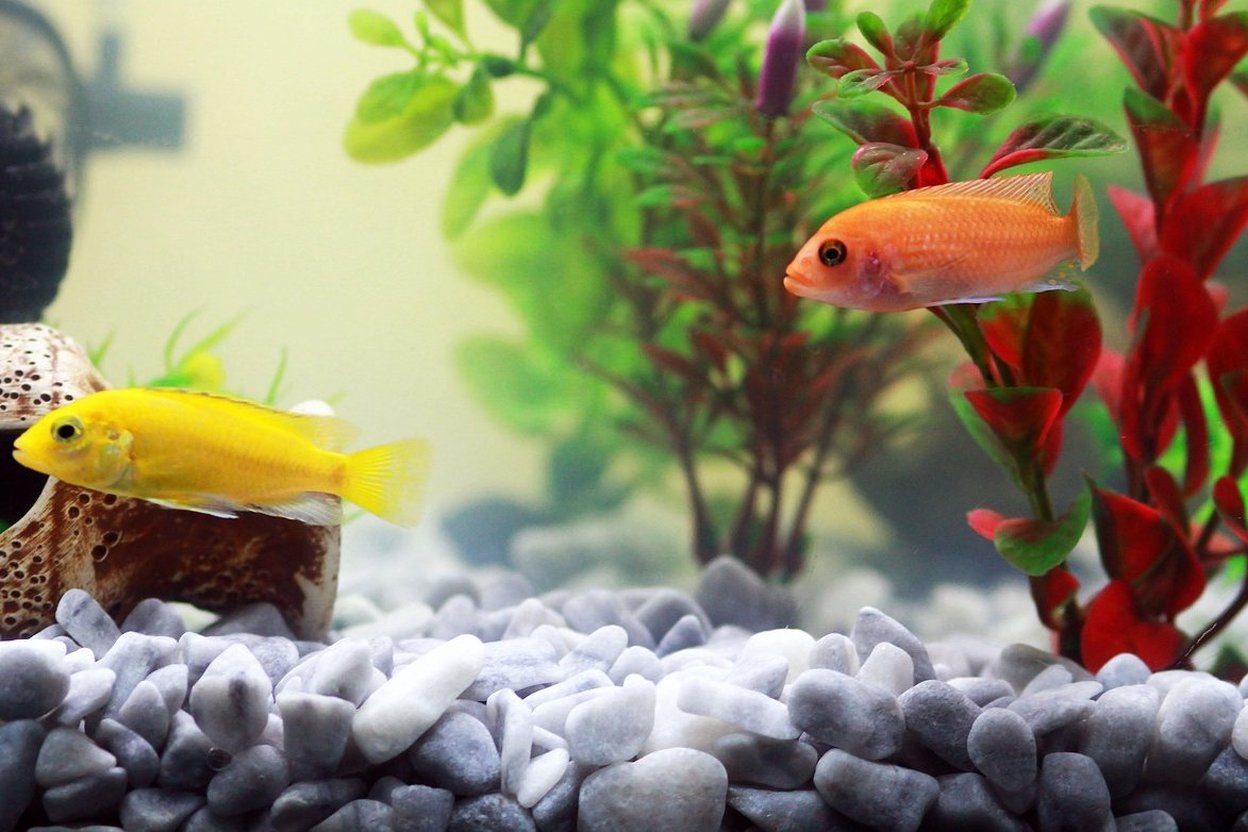
Photo by Irina_kukuts on Pixabay.
Heating vents and radiators can push your tank's temperature past what the heater controls. Learn why to avoid them and how to test a spot.
Tank too cold in winter? Learn how to tell a too-small or misplaced heater from a drafty window, and fix it before the holidays.
Yes, a tank heater adds to your power bill, usually a few dollars to about $15 a month. Learn how to calculate your own heater's winter cost.