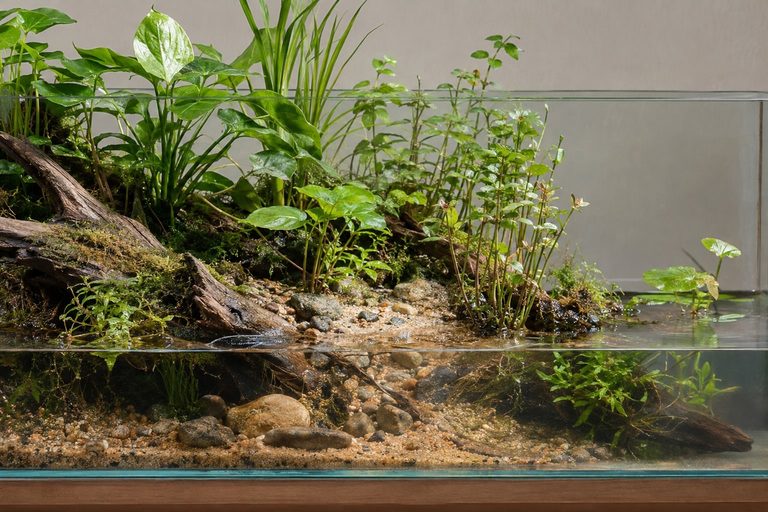
A riparium is a tank with a shoreline. What you actually need
Learn what a riparium is and what you need to build one: an open-top tank, planters, plants that tolerate wet roots, and light above the water.
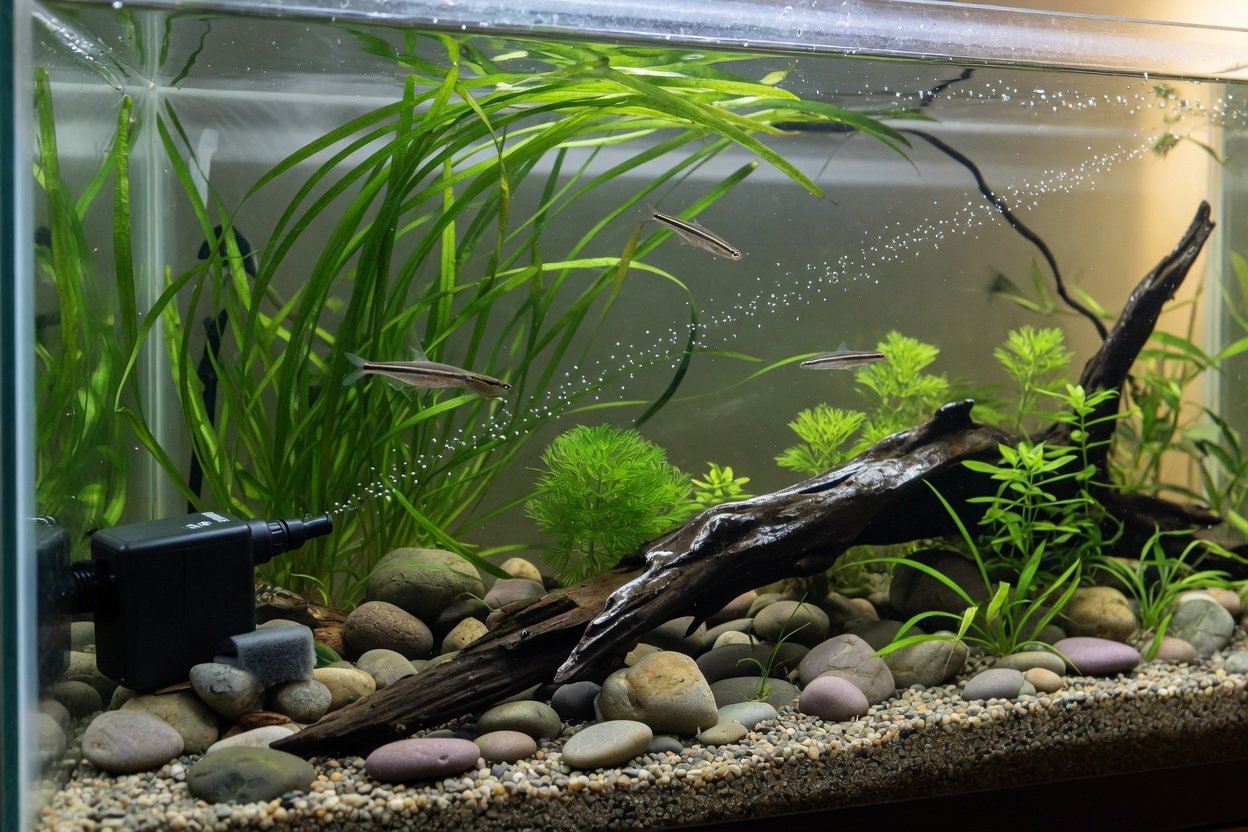
Powerheads push a narrow, steady jet. Wavemakers make wide, variable flow. Which one builds a better river current, how much flow you need, and how to place it so fish can still rest.
Jack·3 min read·October 5, 2026
A river tank lives or dies on its flow. Hillstream loaches, White Clouds and vampire shrimp all need water moving past them. The question is what's pushing it. Most people choose between a powerhead and a wavemaker, and they make very different currents.
A powerhead is a small submersible pump that pushes water out of a nozzle in one direction. The flow is narrow, steady and strong right in front of it, then fades fast.
A wavemaker (also called a circulation pump or propeller pump) moves a much larger volume of water in a wide, gentle pattern. Many have a controller that can pulse the flow, ramp it up and down, or switch between pumps.
For a true one-way "river" down the length of the tank, a powerhead feeding a manifold (a pipe with holes along one end) is hard to beat. It spreads the jet across the whole width of the tank and sends it all one direction. Our guide to building a river manifold shows how.
For a natural stream feel in a wider or taller tank, a wavemaker on a low, steady setting does a better job of moving the whole tank without making one blasting jet.
Many river tanks use both: a powerhead and manifold for the main current, and the filter return or a small wavemaker to keep the corners from going stagnant.
A common rule of thumb for a regular freshwater tank is turning the water over 5 to 10 times an hour. River tanks run higher, often 10 to 20 times the tank's volume per hour, counting the filter and pumps together. For a 55-gallon, that's roughly 550 to 1,100 gallons per hour.
Start lower than you think, and turn it up while watching the fish. If they're struggling to hold position and never rest, it's too much.
If the power goes out, both stop, and fast-flow fish feel the oxygen drop first. A battery air pump is cheap insurance. See our guide to keeping a tank alive in a power outage.
Learn what a riparium is and what you need to build one: an open-top tank, planters, plants that tolerate wet roots, and light above the water.
Learn which Halloween ornaments are safe in a fish tank, why craft-store decor is risky, and a simple screening test before adding one.
Discover why whole pumpkins damage aquarium water and how to safely offer small pieces as seasonal treats.