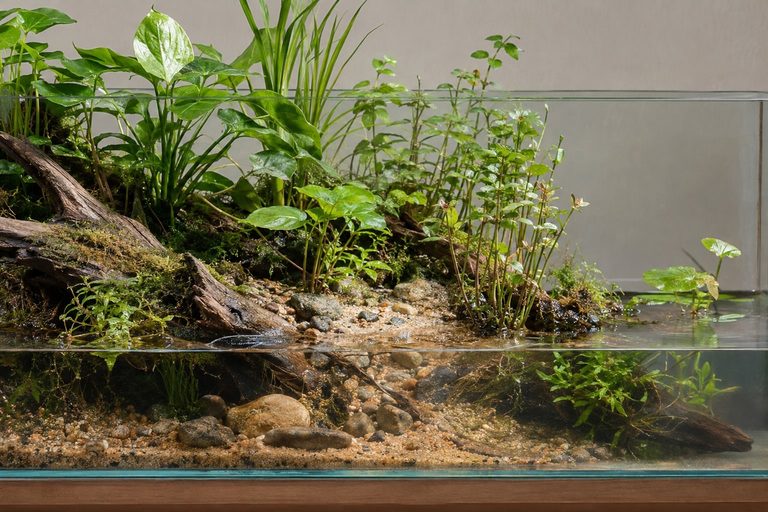
A riparium is a tank with a shoreline. What you actually need
Learn what a riparium is and what you need to build one: an open-top tank, planters, plants that tolerate wet roots, and light above the water.
Shorter days change the light coming through your windows. How many hours to run your aquarium lights, why a timer beats your memory, and how to light the plants growing above the water in a riparium.
Jack·4 min read·October 5, 2026
When the days get shorter, a lot of people leave the tank light on longer to make up for the dark living room. Then the algae shows up. Here's how to set the lights through fall and winter, and what's different about the plants growing out of the water in a riparium.
For most planted freshwater tanks, the light should be on about 6 to 9 hours a day:
More than about 10 to 12 hours doesn't grow plants much faster, but it does grow algae. Fish don't need the light at all, beyond seeing their food. They need a regular day and night.
The best upgrade you can make to any tank is a $10 outlet timer, or the built-in timer many LED lights have now. It gives the fish and plants the same day every day, and it stops the "forgot to turn it off" nights that cause algae blooms.
A tip: split the light into two blocks with a break in the middle (say, 4 hours in the morning and 4 in the evening) if you want to see the tank before and after work. Some keepers find this helps with algae; at minimum, it doesn't hurt.
A riparium has plants with roots in the water and leaves in the air, like pothos, peace lily, anubias, umbrella palm and many others. They need light too, and the light above a regular aquarium often doesn't reach them well.
Many of the best riparium plants are common houseplants that do fine in average indoor light. Our riparium plants guide lists the easy ones. Plants that grow on rock, like java fern and anubias, are happy in low light both above and below the water.
Blue "moonlight" settings are fine for watching nocturnal fish like bristlenose plecos and loaches in the evening. Just don't leave them on all night every night.
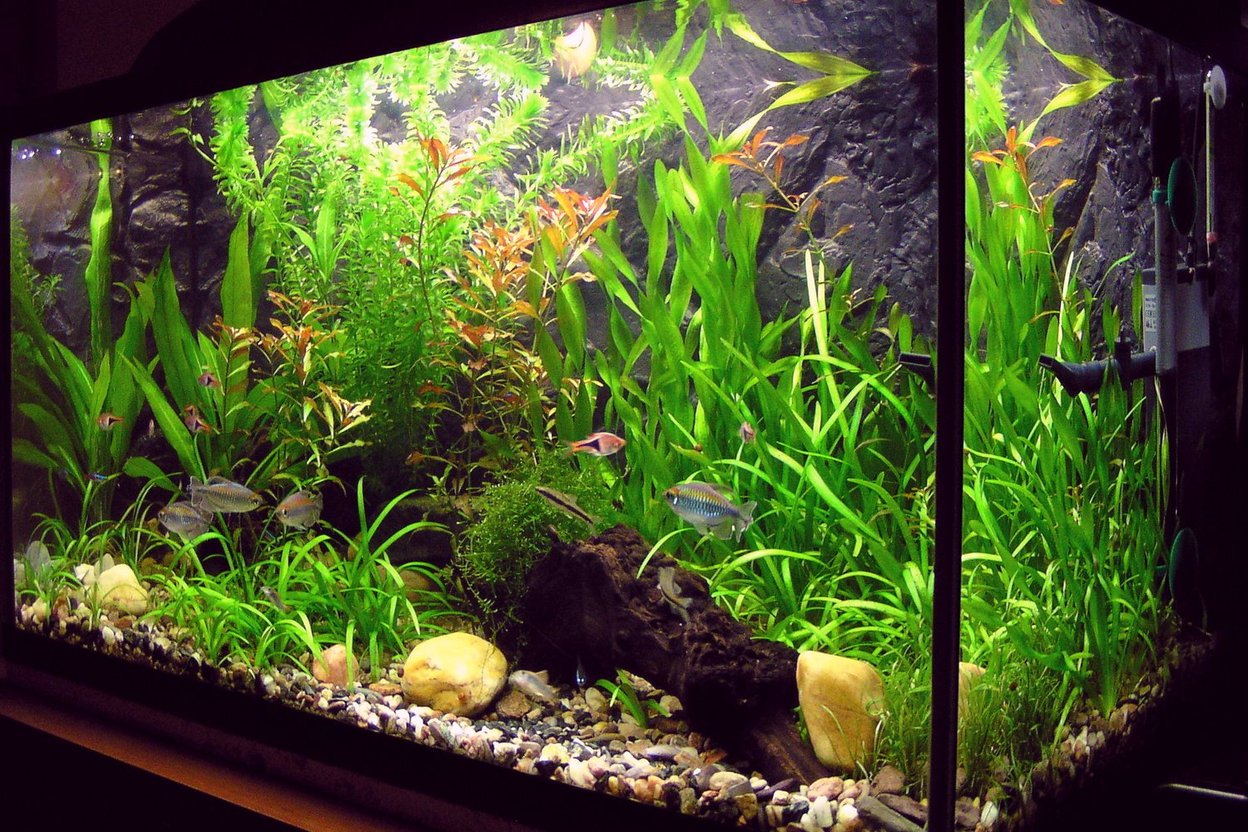
Photo: Amaterske akvarium by User Aleš Tošovský, Public domain.
Learn what a riparium is and what you need to build one: an open-top tank, planters, plants that tolerate wet roots, and light above the water.
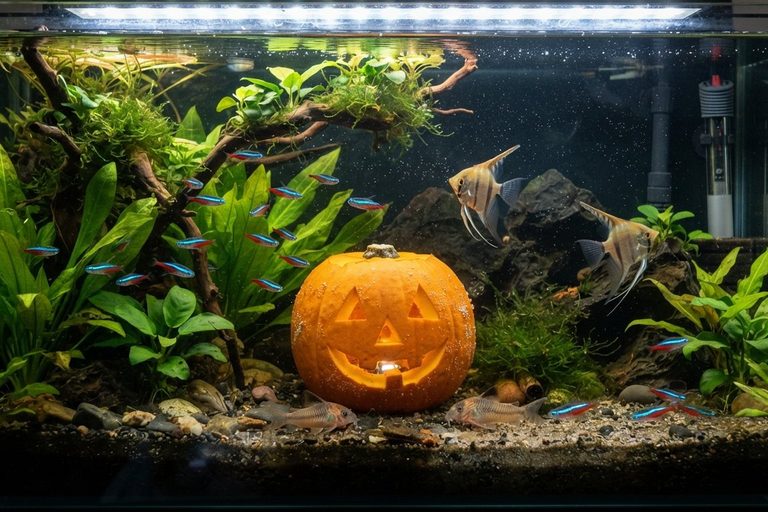
Learn which Halloween ornaments are safe in a fish tank, why craft-store decor is risky, and a simple screening test before adding one.
Discover why whole pumpkins damage aquarium water and how to safely offer small pieces as seasonal treats.