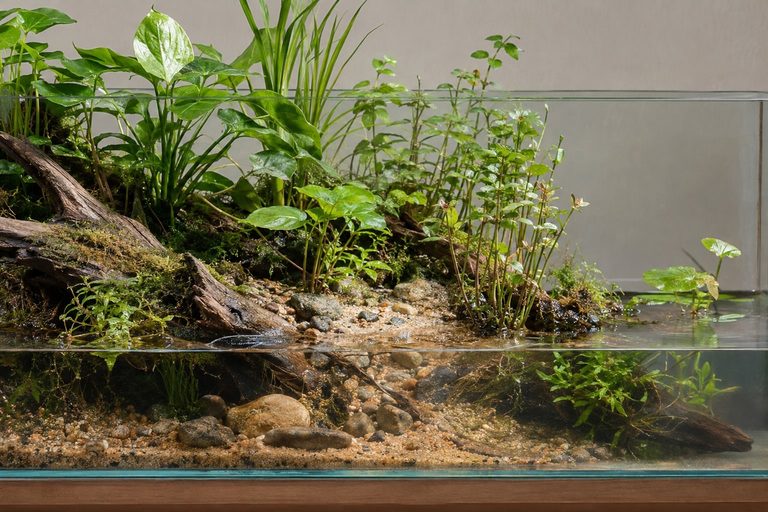
A riparium is a tank with a shoreline. What you actually need
Learn what a riparium is and what you need to build one: an open-top tank, planters, plants that tolerate wet roots, and light above the water.
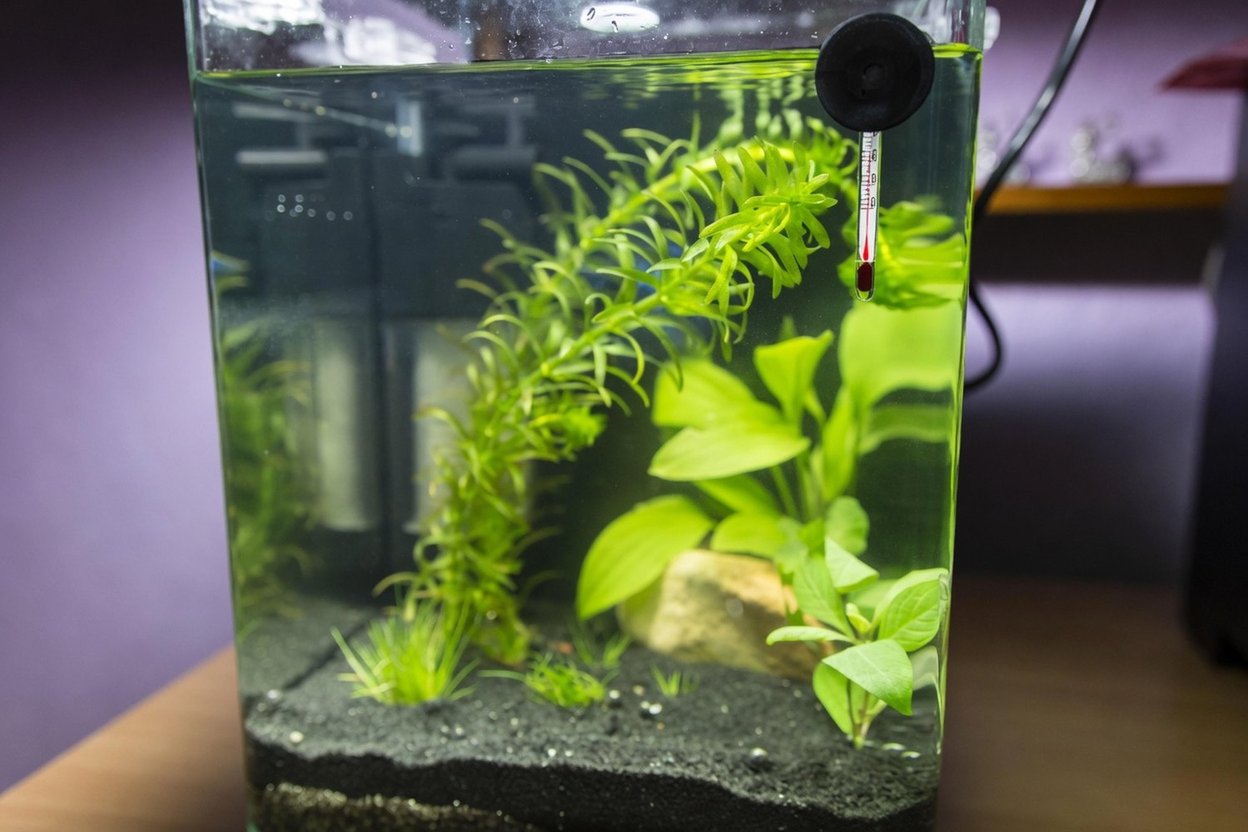
Many river fish come from cool streams and don't need a heater in a heated house. When a heater helps, when it hurts, how to size one, and the fish that do best unheated.
Jack·3 min read·October 3, 2026
A lot of the fish that do best in river tanks come from cool mountain streams, not warm tropical swamps. That raises a good question as fall turns to winter: does a river tank need a heater?
The answer depends on your fish and your house.
These fish come from cooler streams and are often happy at room temperature in a heated home:
If your house stays in the mid to upper 60s °F all winter and the tank isn't near a drafty window, door or outside wall, a cold-water tank can often run without one. Many keepers do just fine.
A heater is good insurance when:
Set the heater to the low end of what your fish like. It only turns on when the water drops below that, keeping things steady.
A common rule of thumb is about 3 to 5 watts per gallon, with more for a cold room or a big temperature gap. Two smaller heaters at each end of a long tank spread the heat evenly and give you a backup if one fails.
In a strong-flow river tank, place the heater where water moves past it so the heat spreads.
For cool-water fish like hillstream loaches, the bigger danger is often summer, not winter. Water above the upper 70s °F holds less oxygen, and some cool-water species struggle. Keep tanks out of direct sun, add surface agitation, and use a fan across the surface on hot days.
In winter, a power outage can drop a tank's temperature fast. See keeping an aquarium warm in a power outage.
Some fish slow down in cold water, but aquarium fish shouldn't be chilled to that point. See do fish hibernate?.
For a true cool-water river tank in a heated house, you may not need a heater. But a small heater set low is cheap insurance against cold nights and outages. A good thermometer is a must either way.
Learn what a riparium is and what you need to build one: an open-top tank, planters, plants that tolerate wet roots, and light above the water.
Learn which Halloween ornaments are safe in a fish tank, why craft-store decor is risky, and a simple screening test before adding one.
Discover why whole pumpkins damage aquarium water and how to safely offer small pieces as seasonal treats.