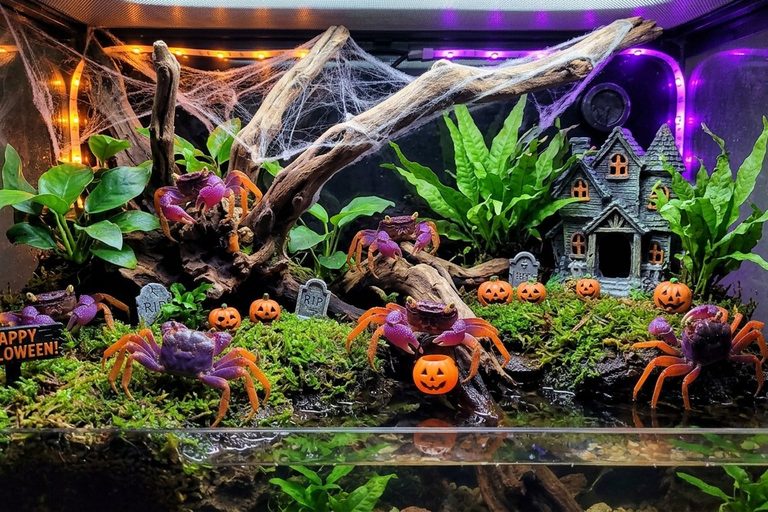
Can a crab get stuck in a pumpkin-house ornament?
Can a crab get trapped in a pumpkin-house ornament? See which openings are risky, how to pick or seal a safe piece, and how to free a stuck crab.
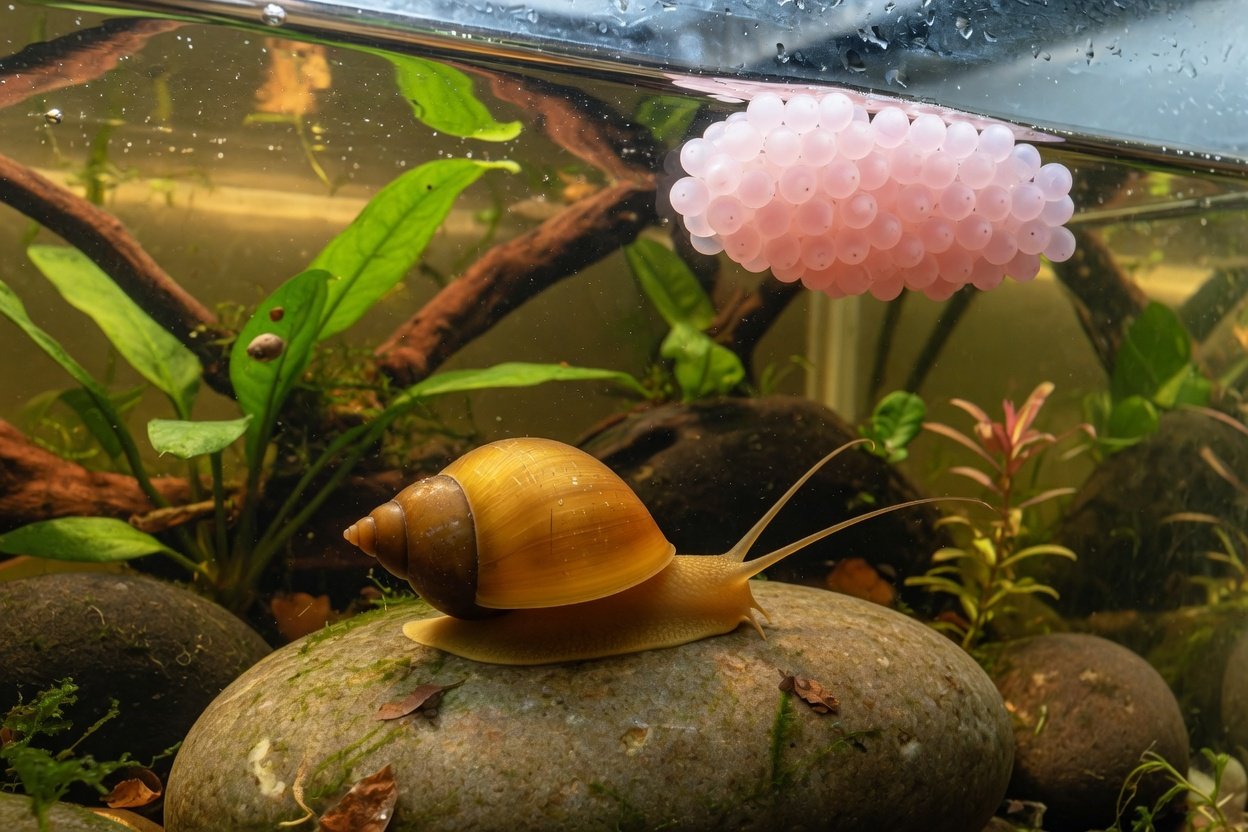
Mystery snails grow to about 2 inches, come in gold, blue, black and ivory, and lay egg clutches above the waterline. How to keep them healthy, what they need in a river tank, and how to handle the eggs.
Jack·3 min read·October 5, 2026
Mystery snails are the golden retrievers of the snail world: big, colorful, harmless and always out where you can see them. They're also one of the best snails for a riparium, because they need an open space above the water to breed.
The mystery snail sold in most U.S. stores is Pomacea diffusa, the spike-topped apple snail. They grow to about 2 inches across and usually live a year or two. They come in gold, ivory, blue, purple, black and brown, all the same species.
They're a different animal from the larger apple snails, like Pomacea canaliculata, that are banned from interstate shipping because they destroy crops and native plants. Even so, a few states restrict apple snails in general, so check your state's rules before you buy.
Mystery snails are not strong-current animals. They'll hold on in moderate flow, but in a fast channel they get knocked loose and tumble into the intake. Give them the slow end of the tank: the pool, the plant shelf, the calm corners. If you run a strong one-way current, see our river manifold guide and plan a still zone.
A riparium is perfect for their eggs, though. The exposed rock and plants above the water give females a place to lay.
They graze on algae and biofilm, eat leftover fish food, and will chew on soft or dying plants. Most healthy plants are left alone. Give them algae wafers, blanched zucchini or spinach, and a calcium source like a cuttlebone or a calcium-rich snail food.
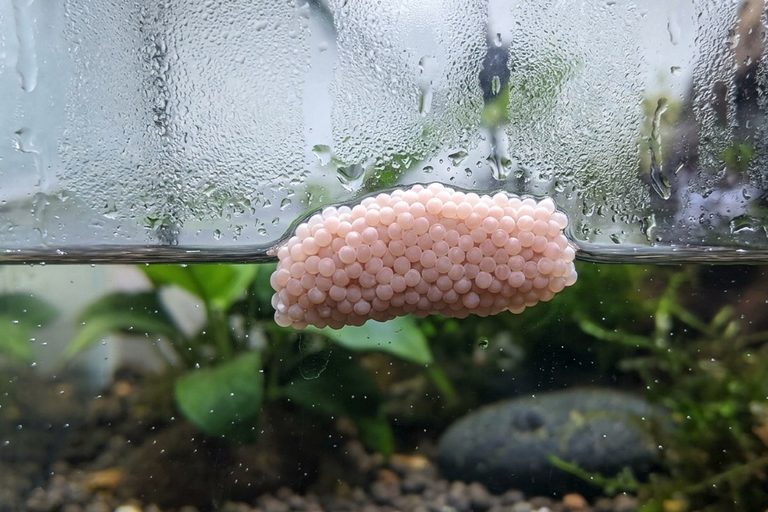
Mystery snails have separate males and females. A female lays a pinkish, chalky clutch of a few hundred eggs on the glass or lid above the water. The eggs hatch in two to four weeks if they stay humid.
A mystery snail that's closed up and lying still may just be resting. Before you take it out, sniff it. A dead snail smells unmistakably awful, and it should come out fast before it fouls the water.
Peaceful fish and shrimp are fine. Avoid loaches, pufferfish, crayfish and big cichlids, which pick at their tentacles or eat them outright. Our assassin snail guide explains why assassins and mystery snails are usually OK together: the mystery snail is too big. For a smaller algae eater that doesn't breed in fresh water, see nerite snails.
Can a crab get trapped in a pumpkin-house ornament? See which openings are risky, how to pick or seal a safe piece, and how to free a stuck crab.
Vampire crabs make tempting Halloween impulse buys at $10, but they need a land-heavy paludarium to survive—not a traditional fish tank.
Tell snail eggs apart by species (nerite dots, mystery snail clutches, ramshorn and bladder jelly) and decide whether to scrape, keep, or hatch them.