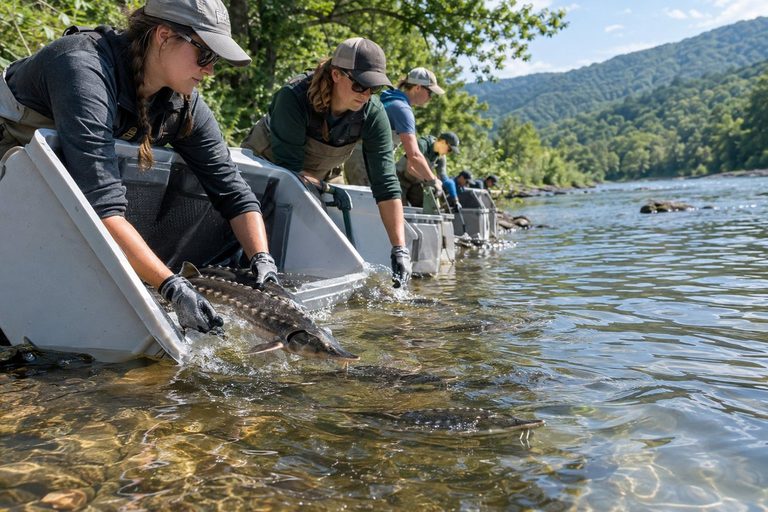
Tennessee Aquarium releases 500 lake sturgeon into the Tennessee River
About 500 juvenile lake sturgeon went into the Tennessee River at Coolidge Park. Here's how the restoration works and whether it's succeeding.
Rosy barb care for unheated river tanks: temperature range, tank size, group size, tank mates, feeding and the fin-nipping problem.
Jack·8 min read·October 6, 2026
Rosy barbs (Pethia conchonius) are one of the few common store fish that do well with no heater. Their home waters run about 64–72°F, so a tank in a room that stays in the mid-60s or warmer suits them fine. Keep at least 5 in a tank 30 inches long or longer, give them some current, and they'll stay active and colorful for 3–5 years.
They cost about the same as a tetra, take beginner mistakes better than most fish, and they're among the best-colored fish you can keep without a heater. The one catch is behavior. A small or bored group nips fins.
Rosy barbs are native to Afghanistan, Pakistan, India, Nepal and Bangladesh. In the wild they live in everything from flowing hill streams and river tributaries to still lakes, ponds and swamps, in a subtropical climate.
That range is why they handle a river tank so well. They're used to moving water and to seasonal swings in temperature. A tank that drops a few degrees at night in November won't bother them the way it would bother a cardinal tetra or a discus.
Sources give slightly different numbers, but they agree on the middle:
In practice, a rosy barb tank in a living room, bedroom or finished basement that stays heated for people usually needs no heater at all. Problems start in a garage, a three-season porch, or a basement corner that drops into the 50s once the furnace cycles down on cold nights.
With first freezes coming, put a thermometer on the tank and read it first thing in the morning for a week. Morning is when the water is coldest. If it stays at 63°F or above, leave the heater in the box. If it dips lower, a small heater set to 65°F works as a safety net, not a tropical setup. Our cold-water heater guide covers how to size one.
Their cold tolerance also helps when the power goes out. A rosy barb tank losing a few degrees over an evening is far less urgent than a 80°F tropical tank doing the same. Read keeping a tank warm in an outage before winter anyway.
Rosy barbs get bigger than most people expect from the 1-inch fish in the store tank. In aquariums they commonly reach about 4 inches. Wild fish have been recorded up to 6 inches.
That size plus a lot of swimming means they need room:
Length matters more than gallons. A tall 30-gallon "column" tank gives them less running room than a 20-gallon long. A long tank also makes it easier to set up real one-way flow, if you're building a river manifold tank.
Rosy barbs are a schooling fish. Most care sheets say 5 is the minimum, and Seriously Fish recommends 8–10. In a big enough group they spend their energy on each other: males chase, flare and color up against other males, and nobody else gets bothered.
In a group of 2 or 3, that energy goes into the tank mates' fins. That's where their nipper reputation comes from.
To keep the nipping down:
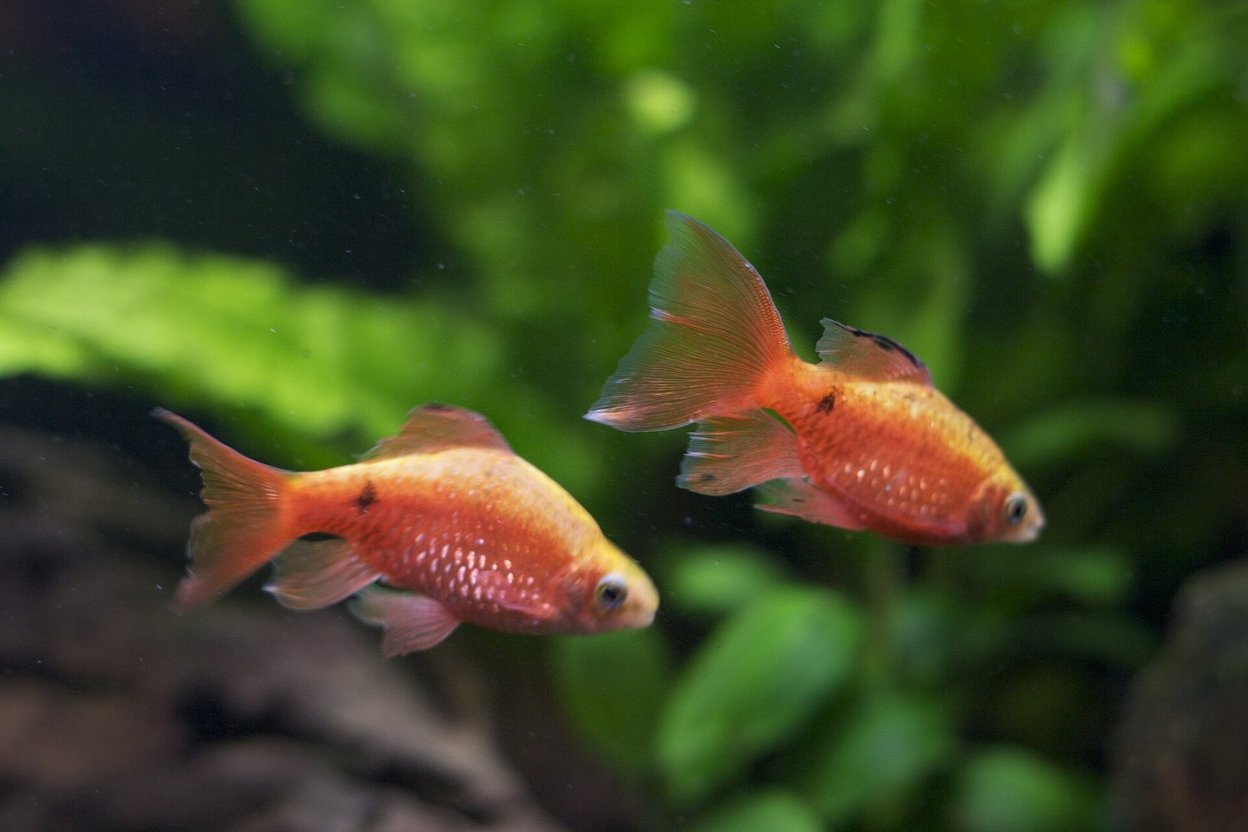
Adult males are smaller, slimmer and much more colorful, with the deep rosy red that gives the fish its name. The color peaks at spawning time. Females are plumper and stay a golden olive.
Young fish in the store all look gold. Buy 6–8 and you'll almost always end up with both sexes. Expect the males to color up as they mature.
You'll also see long-fin rosy barbs for sale. They're a selectively bred variety and they cost more: around $20 each at one online seller, against $3.50–$10 for regular rosy barbs (as of October 2026). Long fins drag in strong current and get picked at by other barbs, so for a river tank the regular short-fin fish is the better buy.
Rosy barbs aren't fussy about water chemistry:
Most tap water in the U.S. lands inside that range without adjustment. Just run a dechlorinator and make sure the tank is fully cycled before fish go in.
Several care sheets say rosy barbs handle small, regular water changes better than big, rare ones. Plan on about 20–25% weekly instead of 50% once a month.
For flow, they like a real current but they're midwater swimmers, not rock-clinging stream specialists. Give them a fast run down one end of the tank and slower water behind rocks or wood where they can rest. If every fish is hiding in the back corner, turn the flow down.
Rosy barbs are omnivores. In the wild they eat worms, insects, small crustaceans and plant matter. In the tank, a good routine is:
They'll graze some algae, but they won't clean a tank. Since they eat plant matter, use tough plants. Java fern and anubias tied to rock hold up to both the barbs and the current.
The point is to pick fish that like the same cool, moving water:
Avoid tiny shrimp if you want them to breed. Adult rosy barbs will eat baby shrimp and probably small cherry shrimp too.
Rosy barbs scatter eggs over plants and gravel and give no care. The eggs hatch in 24–48 hours, but in a community tank the adults eat most of them first. If you want fry, move a ripe pair to a separate tank with fine-leaved plants or a mesh bottom and take the adults out after spawning. Fry start on infusoria and move to baby brine shrimp.
Rosy barbs are hardy enough to survive outdoors in warm places, which is the problem. USGS lists them as established in reservoirs, lakes and streams in Puerto Rico, with specimens also collected in Florida and Louisiana. The likely source was released aquarium fish or escapes from fish farms.
If you need to rehome them, a local fish store or aquarium club will almost always take them. Releasing aquarium fish is illegal in many states, so check your state's rules. Our native fish guide has more on why this matters.
If you can say yes to all five, rosy barbs are about as low-maintenance a schooling fish as you'll find for a heaterless river tank.
Photo: Rosy Barbs by Kkonstan, CC BY 3.0.
About 500 juvenile lake sturgeon went into the Tennessee River at Coolidge Park. Here's how the restoration works and whether it's succeeding.
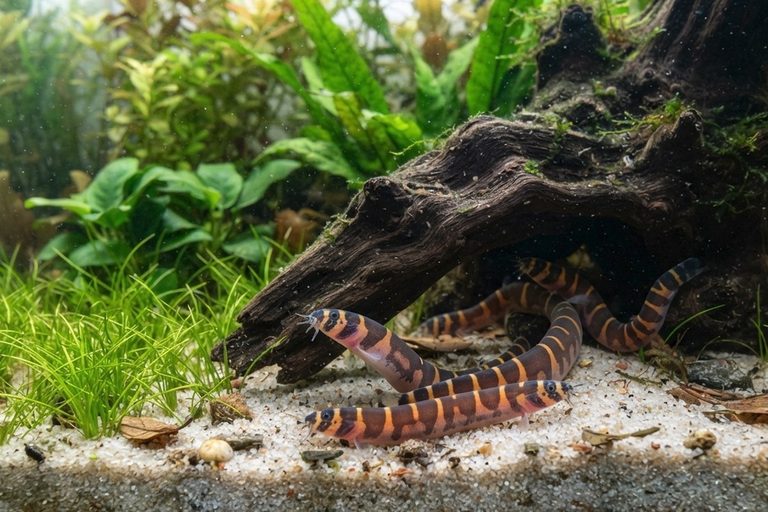
Kuhli loaches can live in a river tank if you give them a calm zone, soft sand, a group of six, 74–79°F water and plenty of places to hide.
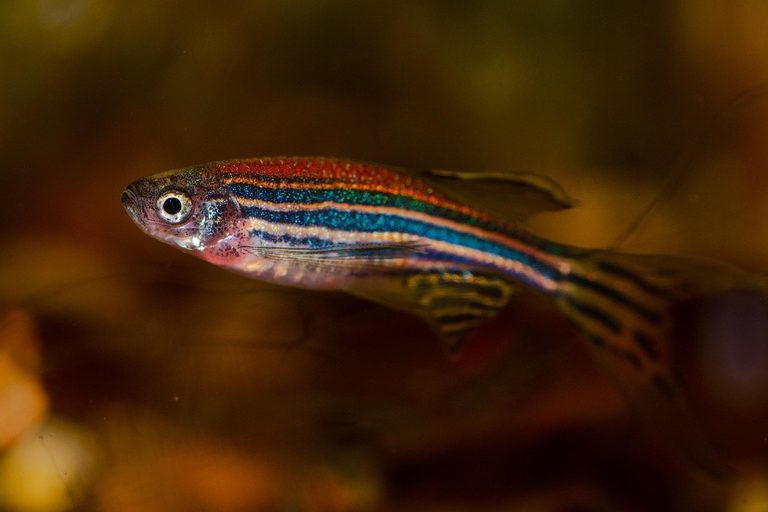
Zebra danios are cheap, hardy, fast, and love a strong current. Group size, temperature, tankmates, the long-fin and GloFish varieties, and how to keep them from nipping fins or jumping out.