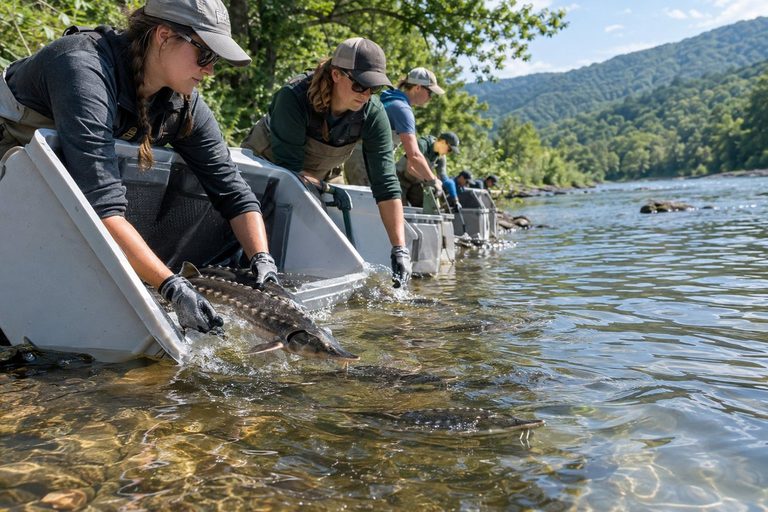
Tennessee Aquarium releases 500 lake sturgeon into the Tennessee River
About 500 juvenile lake sturgeon went into the Tennessee River at Coolidge Park. Here's how the restoration works and whether it's succeeding.
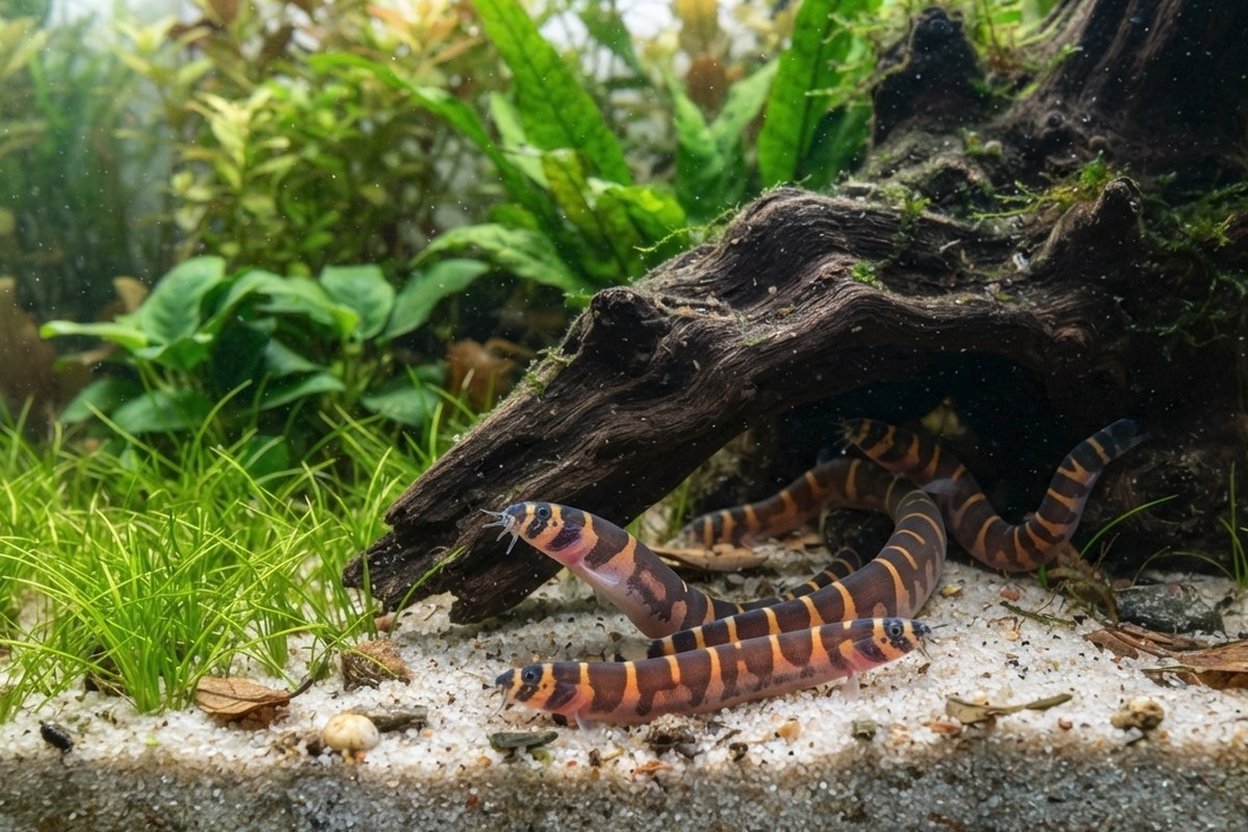
Kuhli loaches can live in a river tank if you give them a calm zone, soft sand, a group of six, 74–79°F water and plenty of places to hide.
Jack·8 min read·October 6, 2026
Kuhli loaches do fine in a river tank, but not in the fast part. Give them a calm, shaded zone downstream of your current, a bed of soft sand at least 2 inches deep, a group of six or more, water around 74–79°F, and a pile of caves and leaf litter to hide in. Cover every filter intake, put a tight lid on top, and you'll have a fish that can live for a decade.
The fish sold as "kuhli loach" is almost never true Pangio kuhlii. According to Seriously Fish, most trade fish are Pangio semicincta from Peninsular Malaysia, Sumatra and Borneo. The true kuhlii comes from Java and is rarely exported. The two are close to impossible to tell apart by eye, and their care is the same, so don't worry about the name on the tank at the store.
They're thin, eel-shaped loaches with orange-and-black bands. Adults reach about 4 inches (10 cm). Wikipedia lists a lifespan of up to about 14 years in captivity, so plan on a long-term fish, not a starter you'll replace in a year.
As of October 2026, expect to pay about $3 each at big-box chains like PetSmart and roughly $5–$12 each from online fish sellers. A group of six runs about $20–$70 before shipping.
This is the main thing to know if you keep a river tank. In the wild, kuhlis live in shallow, slow forest streams, swamps and backwaters, buried in leaf litter. Seriously Fish recommends gentle filtration and warns against high flow. They aren't hillstream loaches, and they won't sit on a rock in the current.
That doesn't rule out a river tank. It means you build in a calm zone:
Kuhlis are thin and they push into any gap they find. Wikipedia notes they can work their way into small places and even out of the tank. In a river tank you usually have more pumps and intakes than a normal setup, so you have more spots where they can get stuck.
Slip a sponge prefilter over every filter and pump intake. These cost a few dollars and they also keep shrimp and baby fish out of the impeller. Check the gaps around heater cords and tubing in the lid, too.
Seriously Fish says the species is known to jump. Between that and squeezing through gaps, a kuhli you can't find is often lying dried out on the floor behind the stand. Use a full lid and fill the cord gaps with filter sponge or aquarium-safe foam. If your river tank is open-top for riparium plants, keep the water level a few inches below the rim and close off the low end where they hang out.
Kuhlis dig. They sift sand for food and spend part of the day fully buried. Seriously Fish lists soft sand as a requirement, and care guides like The Shrimp Farm warn that coarse or sharp gravel damages their bodies and barbels.
What works:
If you're still choosing a bottom for the whole tank, see best substrate for a river tank. A common setup is sand at the calm end and pebbles and cobble at the fast end. If your sand seems to move around overnight, that's normal for loaches; here's why fish dig.
One or two kuhlis will hide almost all the time. In a group they relax and come out more, and Seriously Fish notes they'll often pile into the same cave together to rest. Their minimum is 5–6. A group of 6–10 is better if you have the floor space.
Tank size: Seriously Fish gives a minimum footprint of 24 x 12 inches. That's a 20-gallon long or bigger. Any typical river tank, like a 40 breeder or 55, has room for a group as long as there's enough calm floor space.
This is where kuhlis can clash with other river tank fish. Kuhlis are tropical. Seriously Fish lists 70–79°F, and other care guides go up to about 85°F. Aim for 74–79°F, where most sources overlap. That means a heater; see cold-water river tanks if you've been running unheated.
That temperature rules out some common river tank picks as long-term tankmates:
Water: soft to moderately hard, pH roughly 6.0–7.0. Wild kuhlis come from blackwater, but tank-raised and imported fish adapt to most tap water if it's stable. A few dried leaves add tannins and give them more to hide in; here's which fall leaves are safe. Since it's fall, you can collect oak leaves now, but follow that guide before you drop any in.
Add them only to a fully cycled tank. They spend all their time on the bottom, where waste collects.
A kuhli with nowhere to hide is a stressed kuhli. Give them more cover than you think they need:
They're most active at dusk and after lights-out. If you see them in daylight, swimming up and down the glass, that's often normal. Wikipedia notes they get restless before storms because they sense pressure changes. If you want to watch them, a dim moonlight setting in the evening works better than the main light; see aquarium lighting in fall for timing.
They eat small invertebrates in the wild. In the tank, they'll take sinking pellets and wafers along with frozen or live daphnia, brine shrimp and bloodworms. Feed after lights-out or right before, so faster fish don't clean everything up first. Drop food in the calm zone where it'll settle instead of blowing downstream. Algae wafers broken in pieces are a decent backup, but they eat mostly meaty foods.
Kuhlis have very small scales and are widely reported to be sensitive to medications, especially copper and salt. Hobby guides often recommend a half dose of ich medicine with a slow temperature rise instead. Read the label and use only products marked safe for scaleless or sensitive fish. The easier route is to quarantine new fish first so you don't have to treat the whole river tank.
About 500 juvenile lake sturgeon went into the Tennessee River at Coolidge Park. Here's how the restoration works and whether it's succeeding.
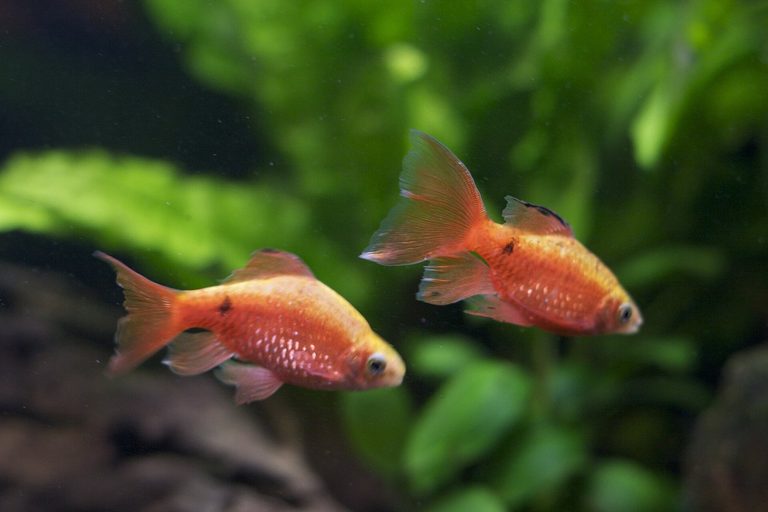
Rosy barb care for unheated river tanks: temperature range, tank size, group size, tank mates, feeding and the fin-nipping problem.
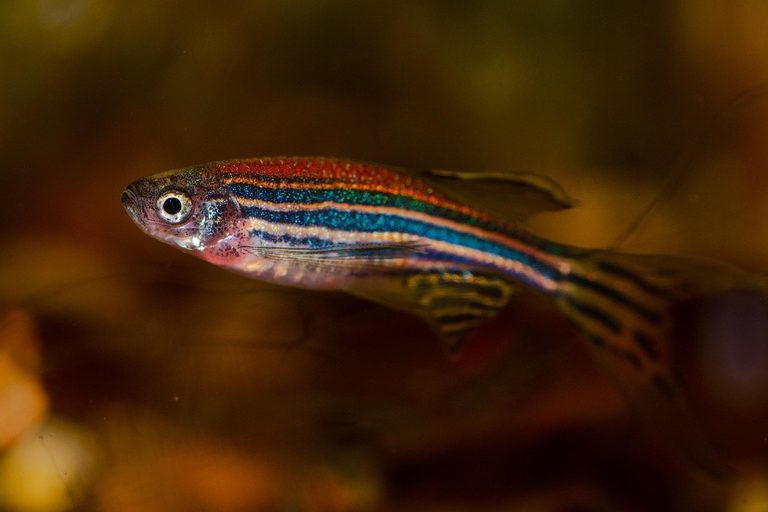
Zebra danios are cheap, hardy, fast, and love a strong current. Group size, temperature, tankmates, the long-fin and GloFish varieties, and how to keep them from nipping fins or jumping out.